Family-owned since 2014 · 4.99 ★ × 463 reviews · 20,000+ jobs
Detached Garage Demolition in Connecticut
Detached garage teardowns coordinated through our licensed demolition partner — the partner quotes and contracts the demolition, and every load of debris goes out in our own dumpsters.
20,000+
jobs completed
4.99 ★
463 reviews
Family-owned
since 2014 (12 years)
Licensed & insured
in Connecticut & New York
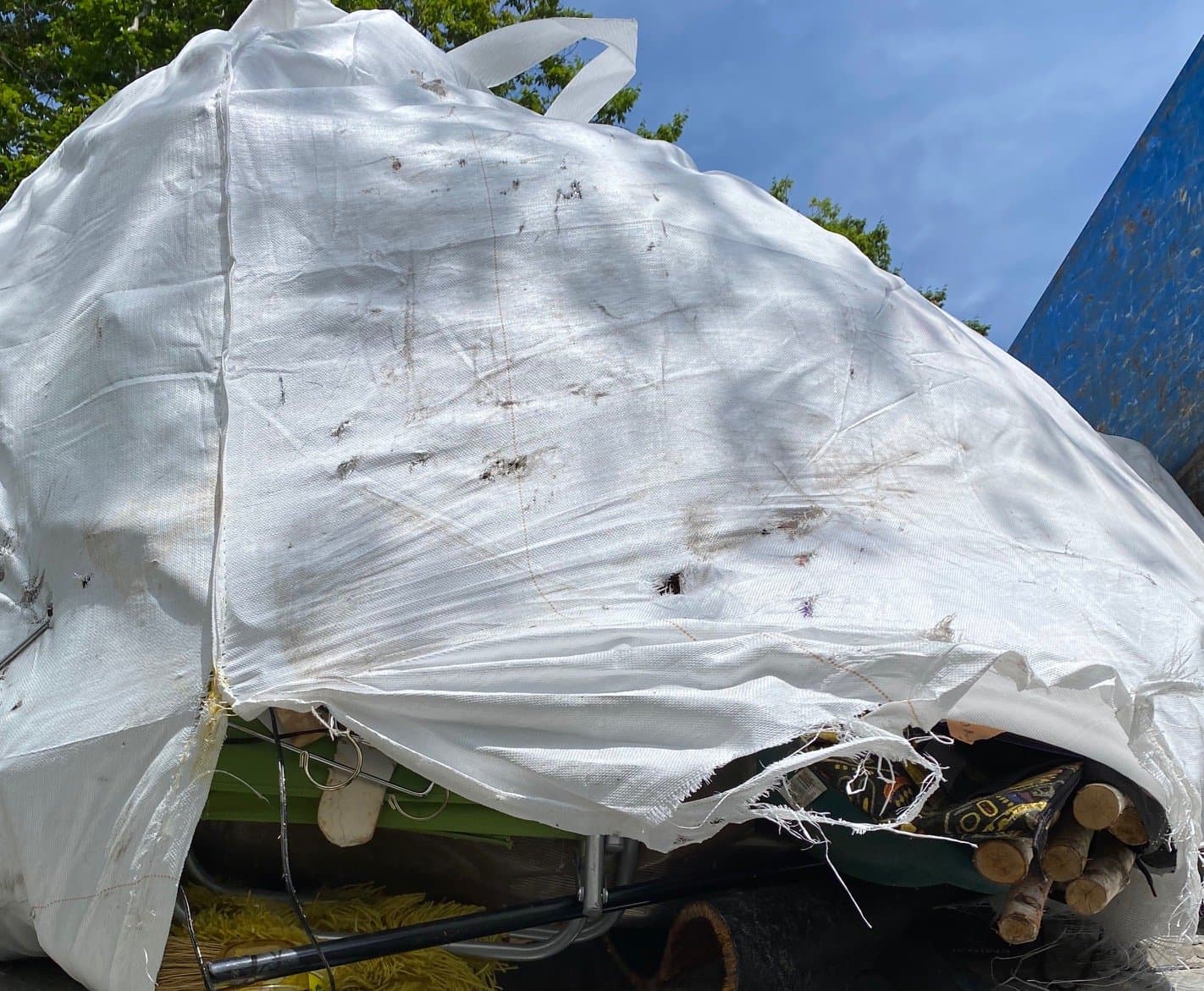
A detached garage is the heaviest thing most homeowners will ever have taken off their property. It's a real building — footprint on the town's records, a roof carrying two or three generations of shingles, usually a live circuit somebody ran out from the house panel decades ago, and a slab underneath that isn't going anywhere.
So here's the split, stated before anything else on this page. Grizzly does not perform garage demolition. The teardown is coordinated through our licensed demolition partner, who walks the structure, quotes the work, and contracts it with you directly under their own license and insurance. What Grizzly runs — first can to last — is the debris: every load of it goes out in our own dumpsters, placed and swapped on the demolition schedule, at the same posted rates every customer on this site sees.
Why start with a hauler at all? Because a garage is mostly tonnage once it's down, and tonnage is the half we're built for. One call sets up both halves instead of leaving you to broker between a demolition contractor and whoever they rent containers from.
How the referral works
Three steps, two contracts, and no confusion about who you're paying for what.
- You bring us the project. Call (203) 219-8855 or send the demolition quote form — address, bay count, whether the garage has power, what's stored inside, and how close a truck can stage. Photos from a couple of sides help; text them to the same number.
- The partner quotes and contracts the demolition. A licensed, insured demolition contractor scopes the teardown on the property — roof construction, interior finish, lot lines, the lean-to somebody grafted on in a previous decade — and puts the demolition price and contract in front of you under their own name.
- Grizzly runs the debris. Cans placed before the first demolition day, swapped as they fill, hauled at our posted rates on a line item that's plainly ours. The demolition schedule drives the container schedule, never the reverse.
Two numbers instead of one blended one: the teardown from the contractor who performs it, the debris from the fleet that hauls it. If either half doesn't make sense to you, you can see exactly which half to question.
Three things that happen before demolition day
A garage rarely comes down on the first available Tuesday, and the reasons are the same in every Connecticut town.
The permit. Of the accessory structures on this site, a detached garage is the one most likely to need a demolition permit — every building department treats it as a real building on the records. Thresholds and paperwork are the town's own, the partner folds the sequence into contracting, and one call to your building department answers what your address needs.
The electrical disconnect. Most detached garages carry at least one circuit from the house — lights, an opener, sometimes a subpanel that fed somebody's workshop ambitions in 1987. That feed has to be disconnected and made safe at the source by a licensed electrician. Not taped off in the garage. Dead at the panel, confirmed rather than assumed. Same rule for any hose bib or gas line that ever crossed the yard.
A look at what the siding is. Pre-1980 garages occasionally wear asbestos-cement siding or shingles. Where suspect material turns up, licensed abatement comes first — a specialist trade with its own certifications and manifests — and demolition follows the clearance. That waste never rides in a standard C&D can, and the loads we haul are strictly the post-abatement stream.
What "garage demolition" covers here
The structures that come through this page:
- Single-bay detached garages — the classic end-of-the-driveway building, often older than the driveway.
- Two-car detached garages — including block-wall builds and plaster-lined interiors, which weigh far more than their footprint suggests.
- Garages with a loft or second story — nearly another structure's worth of framing and debris, scoped as such.
- Lean-tos, workshop additions, and carports — quoted with the main structure rather than as a separate mobilization.
- Attached garages — a bigger conversation rather than a flat no. Removing one opens the house envelope, so the partner reads the framing, flashing, and re-siding scope on site and quotes it honestly, sometimes alongside a general contractor.
Two neighbors this page hands off to. If the garage is staying and only the clutter is going, that's a garage cleanout — Grizzly's own crews, our own service. And if you're doing the teardown yourself, you don't need a referral at all; you need a 20-yard roll-off in the driveway and a free weekend.
The slab stays, and that's usually good news
Unless slab removal is written into the partner's scope, the concrete stays and the structure comes off it — walls, roof, framing, doors and tracks, sill plates, anchor hardware cut flush. What's left is a level pad.
The reason is a hard boundary, not laziness: concrete never rides in Grizzly's cans. Broken slab is dense clean-fill material with its own hauling stream, and pretending otherwise is how quotes turn into invoice surprises. It's the same line we hold on every project on this site.
A bare pad is rarely a problem. It becomes the parking spot, the basketball half-court, the base for the new garage or shed, the patio-to-be. If you genuinely want bare ground, say so at intake — the sequence runs structure first, then the concrete phase on an open site, which costs less than working around a standing building.
The part Grizzly controls end to end
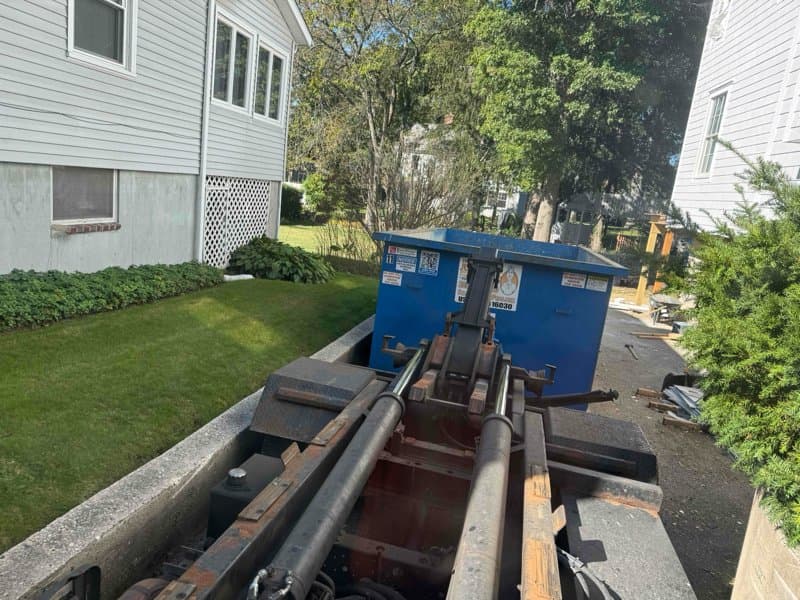
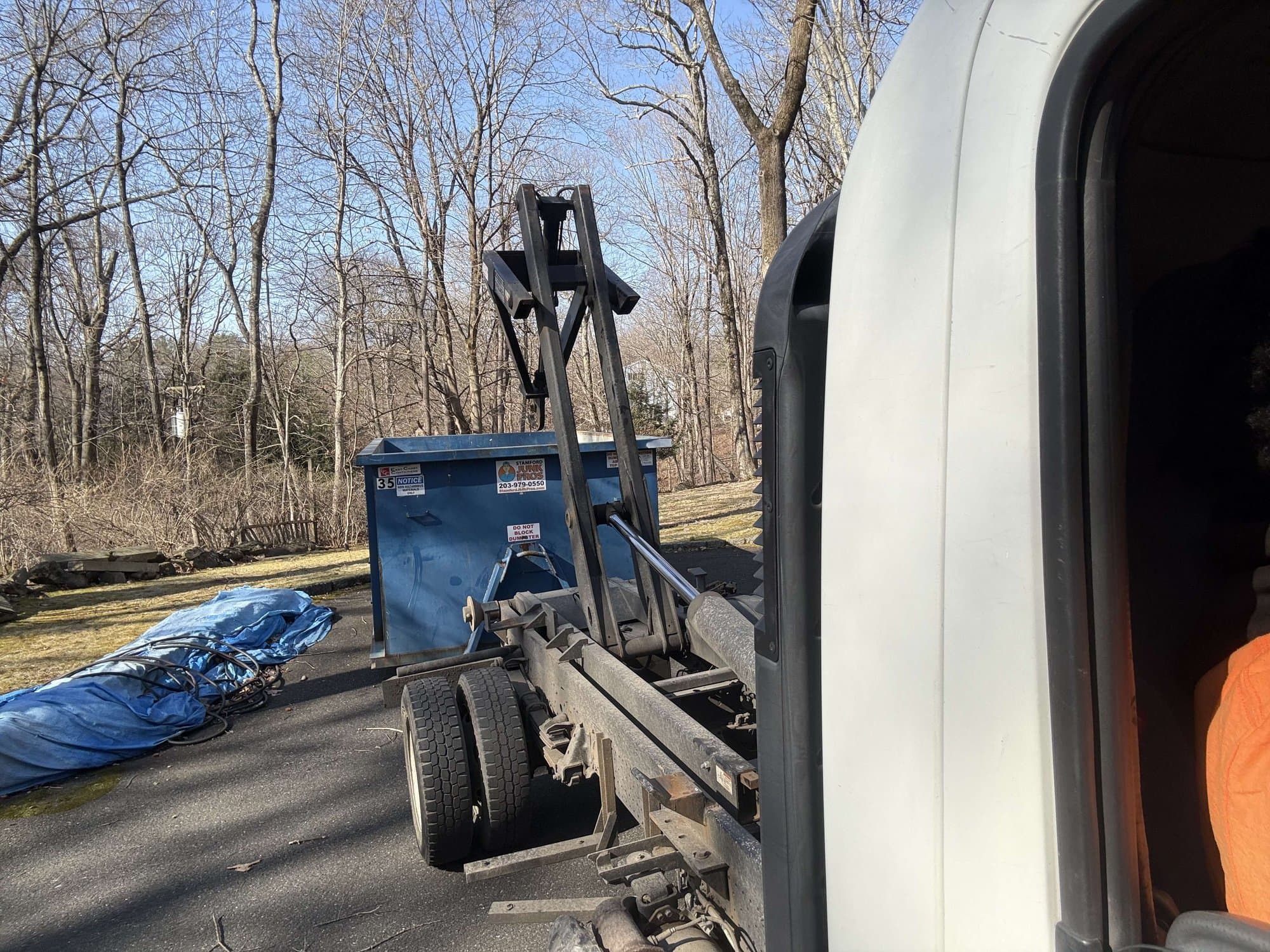
Here's the structural fact behind this whole arrangement: demolition companies rent their roll-off containers from someone. Grizzly owns a hundred identical cans, staged out of two Connecticut yards and dispatched by the same people who answered your first phone call. Debris volume — not the teardown — is the part of your project Grizzly controls end to end.
On a garage that matters more than most people expect, because a garage is genuinely heavy. Asphalt roofing weighs far more than its area suggests, and a doubled-up roof means two roofs' worth of tonnage came down with one building. Plaster interiors, block half-walls, and a decade of stored contents all add to it. The usual debris package is our 20-yard tier, swapped as it fills, at the posted rates published across this site — a size on our fleet is the weight allowance you book, not a different steel box, so the container plan flexes with the debris instead of the debris waiting on the container.
No third hauler in the middle. No markup on somebody else's fleet. When the demolition schedule moves, the cans move with it. The longer version of what drives a garage number up or down — slab, utilities, permit, roof layers — is laid out in our garage demolition cost guide.
Garage past saving?
One call sets up both halves — the partner quotes the demolition, Grizzly quotes the dumpsters.
Where a garage goes when it's gone
Three streams leave the property, and only one of them surprises people.
The mixed construction debris — framing, sheathing, siding, interior finish, and the roof that made up most of the weight — rides out in our own dumpsters to licensed Connecticut transfer stations. That's the bulk of it, and it's the stream the posted rates cover.
Metal is the second stream, and it earns its keep. Garage doors, tracks, opener rails, and steel roofing get pulled aside as the structure comes apart and leave as scrap recycling instead of paid disposal weight.
The third stream never touches a can of ours. Concrete stays or routes on the partner's plan. Paint, oil, fuel, and the rest of the shelf above the workbench go through your town's household-hazardous-waste collection — flag them at intake and clear them before demolition day so nothing stalls the schedule.
Garage demolition FAQs
Does Grizzly take the garage down?
No, and we'd rather say it plainly than blur it. A detached garage is a real building, and the teardown is coordinated through our licensed demolition partner — a licensed, insured demolition contractor who walks the structure, quotes the work, and contracts it with you directly. What Grizzly runs end to end is the debris: every load goes out in our own dumpsters at the same posted rates every customer on this site sees.
Do I need a permit to demolish a detached garage?
Almost always yes — a detached garage is the accessory structure most likely to need a demolition permit, because every CT building department treats it as a real building on the records. The permit sequence is part of what the partner walks you through as they contract the job, and one call to your building department settles what your address needs.
What about the slab?
The structure goes; the slab stays unless slab removal is written into the partner's scope. Concrete never rides in Grizzly's cans — broken slab is dense clean-fill material with its own stream and its own hauler. Most owners keep the pad as parking, a patio base, or the footprint for whatever replaces the garage.
The garage still has electricity — is that a problem?
It has to be dead before demolition starts — disconnected at the panel by a licensed electrician, not just switched off at the garage. Most detached garages are fed from the house panel by a buried or overhead run, and that disconnect gets confirmed, never assumed. Same rule for any water or gas line that ever crossed the yard.
The garage is packed to the rafters — do I have to empty it first?
No, and this part is squarely Grizzly's own work. Clearing the contents is junk removal, which our teams run every day — same visit or the day before, quoted by volume. Pull out what you're keeping and leave the rest. Paint, oil, and fuel are the exception: those route through your town's hazardous-waste program rather than any truck of ours.
Why route a garage demolition through a dumpster company?
Because debris is most of a garage job's logistics, and it's the half we own outright. Demolition contractors rent their roll-offs from someone; Grizzly owns a hundred, staged out of two Connecticut yards. One call sets up the partner's teardown quote and the container pipeline at once, and you get two clean numbers instead of one blended one.
Are attached garages handled too?
They're a bigger conversation, not a flat no. An attached garage shares the house envelope, so removing it means framing, flashing, and weatherproofing work behind the demolition — a scope the partner reads on site and quotes honestly, sometimes alongside a general contractor. Detached or attached, the debris side is ours either way.
The garage sits right on the property line — is that an issue?
It's a conversation before it's an issue. Tell the neighbor it's coming down: staging on a zero-setback garage sometimes means asking to work from their side, and that lands better as a request from you than a surprise from a contractor. Tight lot lines are exactly the kind of constraint the partner's site walk exists to settle, and can placement gets planned in the same conversation.
What makes a garage demolition cost more?
Second stories and packed contents, mostly. A garage with a loft adds nearly another structure's worth of framing and debris. Shingle layers matter too — a roof carrying two or three generations of asphalt weighs far more than most people guess, and weight is what the disposal side runs on. Access for can placement rounds out the list.
Can Grizzly clear the garage out before demolition day?
Yes — that half is ours outright. Emptying a garage is junk removal, which Grizzly's own teams run every day: the lawn equipment that stopped running, the lumber pile, the boxes that moved in when the car moved out. Clearing it first also makes the partner's walk-through more accurate, because nobody is quoting a structure they can only see half of.
Related pages
- Demolition overview — the full two-track picture: what Grizzly takes down itself, and what runs through the partner
- Garage demolition cost guide — slab, utilities, and permit, long form
- Garage cleanouts — when the garage stays and only the clutter goes
- Barn & outbuilding demolition — similar scale, plus the transite screening story
- Shed removal — the smaller cousin, and work Grizzly self-performs
- House demolition — when the garage isn't the only structure coming down
- 20-yard dumpster rental — the debris workhorse, and the DIY option if you're swinging the hammer yourself
Garage Demolition by county
The job changes with the ground it sits on. Each county page covers access, housing stock, and the drive from our yard.
Request a garage demolition quote
Call (203) 219-8855 or send the demolition quote form with the address and rough scope. The partner contracts the teardown directly; the debris line is ours at posted rates. Phones answered 8 AM – 10 PM, 7 days; live team Mon–Fri 8 AM – 4 PM, AI phone assistant other times.