Grizzly Junk Pros · Family-owned since 2014 · 4.99 ★ × 463 reviews · 20,000+ jobs
House Demolition in Connecticut
Full residential teardowns, coordinated through our licensed demolition partner — the partner quotes and contracts the demolition, and every load of debris goes out in our own dumpsters.
20,000+
jobs completed
4.99 ★
463 reviews
Family-owned
since 2014 (12 years)
Licensed & insured
in Connecticut & New York
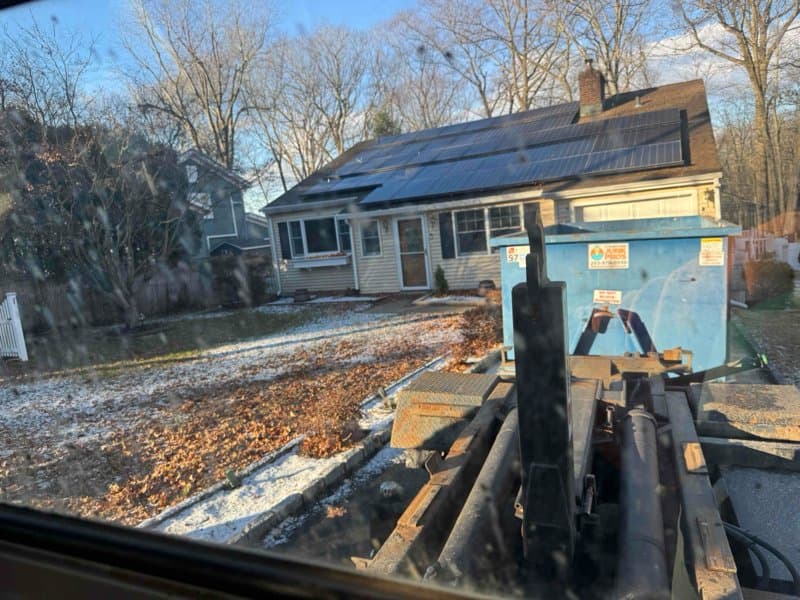
A house teardown is really two jobs wearing one name. The first is the machine work — the excavator, the operator who knows how a structure wants to fall, the licensing and insurance that let a building legally come down. The second job is the one almost nobody thinks about until it's the bottleneck: moving a house's worth of debris off the property, load after load, without the site stalling around a full container.
We'll be plain about who does which. Grizzly does not perform full house demolition. The teardown itself is coordinated through our licensed demolition partner, who walks the property, quotes the demolition, and contracts it with you directly. What Grizzly runs — start to finish, first can to last — is the debris. Every load goes out in our own dumpsters, placed and swapped on the demolition schedule, at the same posted rates every customer on this site sees.
Why route it through a hauler at all? Because debris is most of a demolition's logistics, and it's the half we're built for. One call sets up both halves instead of leaving you to broker between a demolition contractor and whoever they rent containers from.
How the referral works
Three steps, two contracts, no mystery about who you're paying for what.
- You bring us the project. Call (203) 219-8855 or send the demolition quote form — address, what's coming down, whether it's a full teardown or a section, and your rough timeline. Photos help; text them to the same number.
- The partner quotes and contracts the demolition directly. A licensed, insured demolition contractor scopes the teardown — full or partial, salvage strip-out, foundation questions — and puts the demolition price and contract in front of you under their own name. That paper is between you and them, which is how a referral should look.
- Grizzly runs the debris. Cans placed before the first machine day, swapped as they fill, hauled at our posted rates on a line item that's plainly ours. The demolition schedule drives the container schedule, not the other way around.
You end up with two clean numbers instead of one blended one — the teardown from the contractor who performs it, the debris from the fleet that hauls it. If either half doesn't make sense to you, you can see exactly which half to question.
What happens before a teardown
No house in Connecticut comes down on enthusiasm alone. Three things precede every demolition, in roughly this order, and the partner walks owners through the sequence as part of contracting:
The demolition permit. The town issues it, and nothing moves until it exists. Requirements and paperwork are the town's own — the building department is the authority on what your address needs.
Utility disconnects, confirmed by each utility. Electric, gas, water, sewer or septic, and any service that ever crossed the property line to the house — each disconnect is confirmed by the utility itself, not assumed. A teardown with a live service anywhere in the structure is a teardown that doesn't start.
The asbestos survey. Older housing stock gets surveyed before demolition, and if the survey finds asbestos-containing material, licensed abatement happens first — a specialist trade with its own certifications, and the debris from it never rides in a standard C&D can. Demolition follows the abatement clearance, not the other way around.
None of this is optional and none of it is a surprise once you've seen the sequence written down. It's process, and the partner has run it many times.
Full teardowns and partial ones
"House demolition" covers more than the clean-slate lot. The projects that come through this page:
- Whole-house demolition — the full teardown, structure to foundation, typically ahead of a rebuild.
- Teardown to the foundation — structure gone, foundation kept for the new build where the engineering supports it.
- Partial demolition — a wing, an addition that never should have happened, a fire- or water-damaged section removed so the rest of the house can be saved. The partner scopes where the cut line can honestly go.
- Residential demolition ahead of a lot sale — some lots are worth more empty, and a home demolition is the last project the property sees.
Two neighbors this page hands off to: if the structure is staying and the inside is what's coming out — kitchens, walls, a full gut — that's interior demolition, its own coordinated service. And if the "house" is a manufactured home on a chassis, the job runs differently enough to have its own page.
The part Grizzly controls end to end
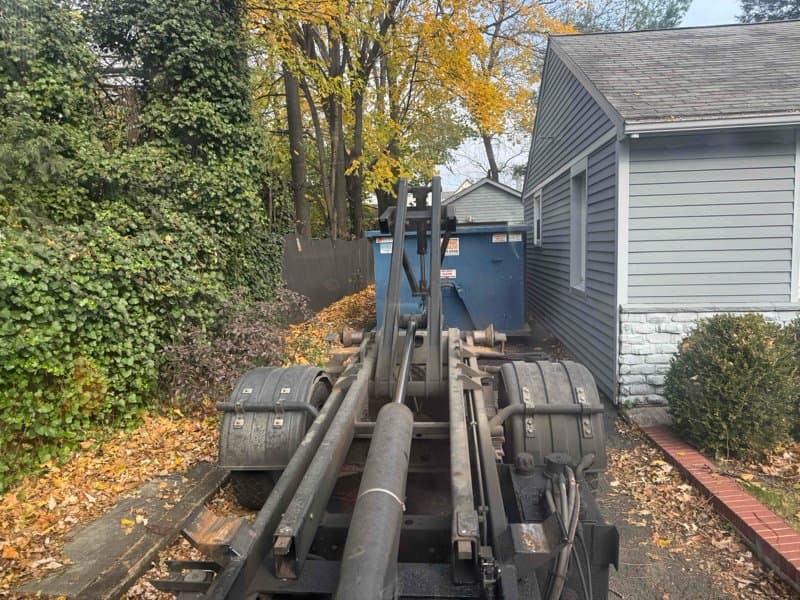
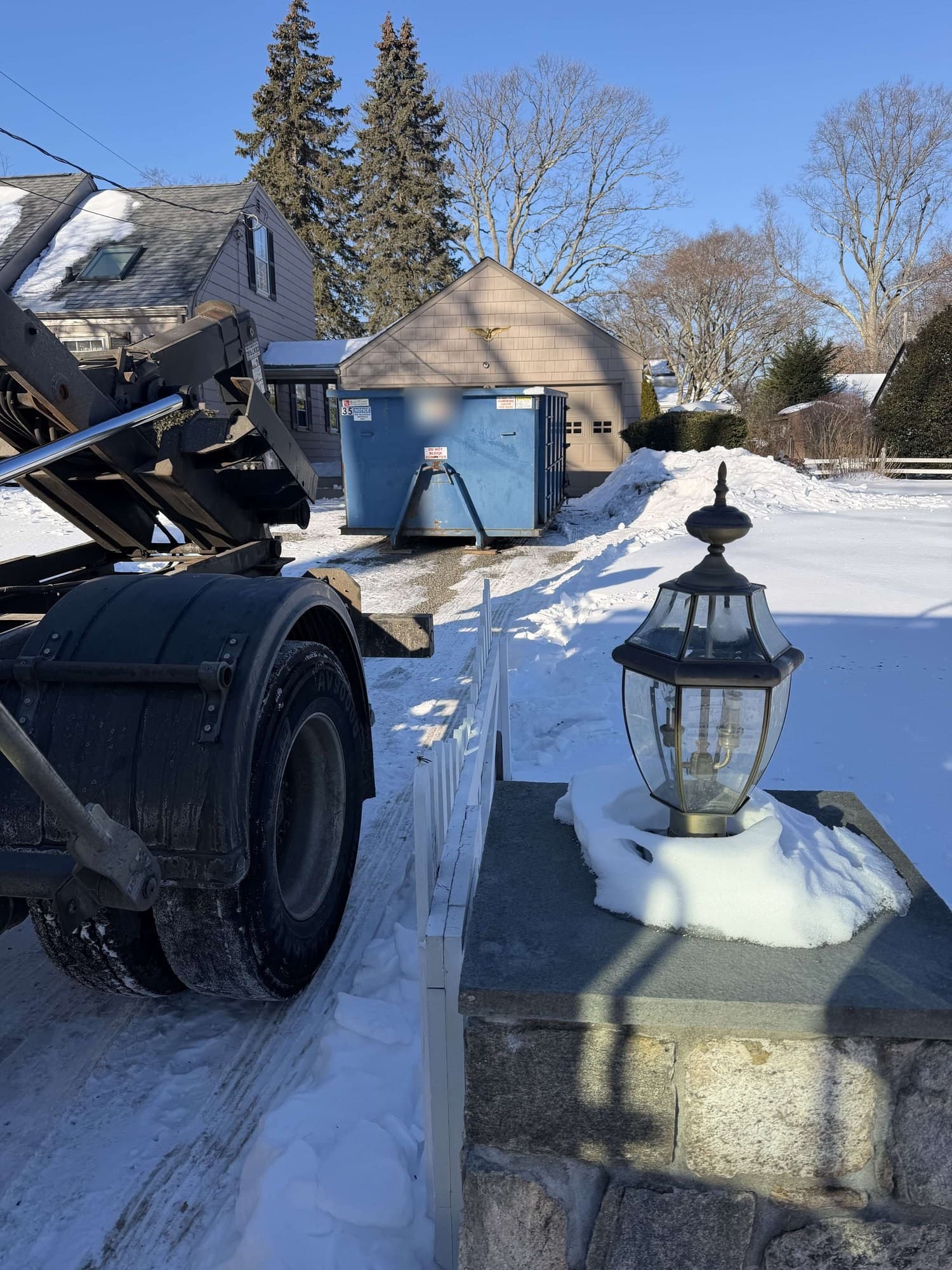
Here's the structural fact behind this whole arrangement: demolition companies rent their roll-offs from someone. Grizzly owns a hundred — roll-off cans on one 15-by-8-foot footprint, staged out of two Connecticut yards. Debris volume, not the teardown, is the part of your project Grizzly controls end to end.
On a house job that matters more than anywhere else, because a teardown produces debris faster than any other residential project. The usual package is our 30/40-yard tier — delivered as two identical 20-yard cans, side by side or one-swapped-for-the-next as the machine works — at $899 with 6,000 pounds included per package and our posted $0.10/lb rate past that. A "size" on our fleet is the weight allowance you book, not a different steel box, so the container plan flexes with the debris instead of the debris waiting on the container.
No third hauler in the middle. No markup on somebody else's fleet. When the demolition schedule moves, the cans move with it, because the dispatcher and the fleet are the same phone number you started with.
How many loads does a house produce? Honest answer: it depends on the house — size, construction era, how much gets stripped for salvage first. The math is laid out load by load in our house demolition cost guide, and the per-project quote states the debris line plainly before anything is scheduled.
Strip it before you crush it
The cheapest mistake to avoid on a teardown is demolishing things that were worth money standing still. Before the machine day, most projects run a strip-out pass: contents and furniture out (that's a Grizzly junk-removal visit, our own service), then whatever the owner wants saved — fixtures, appliances that still run, hardwood worth pulling, doors and mantels with resale life, copper where it's accessible. What gets stripped is one of the levers on the debris math, too: a house emptied of its heavy salvage produces fewer loads than one demolished full.
We're haulers, not salvage brokers, so we won't appraise your mantel — but the sequence is worth planning in the first call, because once the permit-and-disconnect clock starts, salvage days are the easiest thing to run out of. Flag what you want saved early and both halves of the project can plan around it.
Have a teardown in mind?
One call sets up both halves — the partner quotes the demolition, Grizzly quotes the dumpsters.
House demolition FAQs
Does Grizzly demolish the house?
No — and we say that plainly. Full teardowns are coordinated through our licensed demolition partner, who quotes and contracts the demolition directly. What Grizzly controls end to end is the debris: every load goes out in our own dumpsters, on our schedule, at our posted rates.
Why route a demolition through a dumpster company at all?
Because debris is most of a demolition's logistics. Demolition companies rent roll-offs from someone; Grizzly owns a hundred. One call gets the teardown coordinated and the container pipeline guaranteed — no third hauler in the middle marking up cans.
What has to happen before a house comes down?
A demolition permit from the town, utility disconnects confirmed by each utility, and — on older housing stock — an asbestos survey, with licensed abatement before demolition if the survey finds it. The partner walks the owner through that sequence as part of contracting; none of it is optional and none of it is skippable.
How many dumpsters does a house teardown generate?
House size, construction type, and how much gets stripped for salvage first all move the number — which is why loads are quoted per project at our posted rates rather than guessed here. The honest version of the math lives in our house demolition cost guide.
Who do I actually contract with?
The demolition contract is with the partner — a licensed, insured demolition contractor. The dumpster line is Grizzly's. You'll see both, plainly separated, which is how a referral should look on paper.
Can part of the house be saved?
Partial demolition — taking a wing, a fire-damaged section, or everything to the foundation — is common and the partner scopes it. Where a project is really interior gut work rather than structural teardown, that's its own service and its own page.
How long does the whole process take?
The paperwork outlasts the machines. Permits, utility disconnects, and any required asbestos work are measured in weeks; the teardown itself, once cleared, is measured in days on most single-family houses. The partner sets the demolition timeline in its contract, and our can swaps run on that schedule so debris never becomes the bottleneck.
Should the house be emptied before demolition?
Yes, and this is the part Grizzly self-performs. A whole-home cleanout before the machines arrive — furniture, appliances, everything the family isn't keeping — is our own service, done by our own teams. It also lets salvageable material come out as salvage instead of getting crushed into the C&D stream, which the disposal math rewards.
Can a house come down in winter?
Yes — excavators don't mind the cold, and frozen ground can be kinder to a site than mud season. What actually paces a winter teardown is the same thing that paces one in June: permits and disconnects. If a spring build is the goal, starting the paperwork in fall is the honest advice.
Can Grizzly clear out the house before demolition?
Yes — that part is squarely ours. Pre-demolition cleanouts are junk removal, which Grizzly's own teams run every day: furniture, contents, the basement and attic backlog, all out before the machines arrive. Clearing the house first also makes the asbestos survey and any salvage decisions easier, so it's usually the first thing scheduled.
Related pages
- Demolition overview — the full two-track picture: what Grizzly takes down itself, and what runs through the partner
- House demolition cost guide — what drives a teardown's number, debris math included
- Interior demolition — when the structure stays and the inside goes
- Mobile home demolition — teardown-in-place for manufactured homes
- In-ground pool removal — often on the same property, sometimes the same project
- Commercial demolition — the same coordination for commercial buildings
- 30/40-yard dumpster package — the two-can debris workhorse for teardowns
House Demolition by county
The job changes with the ground it sits on. Each county page covers access, housing stock, and the drive from our yard.
Request a house demolition quote
Call (203) 219-8855 or send the demolition quote form with the address and rough scope. The partner contracts the teardown directly; the debris line is ours at posted rates. Phones answered 8 AM – 10 PM, 7 days; live team Mon–Fri 8 AM – 4 PM, AI phone assistant other times.