Grizzly Junk Pros · Family-owned since 2014 · 4.99 ★ × 463 reviews · 20,000+ jobs
Commercial Demolition in Connecticut
Teardowns and strip-outs, coordinated through our licensed demolition partner — the partner contracts the demolition directly, and every load of debris goes out in our own dumpsters.
20,000+
jobs completed
4.99 ★
463 reviews
Family-owned
since 2014 (12 years)
Licensed & insured
in Connecticut & New York
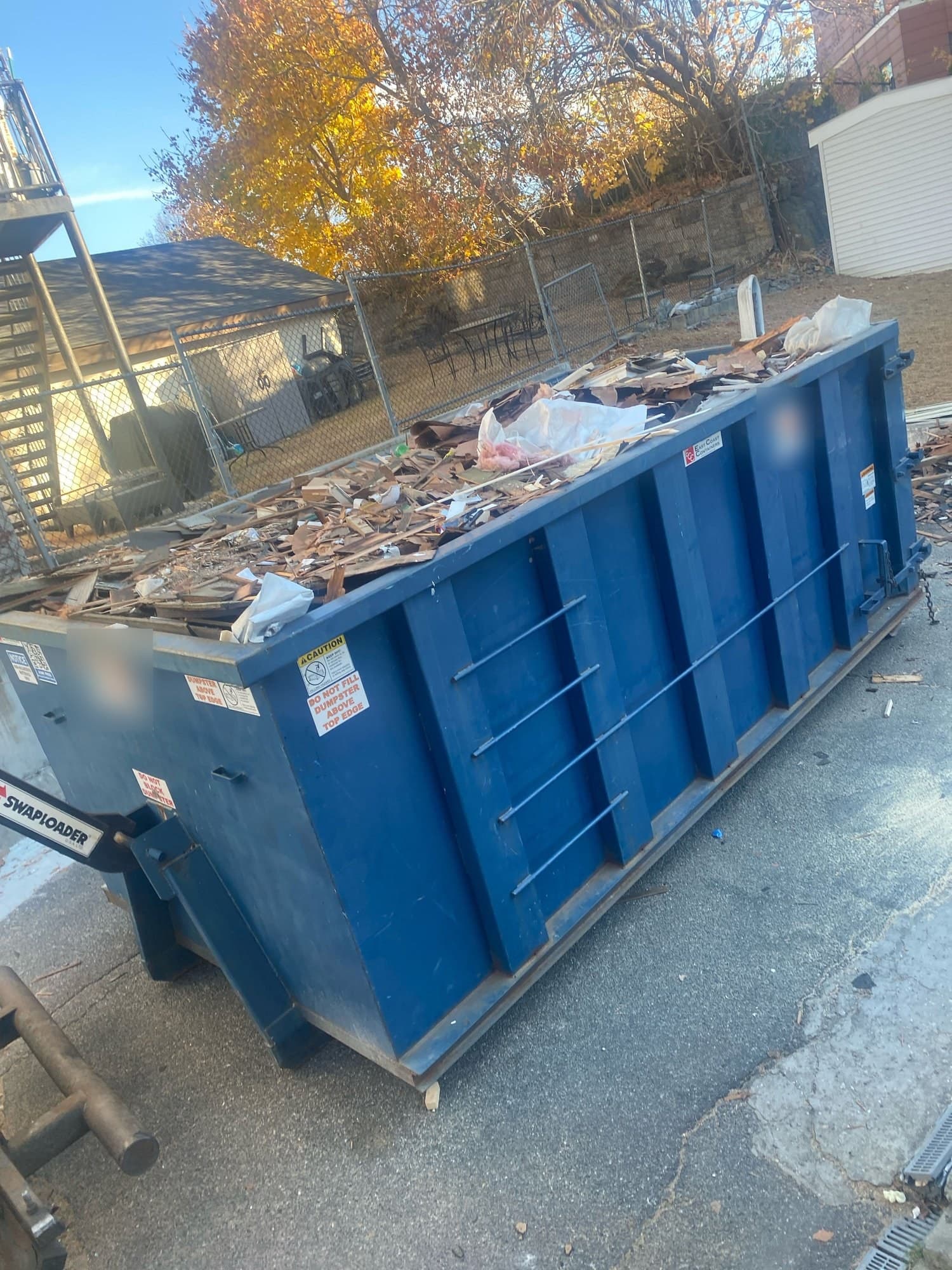
On a commercial demo project, the schedule is the product. A strip-out that finishes Friday instead of the following Wednesday is worth real money to a GC holding a fit-out timeline, and the thing that most often decides which Friday you get isn't the demo labor — it's whether there's an empty container on site when the full one needs to leave.
So here's the arrangement, stated the way we'd want it stated to us. The demolition itself — teardown, strip-out, structural work — is coordinated through our licensed demolition partner, a licensed and insured demolition contractor who scopes, quotes, and contracts the work with you directly. Grizzly does not perform commercial demolition. What Grizzly brings is the debris pipeline: every load goes out in our own dumpsters, dispatched from our own two yards, on your project's schedule. That's the half of commercial demo we already run daily for Connecticut contractors, and it's the half where owning the fleet — not renting it — shows up on your timeline.
The project types that fit
- Tenant fit-out and strip-out demolition — retail and office space taken back to shell between tenants: partitions, ceilings, flooring, storefront elements, casework.
- Retail de-brandings — the fixture, signage, and finish package removed on a changeover, often on nights-and-weekends phasing.
- Small commercial building teardowns — freestanding commercial structures coming down ahead of redevelopment.
- Decommissioning work — a space stripped of equipment and finishes at lease end, documented the way a landlord expects.
Where a project is really a cleanout — contents, inventory, furniture, the accumulation of a business's tenancy rather than the building itself — that's Grizzly's own service line, quoted separately and often scheduled first: see commercial cleanouts and the industry pages under it. Plenty of projects run both phases back to back, cleanout then strip-out, with one point of contact across the seam.
On hazardous materials: surveys and abatement are licensed-specialist work that precedes demolition, stated plainly in the partner's scope. Nothing hazardous rides in our cans — the C&D stream we haul is the post-abatement debris.
How the coordination runs
- Scope call. (203) 219-8855 or the demolition quote form — square footage, project type, phasing constraints, target dates. Plans or photos to the same number move it faster.
- The partner prices the demolition. Directly, under their own contract, license, and insurance — including containment and sequencing where the building stays partially occupied. Their number is theirs; you negotiate it with them.
- Grizzly prices the debris pipeline. Container count, swap cadence, and placement mapped to the phasing plan, at the posted rates on this site. That line item is ours and reads like every other Grizzly invoice.
- The project runs. Cans land before demo day, swaps track the pace of the work, and the last container leaves with the punch-list sweep.
Two contracts, one coordinated schedule. The GC-grade version of "no surprises."
A hundred cans is the pitch
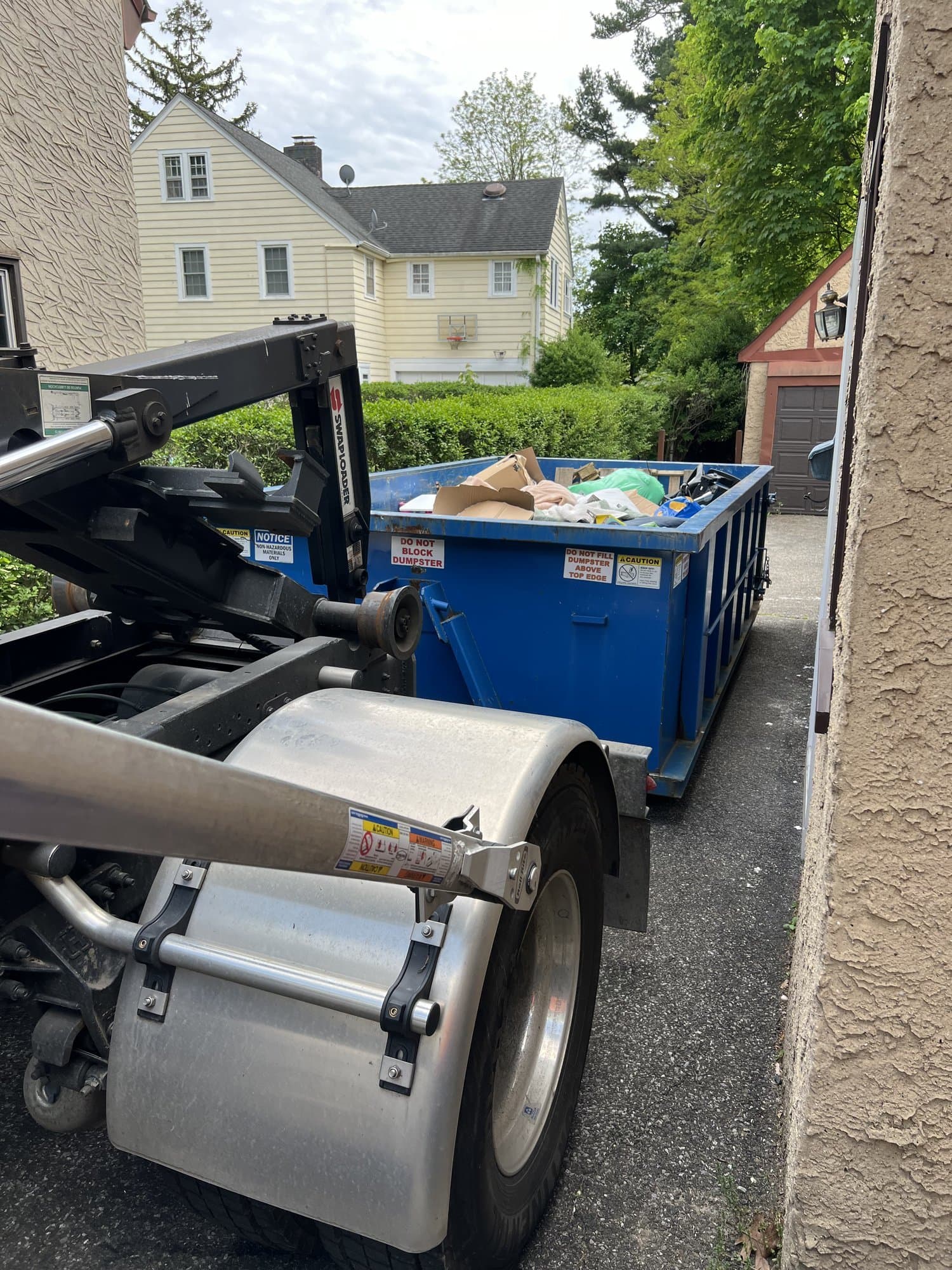
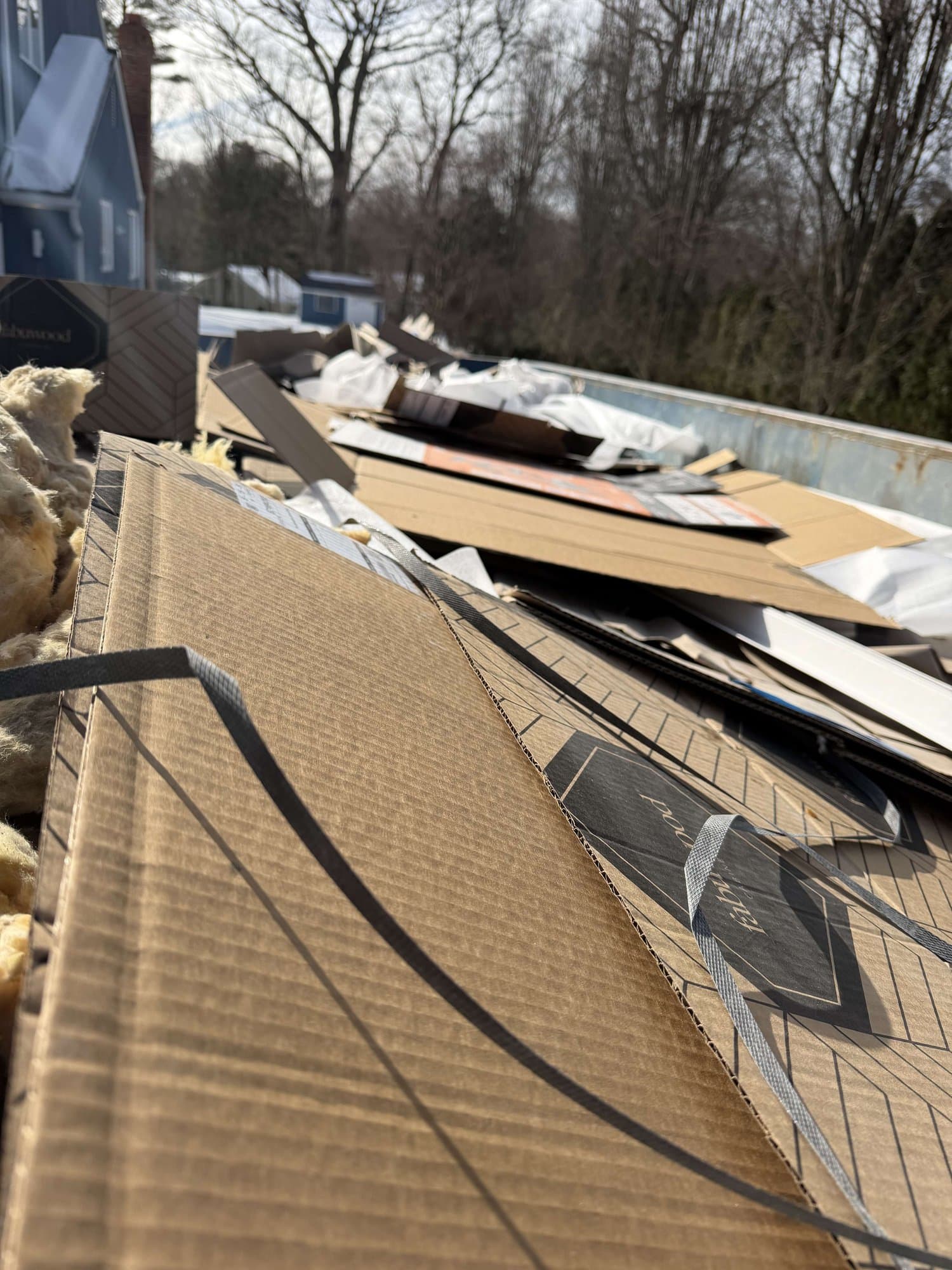
Commercial demo lives and dies on container logistics, so judge the arrangement on that. Demolition companies rent their roll-offs from a container supplier; Grizzly owns a hundred identical 20-yard cans, staged from two Connecticut yards, dispatched by the people who answered your first call. Debris volume — placement, swap timing, weight math — is the part of the project Grizzly controls end to end, with no third company's availability between your schedule and the site.
High-volume phases usually book the 30/40-yard package at $899 — delivered as two identical 20-yard cans, run side by side or in rotation so a full container never idles the demo — with 6,000 pounds included and the posted $0.10/lb rate past the allowance. Every can on the fleet shares the same 15-foot footprint; a "size" is the wall height and weight allowance you book, which is the pricing structure that makes sense on mixed commercial debris. Rates, allowances, and terms sit published on this site where your estimator can check them — up-front pricing is the account structure, not a promotional claim.
For recurring relationships — PMs and GCs with a project pipeline — the same account setup our commercial dumpster customers use applies here: one contact, posted rates, fleet depth that means your project doesn't wait on a can.
For the estimator building the bid
What makes the debris line easy to plug into a bid: the rates are published, the container spec is uniform, and the terms don't move per project. Every can on the fleet shares the same 15-foot footprint, so site-logistics questions — will it fit the loading dock apron, how many can stage in the lane — get answered once and hold for every swap. Weight allowances and overage terms sit on the size pages exactly as they'll appear on the invoice, which means the debris line in your estimate can be real numbers instead of an allowance you pad and hope on.
What we need from you to price it: project type, square footage, debris character (strip-out light versus plaster-and-masonry heavy), phasing, and where cans can physically sit. From there the pipeline gets mapped to your schedule, and the partner's demolition quote arrives under separate cover the way your GC paperwork wants it.
Project going out to bid?
The partner prices the demolition; Grizzly prices the container pipeline at posted rates. One call scopes both.
Commercial demolition FAQs
What kinds of commercial projects fit here?
Tenant fit-out strip-outs, retail de-brandings, small commercial building teardowns, and decommissioning work. The demolition is coordinated through our licensed demolition partner; the debris logistics are the part Grizzly already runs daily for CT contractors.
Why involve Grizzly instead of calling a demolition company directly?
You can, and they'll rent their roll-offs from somebody. Grizzly owns a hundred cans and two yards — which means the container pipeline on your project is first-party, not a markup on someone else's fleet. That's the whole pitch, stated as fact.
Can you support a phased or occupied-building project?
Phased strip-outs with the building partially occupied are normal commercial work — the partner scopes containment and sequencing, and our cans get placed and swapped around the phasing plan.
Who handles hazardous materials on commercial jobs?
Surveys and abatement are licensed-specialist work that precedes demolition, and the partner's scope states it plainly. Nothing hazardous rides in our cans — the C&D stream we haul is the post-abatement debris.
Do you work with GCs and property managers on recurring projects?
Yes — the same account structure our commercial dumpster customers use applies here. One contact, posted rates, and a fleet big enough that your project doesn't wait on a can.
What happens when the demo schedule slips — do the containers slip with it?
Yes, because the dispatcher and the fleet are the same company. A rain week, a late abatement clearance, a landlord who moves the start date — the cans reschedule with one call instead of a rebooking fee negotiation with a third-party rental desk. Fleet depth is what makes that flexibility real rather than a promise.
Related pages
- Demolition overview — the two-track removal and demolition menu in full
- Interior demolition — the residential-scale version of strip-out work
- House demolition — full residential teardowns through the same coordination
- Mobile home demolition — manufactured-home teardowns
- In-ground pool removal — excavation-class residential work
- Commercial services — cleanouts and dumpster programs Grizzly runs first-party
- Commercial dumpster rental for contractors — the debris pipeline as its own service
- 30/40-yard dumpster package — the two-can, high-volume package
Request a commercial demolition quote
Call (203) 219-8855 or send the demolition quote form with the project type, square footage, and phasing. The partner contracts the demolition; the debris pipeline is Grizzly's at posted rates. Phones answered 8 AM – 10 PM, 7 days; live team Mon–Fri 8 AM – 4 PM, AI phone assistant other times.