Grizzly Junk Pros · Family-owned since 2014 · 4.99 ★ × 463 reviews · 20,000+ jobs
In-Ground Pool Removal in Connecticut
Pool demolition and fill-in, coordinated through our licensed demolition partner — the partner contracts the excavation directly, and every load of debris goes out in our own dumpsters.
20,000+
jobs completed
4.99 ★
463 reviews
Family-owned
since 2014 (12 years)
Licensed & insured
in Connecticut & New York
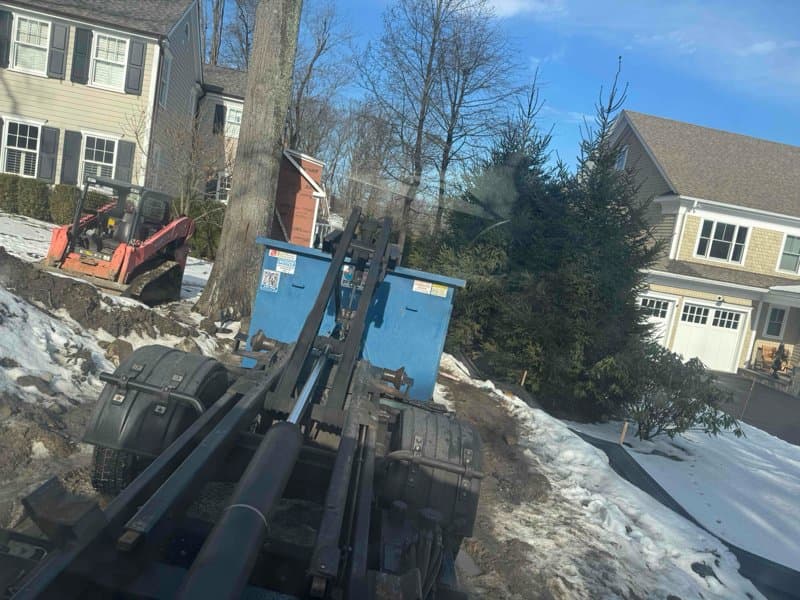
Every in-ground pool in Connecticut eventually presents its owner with the same math: the heater fails, the liner goes, the kids move out, and the thing costs more per summer than it gives back. At that point the pool stops being a pool and becomes a hole in the yard with strong opinions about your homeowner's insurance.
Getting rid of it is excavation work — breaking or collapsing the shell, managing fill, compacting in lifts so the ground doesn't settle into a pool-shaped dent two winters later. That is not hand-tool territory, and we won't pretend it is. In-ground pool demolition is coordinated through our licensed demolition partner, who scopes the job, quotes it, and contracts it with you directly. And every load of debris that isn't clean fill goes out in our own dumpsters — the half of the project Grizzly runs end to end.
If your pool sits above grade with steel or resin walls, stop reading here: above-ground pool removal is work Grizzly takes on in-house, and it's a different page with different math. This page is for the dug-in kind.
Partial fill-in versus full removal
The first real decision on any in-ground pool project, and the one the partner scopes before quoting:
Partial removal and fill-in — the common route. The top portion of the shell is demolished, the bottom is broken or punched for drainage, and the hole is filled and compacted. Less material leaves the property, so it's the less expensive path, and for a yard that's going back to lawn it's usually the right one.
Full removal — every piece of the shell comes out before filling. It costs more and takes longer, and it matters most when the future plan involves building over the footprint, where leftover shell material becomes somebody's expensive surprise.
The material changes the work too. A gunite or concrete pool is a demolition project in the literal sense — the shell has to be broken. A vinyl-liner pool gives up its liner and plumbing easily, but the walls and any concrete decking still have to come apart and come out. Either way the phrase on the estimate might read "pool fill-in," "pool demolition," or "pool removal" — same family of project, scoped honestly per property.
One caveat worth hearing before you commit, not after: many towns record a filled pool on the property file, and building later over a partial fill has rules. Ask the partner to put the fill spec in writing. A future buyer's inspector will thank you.
Who does what on a pool job
- The partner: everything below grade. Shell demolition, excavation, fill, compaction, and the permit conversation with your town — quoted and contracted directly under the partner's own license and insurance. That contract is between you and them, and it should be.
- Grizzly: everything that rides in a can. Concrete decking tear-out where it's in scope, the pool equipment (heater, pump, filter, plumbing runs), fencing, and the general C&D stream the project throws off — placed, swapped, and hauled in our own dumpsters at posted rates. Clean concrete and fill route the way the partner's excavation plan dictates; the mixed debris is ours.
- You: one starting phone call. (203) 219-8855, or the demolition quote form. We collect the project details, the partner takes the demolition scope from there, and the dumpster line shows up under Grizzly's name at the same rates published all over this site.
Two clear contracts beat one blurry one. You'll always be able to see which number is the excavation and which number is the debris.
Why the debris side runs through Grizzly
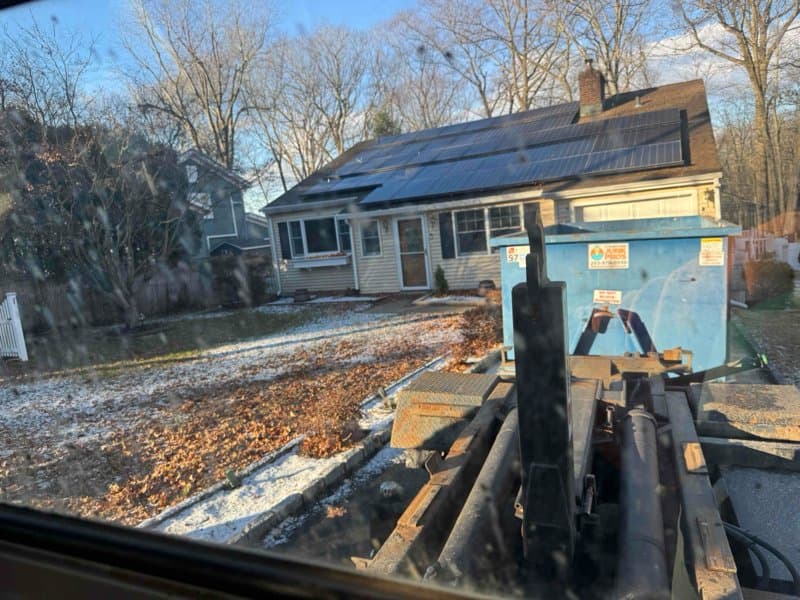
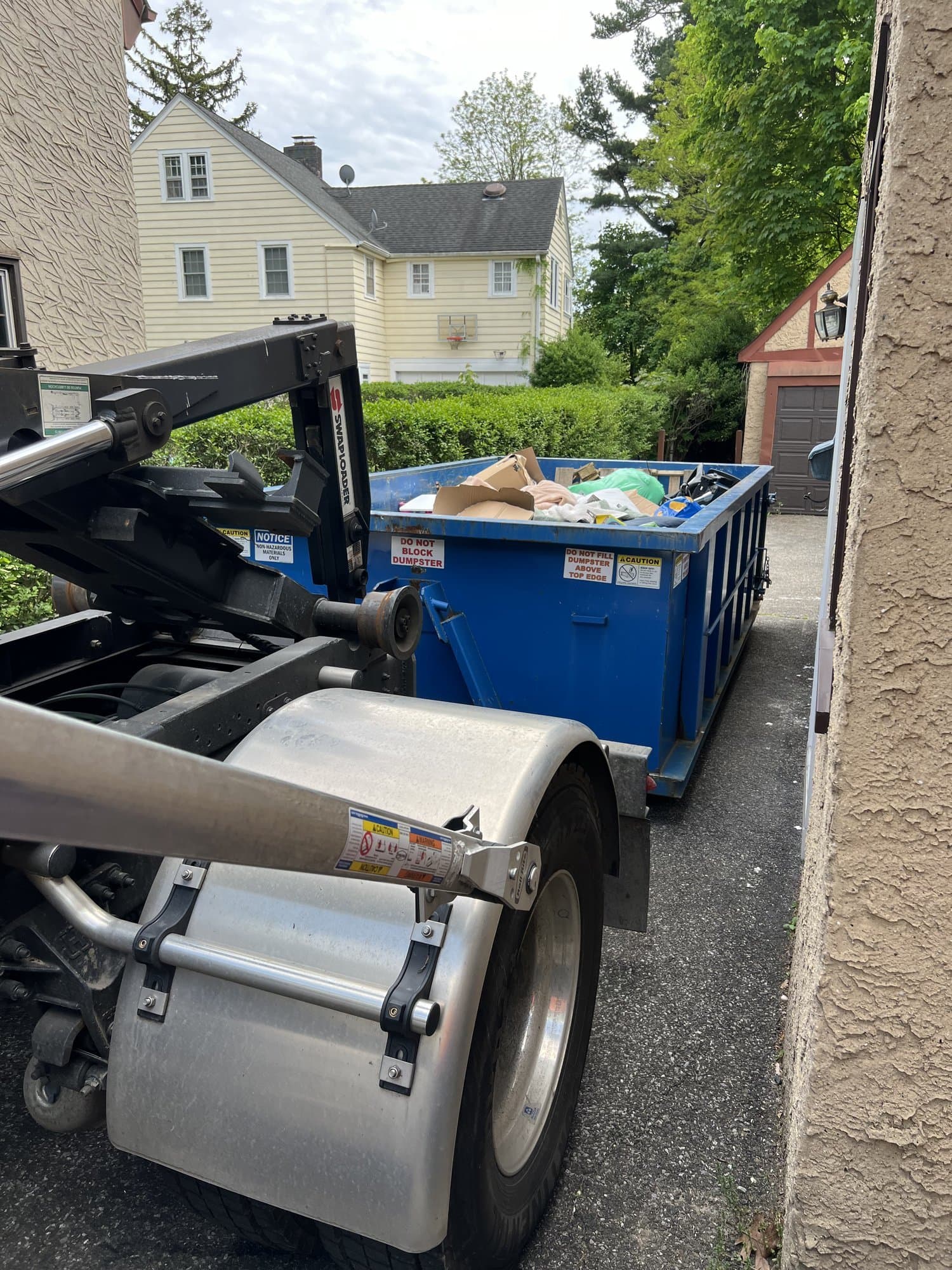
A plain industry fact: demolition and excavation companies rent their roll-off containers from someone. Grizzly owns a hundred of them — identical 20-yard cans, staged from two Connecticut yards, dispatched by the same people who take the first phone call. The teardown is the partner's craft; debris volume is the part Grizzly controls end to end, and on a pool job the debris side has real texture: decking one week, equipment and fence the next, all on the excavation timeline.
The workhorse here is our 20-yard can at $647 with 4,000 pounds included and $0.10/lb past that — and because every can in the fleet is the same physical box, a "size" is just the weight allowance you book. Pool-adjacent debris runs heavy (wet decking, tile, old equipment), so the weight math gets stated up front rather than discovered on the scale ticket.
For the full cost picture — partial versus full, what moves an excavation quote, and the debris math underneath it — our in-ground pool removal cost guide lays it out in long form.
Sometimes the pool isn't actually done
Fair is fair: not every failing pool needs to die. A sound shell with a dead heater, a torn liner, or a tired pump is a repair conversation with a pool company, and repair usually costs less than removal. Where removal wins is when the shell itself has failed — cracking gunite, walls moving with frost, chronic leaks nobody can find — or when the honest accounting says you're paying four figures a year to maintain something used four weekends a summer. Run that math before calling anyone, us included.
And if what you're really staring down is an abandoned pool that's been sitting green behind a sagging fence since the last owner: those are the calls where removal stops being optional and starts being the responsible move. An unmaintained in-ground pool is a liability with a diving board, and the town generally agrees.
Done owning the pool?
The partner quotes the excavation and fill; Grizzly quotes the dumpsters. One call starts both.
What the yard becomes
A properly filled and compacted pool footprint turns back into lawn — most owners seed it the same season and stop thinking about it. The fence can go or stay per your preference (pool-barrier requirements generally follow the pool, so most owners send it out with the debris). The equipment pad becomes a slab for something better, or comes out with the rest.
The honest version of "will it be like the pool was never there": mostly, yes, if the fill was done right — which is exactly why the fill spec belongs in writing. Ground that was compacted in lifts holds a swing set, a shed, a garden. Ground that was filled in one dump-and-run does not, and no part of this arrangement is interested in selling you that version.
In-ground pool removal FAQs
Is this the same as above-ground pool removal?
No. Above-ground pools are the kind Grizzly takes down in-house. An in-ground pool is excavation work — breaking or collapsing the shell, managing fill, compacting — and that's coordinated through our licensed demolition partner. The debris side is ours either way.
Full removal or partial fill-in — what's the difference?
Partial (the common route): the shell is broken up, the top portion demolished, and the hole filled and compacted. Full removal takes every piece of the shell out before filling. Full costs more and matters most when the future plan is building over the footprint. The partner scopes which one the property needs.
Does an in-ground pool removal need a permit?
Yes, in effectively every CT town — it's a demolition permit and often an electrical disconnect sign-off for the pool equipment. The partner handles the permitting conversation as part of contracting.
What does Grizzly's fleet actually do on a pool job?
The non-fill debris — decking tear-out where it's part of scope, equipment, fencing, and the C&D stream the excavation produces — moves in our cans at our posted rates. Clean concrete and fill routes the way the partner's excavation plan dictates.
Will the yard be usable after?
A properly filled and compacted pool footprint becomes lawn. The honest caveat every homeowner should hear: many towns record the filled pool on the property file, and building later over a partial fill has rules. Ask the partner to put the fill spec in writing.
How long does an in-ground pool removal take?
Once permits are in hand, most fill-ins are measured in days — machine in, shell broken or removed per the scope, hole filled and compacted in lifts. The permit and scheduling runway in front of that is longer than the dig itself. The partner gives the working timeline when it scopes the property.
Is there a season that works better for pool removal?
Drier ground helps — compaction is the whole game on a fill-in, and saturated soil compacts badly. That makes late summer and fall friendlier than mud season, though the partner schedules around ground conditions rather than the calendar. If the goal is lawn by summer, a fall removal gives the fill a winter to settle before seeding.
How does the machinery get to a backyard pool?
That's one of the first things the partner scopes on a walk-through. An excavator needs a path — commonly a fence section out and a run of protective mats across the yard. Some turf repair along the machine path is a normal part of any pool job, and it's worth asking the partner to spell out site restoration in the scope.
Anything I should handle before the work starts?
Know your yard. Where the septic and its leach field sit, where the well is, what's buried along the machine path — the partner needs all of it before an excavator moves. Keep the pool area secured until work begins, and decide early what happens to plantings in the access path. Everything else belongs to the scope.
Can Grizzly take the pool furniture, toys, and shed contents too?
Yes — that side of the yard is ours outright. Loungers, covers, ladders, the deflated flamingo collection, and the pool shed's contents are junk removal, which Grizzly's own teams handle. Most pool projects bundle a cleanout visit before the excavation phase so the partner's equipment arrives to a clear yard.
Related pages
- Demolition overview — both tracks: what Grizzly self-performs and what runs through the partner
- In-ground pool removal cost guide — partial vs. full, cost drivers, debris math
- Above-ground pool removal — the version Grizzly takes down in-house
- House demolition — full teardowns through the same partner coordination
- Interior demolition — gut-outs, coordinated the same way
- Commercial demolition — the commercial side of the partner track
- 20-yard dumpster rental — the can that hauls the pool-adjacent debris
In-Ground Pool Removal by county
The job changes with the ground it sits on. Each county page covers access, housing stock, and the drive from our yard.
Request an in-ground pool removal quote
Call (203) 219-8855 or send the demolition quote form with the pool type and rough dimensions. Partner contracts the excavation; the debris line is Grizzly's at posted rates. Phones answered 8 AM – 10 PM, 7 days; live team Mon–Fri 8 AM – 4 PM, AI phone assistant other times.