Grizzly Junk Pros · Family-owned since 2014 · 4.99 ★ × 463 reviews · 20,000+ jobs
In-Ground Pool Removal in Middlesex County, CT
Shell demolition and fill coordinated through our licensed demolition partner; the rest of the debris goes out in our own dumpsters at posted rates.
What does a river-valley yard do with a pool nobody has opened in three summers? That's the Middlesex County version of this project — pools behind valley and shoreline houses that started as seasonal places, and Middletown city-lot pools squeezed into yards that could use the square footage back. Different backyards, same conclusion: the pool costs more standing than gone.
Gone means excavation. The shell gets broken or removed, the hole filled and compacted — work coordinated through our licensed demolition partner, who scopes partial versus full removal on the property and contracts the dig with you directly. Grizzly hauls the rest: decking tear-out, the equipment pad's contents, fencing, and the C&D stream, all in our own dumpsters at the rates posted across this site.
The county's compact geography keeps the debris rhythm friendly — about 30–60 minutes from our yard, near enough that a heavy decking day doesn't strand the project waiting on a swap.
Quote-only, because the price is under the ground
An in-ground pool removal is priced by things a grid can't see from here: whether the shell is gunite or vinyl-liner, whether the property needs a partial fill-in or full shell removal, how the partner's equipment reaches the backyard, and how much fill the hole takes. Our licensed demolition partner scopes those questions on the property, quotes the excavation, and contracts it with you directly under their own license and insurance. Request a demolition quote and the intake covers both halves at once.
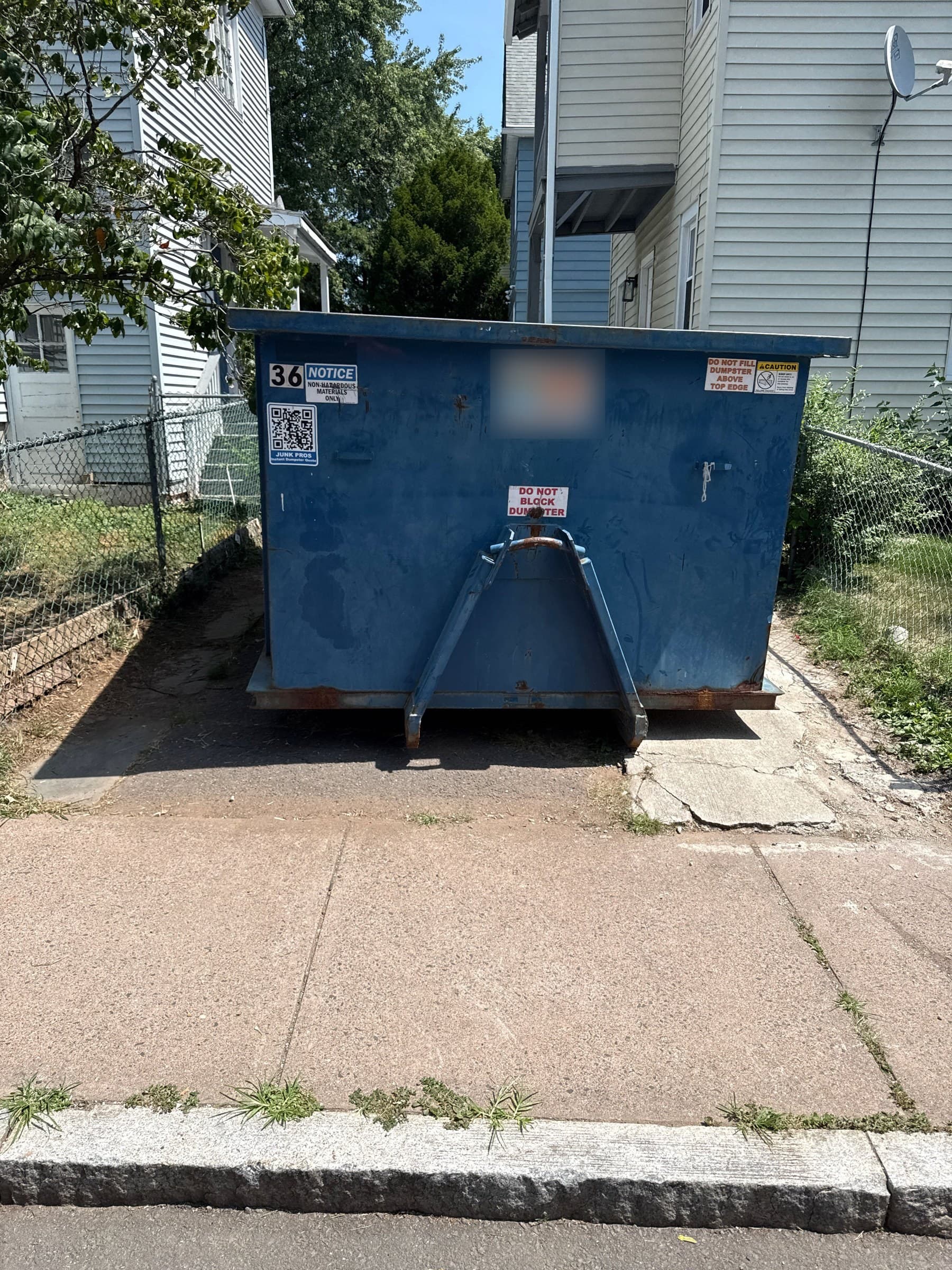
The half with posted numbers is the debris, and it runs on a plain industry fact: demolition and excavation companies rent their roll-off containers from someone. Grizzly owns a hundred roll-off cans, staged from two Connecticut yards and dispatched by the people who take the first call. Decking tear-out, old equipment, fencing, the general C&D stream a pool project throws off — that volume is the part Grizzly controls end to end, at the same rates published all over this site. No third hauler in the middle, no markup on somebody else's fleet, and two contracts you can read separately instead of one blurry number.
Two debris streams, plainly split
Everything that isn't clean fill is can work, and it goes out in Grizzly's own dumpsters at posted rates: concrete decking tear-out where it's in the partner's scope, the equipment pad's tenants — heater, pump, filter, plumbing runs — pool fencing headed for retirement, and the mixed C&D stream the excavation produces along the way. Most projects also bundle a junk-removal visit before the dig, because loungers, covers, ladders, and the pool shed's contents are Grizzly's own service outright, and the partner's equipment works better arriving to a clear yard.
Two things route elsewhere, and we'd rather say so here than surprise you on site. Clean concrete and fill move the way the partner's excavation plan dictates — broken shell often stays as engineered fill on a partial removal, which is part of why partial costs less. And leftover pool chemicals never ride in any can: opened chlorine, algaecide, and the rest are household hazardous waste bound for your town's HHW collection, not a roll-off.
What's left when both streams are gone is a filled, compacted footprint on its way back to being lawn — and a paper trail that shows which loads went where.
Valley parcels, city lots, and the middle distance
Middlesex pool logistics split along the county's two personalities. Middletown city lots ask the urban questions — can placement against machine access, close neighbors, what the street tolerates — and the partner's walk answers them before scheduling. Valley and shoreline properties swap those for narrow lanes near the water and yards that slope, where the path between broken decking and the can gets planned rather than discovered.
Distance stays comfortable throughout: about 30–60 minutes from our West Haven yard, close enough for a responsive swap loop when pool debris does what pool debris does and comes in heavier than it looked. The weight math gets stated up front either way.
How a pool removal actually runs
First call comes to us, with the pool type and rough dimensions if you know them. The partner takes the scope from there and settles the project's one big fork before quoting: partial removal — the common route, where the upper shell is demolished, the bottom is opened for drainage, and the hole is filled and compacted in lifts — or full removal, where every piece of the shell comes out first, which matters most when the future plan involves building over the footprint. Permitting is folded into the partner's scope; your building department answers the rest in one call.
Excavation days belong to the partner. The container rhythm belongs to Grizzly: cans placed for the debris path and swapped on the excavation timeline, so tear-out never stalls around a full box. Pool-adjacent debris runs heavy — wet decking, tile, waterlogged equipment — so the weight math gets stated up front rather than discovered on a scale ticket.
One piece of advice we give every owner: ask the partner to put the fill spec in writing. Ground compacted in lifts holds a shed or a swing set later. Ground filled in one pass does not, and nobody in this arrangement is selling you that version.
In-Ground Pool Removal in Middlesex County — questions we actually get
What does Grizzly's fleet actually do on a pool job?
The non-fill debris — decking tear-out where it's part of scope, equipment, fencing, and the C&D stream the excavation produces — moves in our cans at our posted rates. Clean concrete and fill routes the way the partner's excavation plan dictates.
Is this the same as above-ground pool removal?
No. Above-ground pools are the kind Grizzly takes down in-house. An in-ground pool is excavation work — breaking or collapsing the shell, managing fill, compacting — and that's coordinated through our licensed demolition partner. The debris side is ours either way.
Full removal or partial fill-in — what's the difference?
Partial (the common route): the shell is broken up, the top portion demolished, and the hole filled and compacted. Full removal takes every piece of the shell out before filling. Full costs more and matters most when the future plan is building over the footprint. The partner scopes which one the property needs.
Does an in-ground pool removal need a permit?
Yes, in effectively every CT town — it's a demolition permit and often an electrical disconnect sign-off for the pool equipment. The partner handles the permitting conversation as part of contracting.
Will the yard be usable after?
A properly filled and compacted pool footprint becomes lawn. The honest caveat every homeowner should hear: many towns record the filled pool on the property file, and building later over a partial fill has rules. Ask the partner to put the fill spec in writing.
Our lot slopes toward the water — does that complicate the fill?
It's a scoping input the partner reads on the walk — grade and drainage shape how a fill gets compacted and how the yard sheds water afterward, and a water-adjacent parcel deserves that looked at honestly rather than assumed. The debris side doesn't change: what isn't clean fill rides out in our cans, and the fill plan is the partner's to put in writing.
Middlesex County towns we serve
ChesterClintonCromwellDeep RiverDurhamEast HaddamEast HamptonEssexHaddamKillingworthMiddlefieldMiddletownOld SaybrookPortlandWestbrook
Drive times from our yard run ~30–60 min across the county.
More in Middlesex County
- Hot Tub Removal in Middlesex County
- Shed Removal in Middlesex County
- Above-Ground Pool Removal in Middlesex County
- Deck Removal in Middlesex County
- Fence Removal in Middlesex County
- Garage Demolition in Middlesex County
- House Demolition in Middlesex County
- Dumpster rental in Middlesex County
- In-Ground Pool Removal across Connecticut
- All demolition & removal services
Ready to book your delivery?
Same-day delivery when you call before 11 AM. Trucks dispatch Mon–Sat 8 AM – 4 PM (best-effort scheduling for earlier or later requests). Phones answered 8 AM – 10 PM, 7 days; live team Mon–Fri 8 AM – 4 PM, AI phone assistant other times.