Grizzly Junk Pros · Family-owned since 2014 · 4.99 ★ × 463 reviews · 20,000+ jobs
Mobile Home Demolition in Connecticut
Manufactured home teardowns, coordinated through our licensed demolition partner — the partner contracts the demolition directly, and every load of debris goes out in our own dumpsters.
20,000+
jobs completed
4.99 ★
463 reviews
Family-owned
since 2014 (12 years)
Licensed & insured
in Connecticut & New York
Before anyone talks teardown, ask the cheaper question first: can the unit move? A mobile home in genuinely transportable condition — frame sound, roofline straight, axles intact or restorable — can sometimes be sold, donated, or relocated for less than the cost of demolishing it. That's money in your pocket instead of ours, and it's the first thing worth checking. Ask a mobile home transporter for an honest assessment before you commit to demolition.
The units that reach this page usually can't make that trip. Decades of settling, additions built over the tongue, soft floors, a roof that's been reroofed over twice — at some point a manufactured home becomes a structure that will only ever leave the lot in pieces. Taking one apart safely is genuine demolition work, and it's coordinated through our licensed demolition partner, who quotes and contracts the teardown directly. Grizzly's role is the one we're built for: every load of debris goes out in our own dumpsters, on the teardown's schedule, at posted rates.
Why a mobile home isn't a big shed
The mistake people make with single-wides and double-wides is sizing them up like an outbuilding. Under the walls is a steel chassis — frame rails, outriggers, axles, a hitch — because a manufactured home is a structure with vehicle DNA. Add the plumbing runs, the wiring, the belly wrap, and more insulation than anyone expects, and the teardown becomes layered work with a heavy steel skeleton at the bottom of it.
That skeleton is also the silver lining: the chassis routes to scrap steel, which offsets some disposal cost, while the mixed debris — paneling, roofing, flooring, insulation — rides out in our cans. The split between the scrap stream and the C&D stream is part of the partner's scope and shows up plainly in the numbers, not as a vague "disposal" line.
Single-wide, double-wide, trailer home, manufactured home — the vocabulary varies by decade and by who's talking, but the project is the same family: teardown-in-place, streams separated, lot left clear.
Title, park, permit — the paperwork layer
Mobile homes carry a paperwork layer site-built houses don't, and it's worth knowing before scheduling anything:
- Title status. A manufactured home is titled property, and the title question has to be settled before a unit is demolished. The partner walks owners through what needs resolving.
- Park requirements. If the unit sits in a mobile home park, the park has its own removal requirements on top of everything else — lot condition, timelines, notice. Those get confirmed up front, not discovered mid-project.
- The town's demolition permit. Same as any structure coming down: the town issues the permit and the process runs through its building department.
- The asbestos survey. Older manufactured housing can carry asbestos-containing materials, and the sequence is the same as for site-built homes: survey first, licensed abatement if the survey finds it, demolition after clearance. Stated as process because that's what it is.
None of this should scare anyone off — it's a known path the partner has walked before. It's listed here so the timeline makes sense: the paperwork layer, not the teardown itself, is usually the long part.
The debris side, run first-party
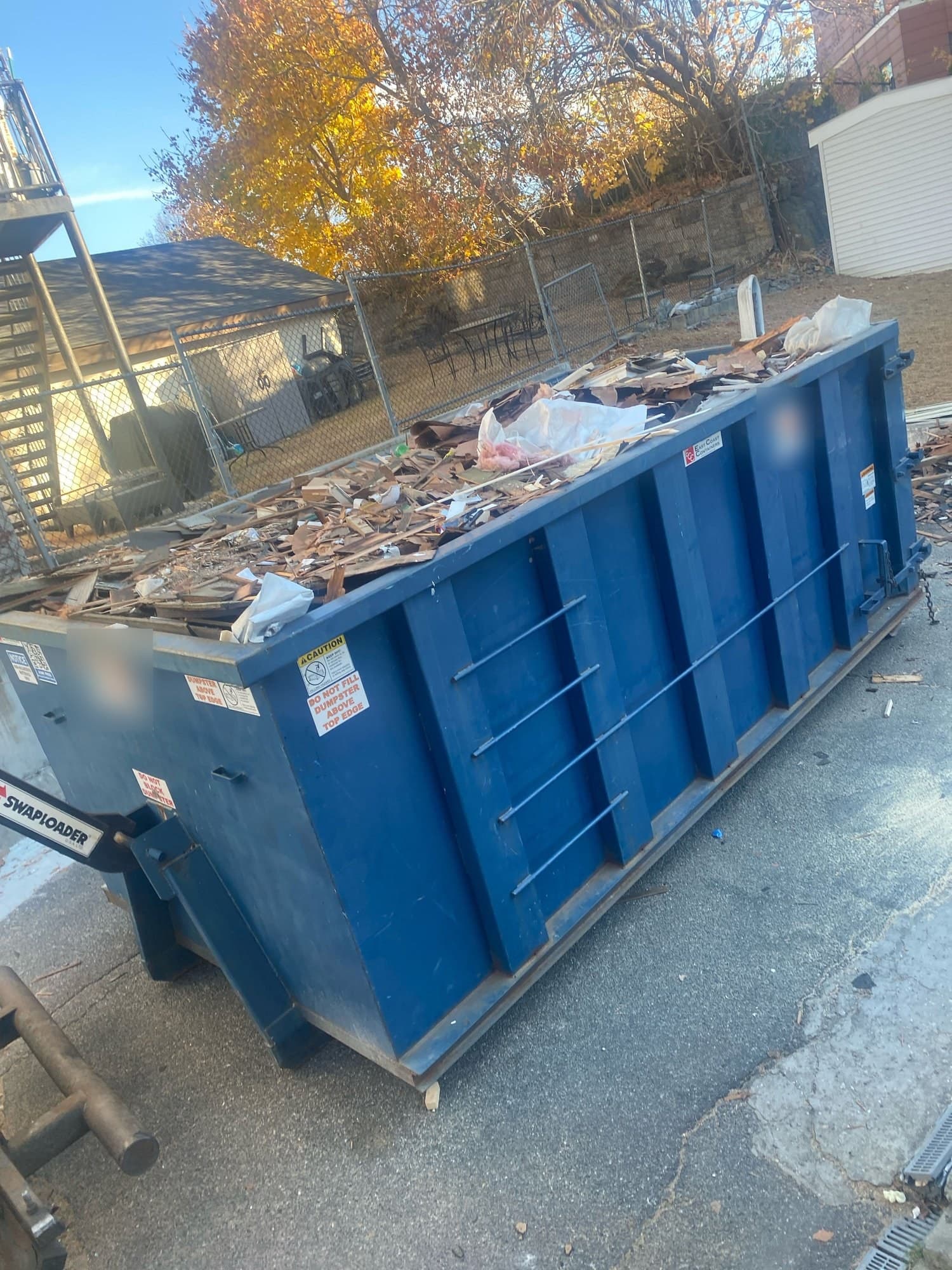
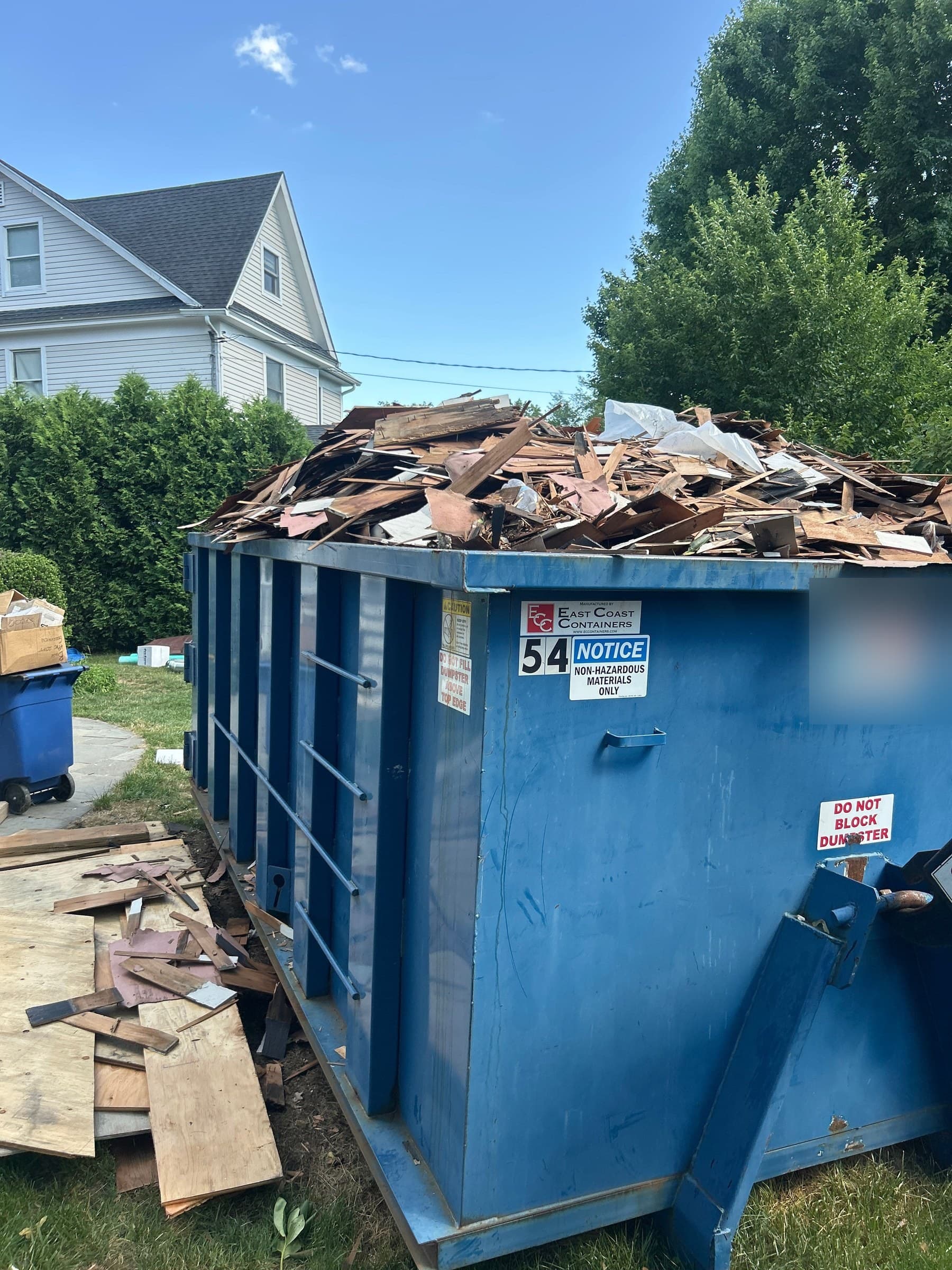
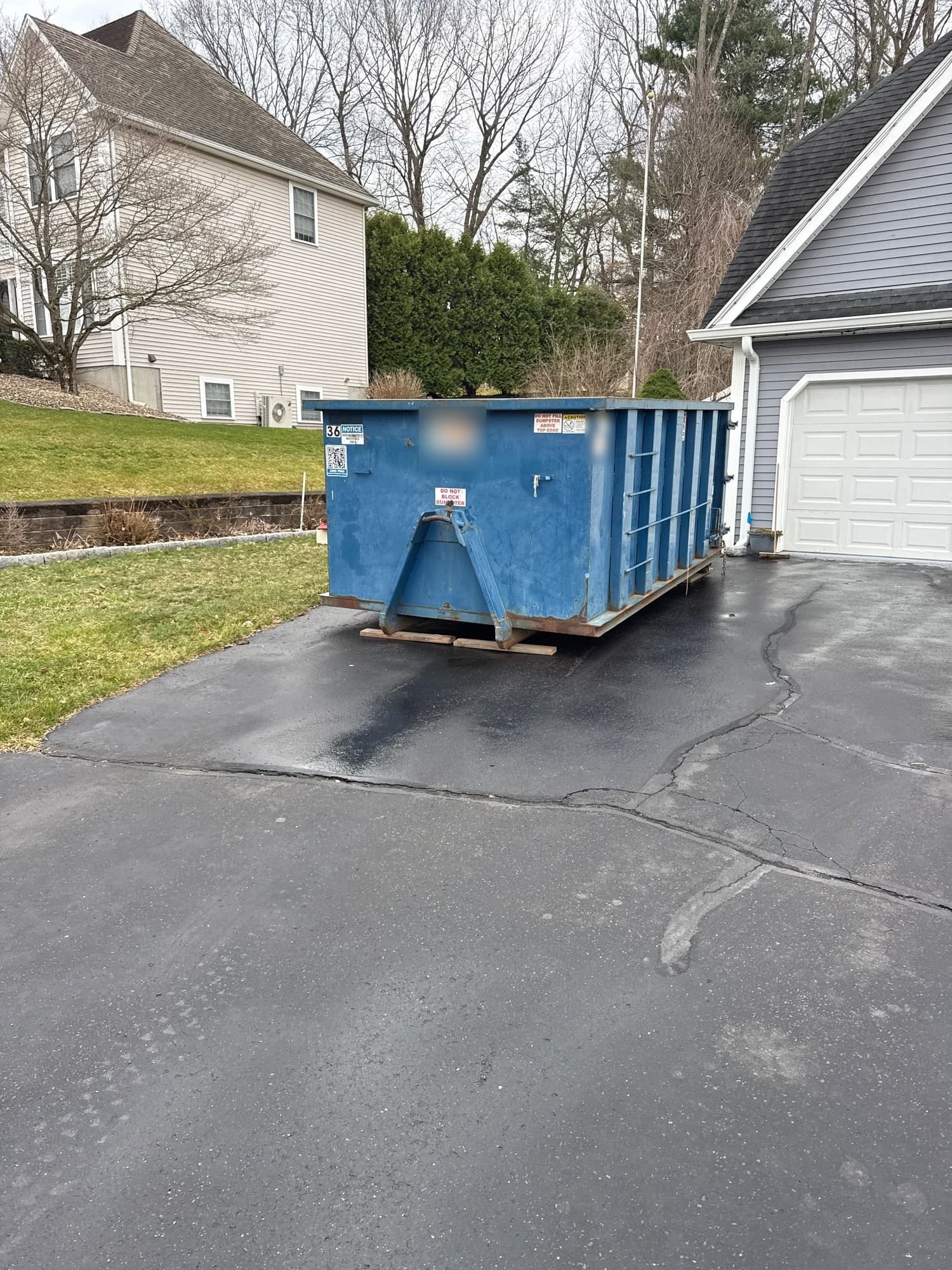
A fact about how this industry works: demolition contractors rent their roll-off containers from somebody. Grizzly owns a hundred — identical 20-yard cans out of two Connecticut yards — which means the debris side of your teardown isn't a markup on a third company's fleet. The teardown is the partner's contract; debris volume is the part Grizzly controls end to end.
A mobile home teardown generates debris in a burst — most of the structure comes apart in a day or two — so the usual booking is our 30/40-yard package at $899: delivered as two identical 20-yard cans, either side by side for the burst or one swapped for the next as the pile grows, with 6,000 pounds included and the posted $0.10/lb rate past the allowance. Every can on the fleet is the same physical box; the "size" you book is the weight allowance, which is the honest way to price debris that's mostly light paneling with heavy pockets.
When the chassis is cut and the scrap truck takes the steel, the last mixed load rides out in our can and the lot is a lot again. What moves the teardown number itself — title, park rules, single versus double-wide, the survey on older units — is laid out driver by driver in our mobile home demolition cost guide.
The stuff around the unit is a different job — and it's ours
A manufactured home rarely sits alone. There's the added deck, the skirting, the steps, the shed that migrated over from a previous life, the awning, the fence around the lot. Most of that is standalone structure removal — exactly the work Grizzly self-performs on the other track of our demolition menu — so it often makes sense to clear the perimeter first with our own visit: deck removal, shed removal, fence removal, each with published starting prices and a fixed quote on site.
Clearing the accessory structures ahead of the teardown gives the partner clean access to the unit itself, and it puts the simpler work on the simpler pricing. One property, two tracks, both explained before anything is scheduled.
Unit past moving?
Check the relocation option first — and when teardown is the answer, one call sets up the partner's quote and the dumpster line.
Mobile home demolition FAQs
Can a mobile home just be hauled away whole?
Occasionally — a unit in transportable condition can sometimes be moved or sold instead of demolished, and that's worth checking first. The ones that reach this page usually aren't movable, and teardown-in-place through our licensed demolition partner is the realistic path.
What's different about demolishing a mobile home versus a shed or garage?
The frame. Under the walls is a steel chassis, plus axles, plumbing, wiring, and often more insulation than expected. It's a structure with vehicle DNA, and taking one apart safely is genuine demolition work, not hand-crew work.
Are there title or park requirements before demolition?
Commonly yes — the unit's title status matters, and mobile home parks have their own removal requirements on top of the town's permit. The partner walks owners through both before anything is scheduled.
Do older units need an asbestos check?
Older manufactured housing can carry asbestos-containing materials, and the survey-before-demolition rule applies the same as site-built homes. If the survey finds it, licensed abatement comes first. That sequence is stated as process because it is one.
Where does the steel chassis go?
Steel routes to scrap, which offsets some disposal cost; the mixed debris rides out in our cans at posted rates. The split between the two streams is part of the partner's scope and shows up plainly in the numbers.
The unit is full of belongings — does that need to be handled first?
Yes, and that part is Grizzly's own lane. Contents come out as a junk-removal job before the teardown is scheduled — furniture, appliances, whatever a unit accumulates over decades. Clearing it first also makes the asbestos survey and the partner's scoping visit straightforward instead of an archaeology project.
Related pages
- Demolition overview — both tracks of the removal and demolition menu
- Mobile home demolition cost guide — what drives the number, relocation check included
- House demolition — site-built teardowns through the same partner coordination
- Interior demolition — gut-outs where the structure stays
- In-ground pool removal — the excavation side of the partner track
- Commercial demolition — strip-outs and commercial teardowns
- Junk removal — contents cleared first by Grizzly's own teams
- 30/40-yard dumpster package — the two-can package teardown debris usually books
Request a mobile home demolition quote
Call (203) 219-8855 or send the demolition quote form with the unit type, location, and whether it sits in a park. The partner contracts the teardown; the debris line is Grizzly's at posted rates. Phones answered 8 AM – 10 PM, 7 days; live team Mon–Fri 8 AM – 4 PM, AI phone assistant other times.