Family-owned since 2014 · 4.99 ★ × 463 reviews · 20,000+ jobs
Deck Removal & Demolition in Connecticut
Attached and freestanding, wood and composite — boards up, framing down, ledger unbolted clean. From $995, fixed quote on site, disposal included.
20,000+
jobs completed
4.99 ★
463 reviews
Family-owned
since 2014 (12 years)
Licensed & insured
in Connecticut & New York
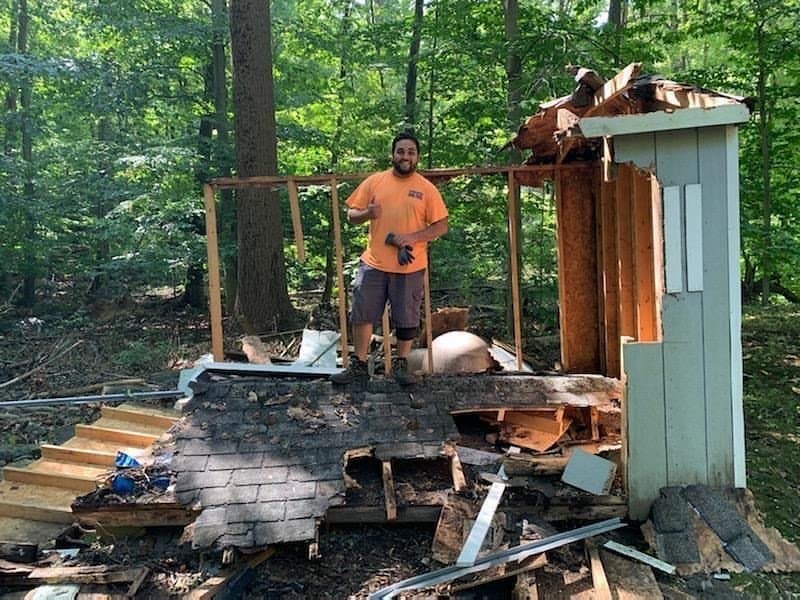
The deck tells you before the inspector does: a board that gives underfoot near the grill, railings the kids aren't allowed to lean on anymore, joists gone punky where the ledger meets the house. When it's past saving, we tear it out — that's deck removal, deck demolition, deck tear-out, whichever name you searched it by — single-level to multi-story, wood and composite, attached or freestanding, anywhere in Connecticut within about an hour of our Stamford or West Haven yards. Small decks start at $995, and every job gets a fixed written price at a free walkthrough before a single board comes up.
Deck demolition looks simple from a lawn chair — it's just boards, right? The boards are the fast part. The quote actually lives in three other places: what the deck hangs on, how high it stands, and what it's made of. That's this page.
Deck removal — starting prices by size
Every demo job is different — final quote confirmed on site after walkthrough. These are honest starting ranges so you can self-qualify before calling. Disposal of all materials is included in the total.
- Decks (under 200 sq ft)$995+
Small wood deck, single-level, attached or freestanding.
How this job goes →Get a quote for your project → - Decks (200-400 sq ft)$1,395+
Mid-size deck, single-level. Multi-level adds time + cost.
How this job goes →Get a quote for your project → - Decks (400+ sq ft)$2,395+
Large decks. Multi-level, deep footings, or built-ins quoted on site.
How this job goes →Get a quote for your project →
How the pricing works: These are starting prices, and most jobs land here. Every one includes teardown, loading, hauling, and full disposal — no separate dump fee, no labor line added later. What moves the number up: size, how far the structure sits from where the truck can park, whether the crew has to carry debris through a gate or around a house, material, footings or a slab, and distance from our depots for jobs outside Fairfield and New Haven County. Concrete stays unless it's quoted. Send photos and we'll give you a real number — the price we quote is the price you pay, confirmed on site before anything comes down. We don't pull demo permits — that's the homeowner's responsibility when required.
Standalone outbuildings only — no interior demo, no full-house teardowns, no asbestos.
See demolition scopeDeck removal cost, tier by tier
Three tiers, sorted by square footage: under 200 sq ft from $995, 200-400 from $1395, 400+ from $2,395. The figures render live from the same canonical pricing data as the demolition hub — nothing typed into this page that can drift from the master list.
Square footage picks the tier; height and complexity set where you land within it. A ground-level platform comes apart from a standing position, and gravity helps. A second-story deck is the same lumber with none of the help — every board gets lowered instead of dropped, and that time is real. Built-in benches, planters, pergola posts, hot-tub framing, and stair runs each add cut time; composite adds weight, which is disposal money. Tell us what the deck's carrying and how high it sits, and the quote holds. Disposal and metal recycling are inside the fixed price — up-front pricing, no scale-ticket surprise on the invoice.
If you're pricing deck removal services against the DIY weekend: a deck is genuinely doable with a good bar and stubbornness, and a roll-off dumpster in the driveway handles the debris — mind the weight allowance if the boards are composite. If you'd rather not have a can parked there for the week, we'll send a crew for the pile after you're done instead: post-teardown debris hauling, priced by the truck space it fills. For the long version of how height, built-ins, and material move a deck quote, read our deck removal cost guide.
How a deck tear-out goes
Boards up, framing down, posts last. Decking comes up first and stacks as it goes, then joists and beams drop in order, then the posts get cut at grade. Concrete footings stay in the ground — concrete isn't something our cans haul, and digging footings is excavation work, a different trade entirely. The cut sits below lawn height, disappears under new grass, and most rebuilds pour fresh footings anyway. Debris loads as we work, never piles on the lawn.
The ledger is where our scope line sits, and it's worth knowing before you call. Most Connecticut decks hang on a ledger board lag-bolted to the house's band joist. Those are in scope: we unbolt the ledger, pull it clean, and you're left caulking a row of lag holes — a ten-minute job with a tube of sealant, and we'll point at exactly which holes on our way out. What's not in scope is any deck whose removal opens the house itself — ledgers structurally integrated into an addition, deck roofs tied into the main roofline, three-season-room hybrids where "deck" and "house" stopped being different things. That's building-envelope work for a general contractor, the same line we hold on sunrooms, and we'll tell you which kind you have at the walkthrough. It's obvious 95% of the time.
Before demo day: clear the deck — grill, furniture, planters — and pull whatever you store underneath. A gas line to a built-in grill gets capped by a plumber first; the line has to be dead before anyone cuts near it. Partial jobs are fine too — a rotted stair run, one level of a two-story build — with the one caution that if the part you want gone is holding up the part you want kept, that's a deck builder's conversation first, and we'll flag it rather than guess. Winter work is a yes (frozen ground under the staging area is easier on a lawn than April mud); active rain on an elevated deck is a morning-of judgment call, called honestly and re-slotted fast.

What happens to the old decking
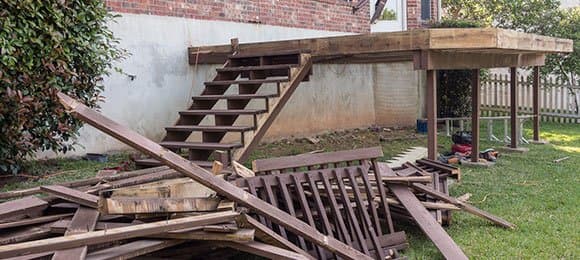
Pressure-treated lumber — which is most Connecticut decks — is C&D waste, full stop. The treatment chemicals rule out burning, chipping, and mulching, which is why we don't leave a free-firewood pile no matter how good the boards look, and why the whole load rides in our own trucks to licensed CT transfer stations. Composite goes the same route: dense polymer-and-wood-flour board, heavier than it looks, effectively unrecyclable once weathered — pure tonnage at the scale, which is the honest reason composite jobs land a little higher within their tier.
Two things come out of the waste stream instead. The steel — joist hangers, bolts, flashing, aluminum railing systems — gets sorted for scrap as we load. And anything you want to keep, keeps: say so before we start and we'll stack sound joists for your next project instead of loading them. When we pull away, the work area gets a nail sweep, and the disposal cost is already inside the number you approved.
One flag for the paperwork-minded: demolition alone often doesn't need a permit in CT, but larger and attached decks sit closer to the line and every town draws it differently — especially if a rebuild is coming, since some towns want the demo noted on the same application. Check with your building department; any required permit is the homeowner's to pull, and we'll raise the question early rather than late.
Deck due to come down?
Free walkthrough — ledger checked, height counted, fixed price in writing.
The job, in five steps
- Call (203) 219-8855 or send the demolition quote form. Rough dimensions, levels, wood or composite, attached or freestanding. Photos from a couple of angles do wonders.
- Free walkthrough. Ledger inspected, height and built-ins counted, fixed price in writing.
- Schedule. Most deck jobs book within about a week.
- Demo day(s). A day on small decks, up through two or three on the big ones — boards up, framing down, posts cut at grade, loaded as we go.
- Cleanup and haul-out. Nail sweep of the work area, metal to scrap, debris to licensed CT transfer stations in our trucks. The price you approved is the price you pay.
Deck removal FAQs
What does deck removal cost in Connecticut?
Three size tiers: under 200 sq ft from $995, 200-400 sq ft from $1395, and 400+ sq ft from $2,395. Square footage picks your tier; height and complexity move you within it — a ground-level platform comes apart from a standing position, while a second-story deck means everything gets lowered instead of dropped. Built-in benches, planters, hot-tub framing, and stairs each add cut time, and composite adds weight. The fixed number comes from a free on-site walkthrough, in writing, before we book anything — and the full cost anatomy lives in our deck removal cost guide on the blog.
Can you remove a deck that's attached to the house?
Yes — ledger-unbolt attached decks are in scope. A standard deck hangs on a ledger board lag-bolted to the band joist; we unbolt it, pull it clean, and the house is exactly as it was, minus a row of lag holes to seal. What we won't do is anything whose removal opens the house envelope — ledgers integrated into an addition, deck roofs tied into the main roofline, three-season-room hybrids. If taking the deck off exposes framing or sheathing that needs a contractor's repair, we refer that portion out and say so up front, at the walkthrough, not on demo day.
Do the footings come out?
Posts get cut at grade. Concrete footings stay in the ground — concrete isn't something our cans haul, and digging footings is excavation work, a different trade with different equipment. In practice this rarely matters: the cut sits below lawn height and disappears under new grass, and most rebuilds pour new footings anyway.
Composite decking versus wood — does it matter?
For the tear-down, barely. For the weight, yes — composite runs heavier per board than dry lumber, and weight is what drives the disposal math. We factor the material into the quote so there's no surprise on the scale ticket; composite decks just tend to land a bit higher within their size tier.
How long does a deck tear-out take?
A standard 12x16 is typically a day. Mid-size decks run a day or two, and the big multi-level builds take two to three. Boards come up first, then joists and beams, then posts — the boards are the fast part; framing, height, and the carry set the pace.
Can I keep some of the lumber?
Sure — tell us before we start and we'll stack what you want to keep instead of loading it. Plenty of customers keep sound joists for projects and send the weathered boards out.
Anything I should do before demo day?
Clear the deck — grill, furniture, planters — and pull anything you store underneath it. If a gas line feeds a built-in grill, have it capped by a plumber first; same rule as electrical, the line has to be dead before we cut near it. Ten minutes walking the deck with us at the start covers the rest.
What happens to the old decking?
Pressure-treated lumber is C&D waste, full stop — it can't be burned, chipped, or mulched because of the treatment chemicals, which is why we don't leave a free-firewood pile no matter how good the boards look. Composite goes the same route. The steel — joist hangers, bolts, flashing — gets pulled for scrap where the facility takes it, and everything rides out in our own trucks to licensed CT transfer stations.
Related pages
- Demolition overview — every category, every published starting price
- Deck removal cost guide — height, built-ins, and materials, long form
- Hot tub removal — the thing sitting on half the decks we remove
- Above-ground pool removal — pool-serving decking is part of that job, covered there
- Fence removal — often bundled into the same visit
- Roll-off dumpsters — for the DIY tear-out crowd
Where we go
The whole state. Deck crews roll out of Stamford and West Haven with no ring on the map where the service stops — shoreline cottage platforms, capital-region elevated builds, hillside decks up in the Litchfield hills. Every one is quoted per job, not off a price card: square footage, height, material, access, and the distance to your door all move the number.
Photos beat adjectives on this job. Send a few angles of the deck — or just a Street View link — with the demolition quote form and you'll get a real number back, not a range. The price we quote is the price you pay.
Deck Removal by county
The job changes with the ground it sits on. Each county page covers access, housing stock, and the drive from our yard.
Get a deck removal quote
Call (203) 219-8855 or send the demolition quote form — mention levels, material, and whether it's attached. Phones answered 8 AM – 10 PM, 7 days; live team Mon–Fri 8 AM – 4 PM, AI phone assistant other times.