Grizzly Junk Pros · Family-owned since 2014 · 4.99 ★ × 463 reviews · 20,000+ jobs
Debris Removal in Connecticut
Renovation tear-out, demolition aftermath, storm mess — a dumpster you load at posted rates, or a crew that loads for you from $179. We'll tell you which one your pile actually needs.
20,000+
jobs completed
4.99 ★
463 reviews
Family-owned
since 2014 (12 years)
Licensed & insured
in Connecticut & New York
Last updated: September 6, 2026
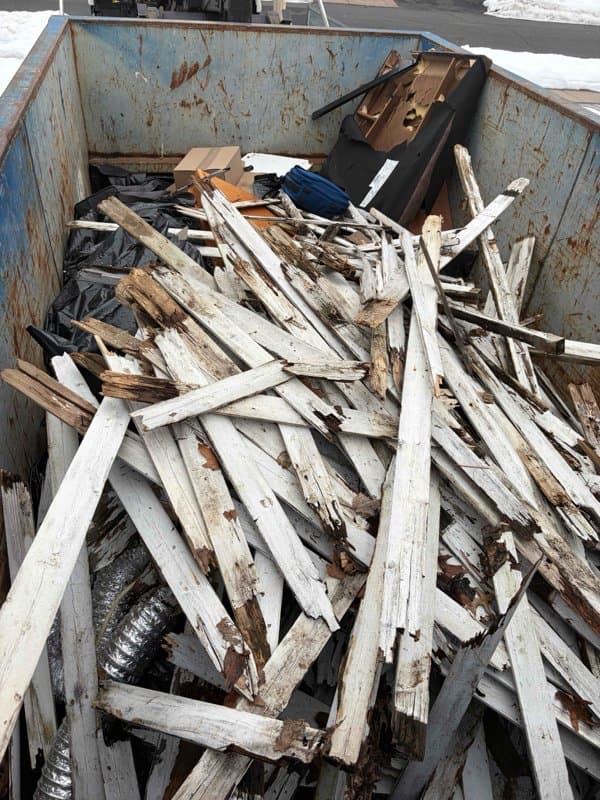
"Debris removal" is one search term covering three very different messes. The contractor left and the garage is stacked with torn-out cabinets and drywall. The deck came down over the weekend and the boards are piled where it stood. A storm went through and the yard is fence sections, shed roofing, and half a maple tree. Same phrase, three different jobs — and honestly, sometimes three different answers to "who should haul this?"
We've been clearing Connecticut's aftermath since 2014, with two tools for it: roll-off dumpsters you load yourself at posted rates, and a crew that loads for you on a posted truck-space ladder from $179 to $979. This page sorts the three scenarios into the right tool, including the one thing no dumpster of ours will take.
Post-renovation debris: usually a dumpster
Renovation debris arrives on a schedule — a tear-out phase, then days or weeks of work generating more. That rhythm suits a roll-off dumpster: it sits in the driveway for the included rental week while the mess accumulates, and you (or your contractor) load as you go. A kitchen or bath gut typically fills the 15-yard at $547; bigger renovations step up to the 20-yard at $647. The home renovation dumpster page has the size math per project, and the construction debris page covers mixed C&D loads.
When the crew makes more sense: the renovation is done, the debris is a single finished pile, and nobody wants a can in the driveway for a week. One visit, we load, it's gone — priced by how much truck space the pile fills. A contractor's tear-out pile from a small bath often lands mid-ladder; confirm with photos and we'll quote the tier before anyone commits.
One material warning either way: renovation debris is dense. Tile, plaster, and old lumber hit weight allowances long before they fill the can, and concrete, dirt, and rock don't ride at all — tell us what's in the pile and we'll route it honestly.
Post-demolition debris: depends who swung the hammer
If we're doing the demolition — sheds, decks, above-ground pools — debris removal is built into the price and this page doesn't apply to you. Tear-down and haul-away are one number.
Where this page earns its keep is self-demolition: you knocked the structure down yourself and now own a pile. Two routes. Load-it-yourself: a dumpster dropped next to the pile, a week to fill it, posted rate by size. Crew: we show up, size the pile against the ladder, confirm the number, and load. A knocked-down shed is usually a mid-ladder crew job or a comfortable 15-yard fill; a full deck's worth of boards with hardware still in them leans 20-yard. If you're still deciding whether to swing the hammer at all, price the full-service demo first — by the time you've rented tools and a can, the gap is smaller than most people expect.
Post-storm debris: the honest version
Storm cleanup is where we have to draw a line other pages on the internet blur: tree limbs and stumps never go in our cans. Not a capacity issue — a materials rule. Dense trunk wood is its own disposal stream, and no size of dumpster we rent accepts it, same as concrete and dirt. The tree service that cuts up the downed tree typically chips or hauls the trunk wood as part of the job, and most Connecticut towns run brush collection programs — your town's public works page will say what qualifies and when.
Everything else the storm wrecked is squarely our work, and it's usually crew work rather than dumpster work: the debris is scattered across a property, some of it's heavy and awkward, and after a storm most people want it gone now, not sitting in a driveway can for a week. Flattened fence runs, sheared-off shed panels, destroyed patio furniture, a trampoline the wind relocated, the soaked contents of a flooded basement — the crew loads it in one visit at the truck-space tier the pile fills. Brush and thin pruned branches can ride along; the trunk sections stay for the chipper.
Dumpster or crew: the thirty-second decision
- Is the debris in one loadable pile, and are you willing to load it? Dumpster. Posted rates start at $447, week included, no labor from us and none billed.
- Is it scattered, upstairs, heavy, or do you want it gone today? Crew. Ladder runs $179 to $979 by truck space, loading included, number confirmed before we lift.
- Is it still attached to something? That's demolition, and debris removal comes bundled.
- Is it trunk wood, stumps, concrete, or dirt? Neither tool — those are different streams, and we'll say so on the phone instead of surprising you at the driveway.
Mixed jobs are normal. Plenty of storm cleanups end up as a crew visit for the scattered mess plus a tree service for the maple, and plenty of renovations end as a can for the tear-out plus a junk removal visit for the old furniture that came out with it.
What crew debris hauling costs
The ladder below is the same posted 13-tier truck-space ladder as every junk-removal job — debris doesn't get its own secret menu. A small pile rides low on the ladder; a whole demolished deck rides high; the crew confirms the tier on arrival before loading starts. Dumpster pricing lives on the dumpster page and the size pages, posted the same way.
Crew debris hauling — the posted ladder
When loading the dumpster yourself isn’t the right call — small volume, awkward access, or you just want it gone today — we send a crew. Pricing runs by truck space used, not by item. Final pricing confirmed before removal begins.
- Minimum Load$179
- 1/8 Truckload$239
- 1/6 Truckload$309
- 1/4 Truckload (~5 yd³)$359
- 1/3 Truckload$419
- 3/8 Truckload$489
- 1/2 Truckload (~10 yd³)$559
- 5/8 Truckload$659
- 2/3 Truckload$759
- 3/4 Truckload (~15 yd³)$809
- 5/6 Truckload$849
- 7/8 Truckload$919
- Full Truckload (~20 yd³)$979
Not sure which tier? Send a few photos and we’ll size it for you.
Get a Free Junk Removal QuoteGot a pile that needs to disappear?
A photo of the debris gets you a straight answer — dumpster, crew, or the honest 'that's a tree service's job.'
Debris removal FAQs
What counts as debris removal — and what doesn't?
In our world, debris is the aftermath: torn-out drywall and cabinets after a renovation, the broken-up boards and shingles after a demolition, the scattered mess a storm leaves on a property. It's distinct from household junk (whole furniture, appliances, boxed clutter), though both ride the same trucks. What debris removal is NOT: hazardous material handling. Asbestos-suspect material, chemicals, and paint route through regulated streams, not a debris load — and tree limbs and stumps never go in our cans at all.
Should I rent a dumpster or have a crew haul my debris?
Math first, preference second. If the debris is already in a pile and you have the backs to load it, a dumpster is usually cheaper — our cans start at $447 with a week to fill. If it's scattered through a house, up a flight of stairs, or you just want it gone in one visit without lifting anything, the crew wins: truck-space pricing from $179 for a small load to $979 for a full truck, loading included. Renovations lean dumpster; storm messes and single-room tear-outs lean crew.
Can storm debris — branches, limbs, downed-tree wood — go in a dumpster?
Brush, thin pruned branches, and leafy green waste can. Tree limbs and stumps cannot — that's a hard materials rule in every one of our cans, because dense trunk wood is a different disposal stream. After a storm, the tree service that cuts up the downed tree usually chips or hauls the trunk wood, and most towns run some form of brush collection — check your town's public works page for what it takes and when. Our crew or can handles everything else the storm scattered: fence sections, shed pieces, ruined outdoor furniture, the soaked contents of a flooded basement.
How is crew-based debris removal priced?
By truck space, on the same posted 13-tier ladder as every junk-removal job — from $179 for a minimum load up to $979 for a full truck. Debris tends to be dense, so the crew sizes the pile on arrival and confirms the number before loading starts. Heavy material like concrete, dirt, and rock doesn't ride the debris truck or the cans — say so when you call and we'll tell you the honest route.
What size dumpster does renovation debris need?
Most single-room renovations — a kitchen or bath gut, a flooring tear-out — land in the 15-yard at $547. Whole-floor renovations and demolition aftermath usually want the 20-yard at $647. Every size includes a weight allowance, and renovation debris is heavier than it looks: tile, plaster, and wet lumber eat pounds fast. The size pages walk through the math per project type, and we'll talk you down a size if your description doesn't justify the bigger can.
Related pages
- Dumpster rental — all sizes, posted rates, the self-load route
- Construction debris dumpsters — mixed C&D loads, weight math
- Home renovation dumpsters — size-by-project guidance
- Demolition services — when the structure still needs knocking down
- Junk removal — the crew service, whole-house scope
- 15-yard dumpster and 20-yard dumpster — the two debris workhorses
Get a debris removal quote
Call (203) 219-8855 or send the quote form with a photo of the pile — we quote the tier or the can size before anything is scheduled. Phones answered 8 AM – 10 PM, 7 days; live team Mon–Fri 8 AM – 4 PM, AI phone assistant other times.