Deck Removal Cost in Connecticut
Deck demo cost isn't really about the boards. It's footings, levels, and what the deck is made of — here's how each one moves a Connecticut quote.
20,000+
jobs completed
4.99 ★
463 reviews
Family-owned
since 2014 (12 years)
Licensed & insured
in Connecticut & New York
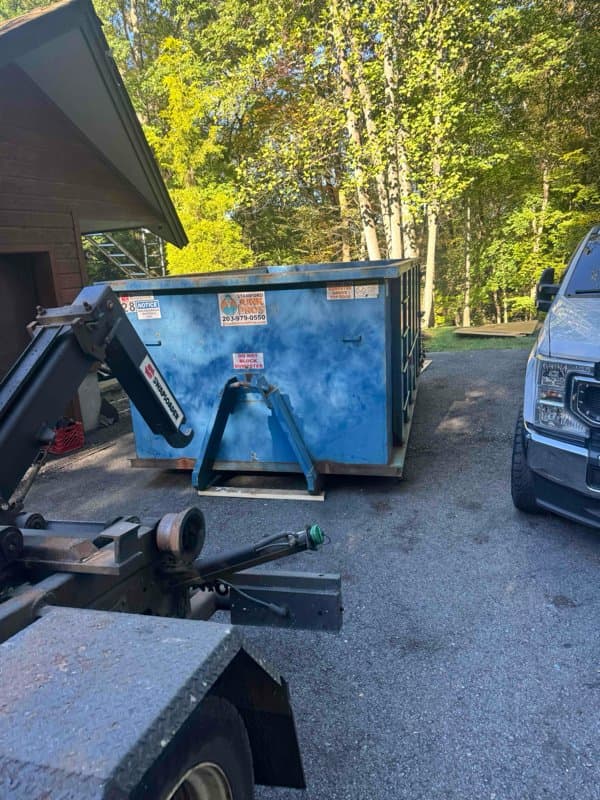
A deck teardown looks like the simplest demolition there is: boards, screws, gravity on your side. Then you get under it. The quote for a Connecticut deck removal is mostly written below the deck surface and at the house wall — in the footings, the ledger, and the framing — and this post walks through how each piece moves the number.
Our published starting prices, banded by square footage, live on the deck removal page and the demolition overview. What follows is how to read your own deck against them.
Square footage picks the tier — everything else picks where you land in it
We band deck pricing by footprint: under 200 square feet, 200 to 400, and 400-plus. Pace off your deck and you know your tier before you ever call.
The rest of the walkthrough is about placement within the tier:
- Levels. Every elevated board is slower to drop safely than the same board at grade. A second story with stairs isn't twice the deck, but it's meaningfully more than one story of extra work — staging, controlled drops, and railings that have to come down before anyone can work the edge.
- Built-ins. Benches, planters, pergola posts through the decking, the hot-tub cutout with its doubled framing — every integrated feature interrupts the clean rip-and-stack rhythm.
- Carry distance. Debris that walks fifty feet to the truck costs more than debris that drops next to it. Waterfront and back-lot decks feel this the most.
The footing decision: the biggest number you control
Under every post is a concrete footing, and Connecticut frost-depth code puts them deeper than most homeowners guess. When the deck goes, you have two honest options, and this is the one part of the quote where you hold the pen:
Cut flush. Posts sawed at grade, footings left buried. Cheaper, faster, invisible under new lawn. The right call when the space's future is grass and nothing but grass.
Pulled. Each footing dug out and extracted — real digging, priced per hole. The only correct answer when anything is being built there next, because nothing derails a patio install like a grid of discovered concrete.
Our standing practice is to quote both ways at the walkthrough, and mixed answers are normal: pull the footings where the garden's going, flush-cut the rest. If a contractor's quote for your deck doesn't say which way it handles footings, ask — "we take the deck away" and "we deal with what it stood on" are different jobs.
The ledger and the scope line
Most CT decks hang on a ledger board bolted through the siding to the house's band joist. Unbolting the ledger and pulling it is in scope for us — you're left with a row of lag holes and a ten-minute caulking job we'll point out on our way off the property.
Where we stop: decks that have stopped being decks. Roof structures tied into the house's roofline, three-season-room conversions, ledgers structurally buried inside an addition. If removing the structure would open the building envelope, that's a general contractor's project, and we say so at the walkthrough rather than discovering it on demo day. Judging that line is free; it's part of every deck quote we write.
Wood vs. composite: same demo, different disposal bill
How a deck comes apart doesn't depend much on the material. What happens after does:
Pressure-treated lumber — the bulk of Connecticut's deck stock — carries preservative chemistry that rules out burning, chipping, and mulching. It rides to a licensed transfer station whether we haul it or you do.
Composite is the sleeper cost. The boards are dense polymer and wood flour, heavier per foot than the lumber they replaced, and disposal is a tonnage business. Two decks of identical footprint can weigh very differently on the scale ticket, and composite jobs tend to land higher within their tier for exactly that reason. We'd rather explain that here than pad a quote quietly.
Either way, disposal is inside our fixed price, and the metal — joist hangers, fasteners, aluminum railing systems — gets sorted out for recycling as we load.
What a deck quote includes
Teardown in the safe order (railings, decking, framing, posts, footings per your choice), loading as we go rather than piling on the lawn, a nail sweep of the work area, haul-out in our trucks, and licensed CT transfer-station disposal folded into the written number. The number from the walkthrough is the number on the invoice — that's not a deck-page slogan, it's how every demolition job here runs.
If you'd rather do it yourself
Decking boards are honest DIY territory. Rent a roll-off dumpster, start at the outer edge, and enjoy the most satisfying crowbar work in home ownership — with two cautions. First, weight: composite and wet PT lumber add up fast, and every can size has a weight allowance with overage billed by the pound past it. Second, know where you'll stop. The framing drops fast once the surface is gone, the ledger involves your house's siding, and footings involve a shovel argument with Connecticut's frost line. The most common deck call we get isn't "remove my deck" — it's "finish removing my deck."
Timing the teardown
One scheduling note worth knowing: deck removal is a near-year-round job in Connecticut. Frozen ground doesn't stop it — footings being flush-cut don't care about frost, and a hard-frozen lawn actually takes truck and foot traffic better than April mud does. The season to avoid, if you have the choice, is the height of spring, when everyone's home inspector has just circled everyone's deck at once and the calendar tightens. If a rebuild is planned, coordinate backwards from your deck builder's start date and give the removal a buffer week; handing an installer a clean, cleared, footing-decided site on day one is worth more to the project than any other scheduling decision you'll make.
Getting your number
Rough dimensions, level count, wood or composite, attached or freestanding — into the demolition quote form or over the phone, photos welcome. Free walkthrough, footings quoted both ways, fixed price in writing. Your tier's starting price is already published on the deck removal page; the walkthrough turns it into your actual number. For how deck pricing compares to the rest of the teardown menu, the Connecticut demolition cost guide is the wider view.
Ready to talk through your project?
Call (203) 219-8855, 8 AM – 10 PM, 7 days; live team Mon–Fri 8 AM – 4 PM, AI phone assistant other times. Or use the instant-quote tools below.
Looking for service in your area?
We dispatch from two depots — Stamford and West Haven — across 5 CT counties + lower Westchester NY. Each county page rolls up the towns we cover with depot dispatch realities and same-day-vs-next-day framing.
Related posts
- Pricing8 min read
What House Demolition Really Costs in Connecticut
Every printed house-demo price range online is too wide to plan with. Here's what actually moves the number, what has to happen before the first machine arrives, and the debris line — the one part with published rates.
By Justin Hubbard - Pricing8 min read
In-Ground Pool Removal Cost in Connecticut
Partial fill or full removal is the first decision, and it changes the price, the paperwork, and what you can build there later. The honest version of both options, plus the one budget line with published rates.
By Justin Hubbard - Pricing7 min read
What Mobile Home Demolition Costs in Connecticut
A mobile home teardown isn't a big shed job — there's a steel chassis under it, a title behind it, and sometimes a park with its own rules. Here's what moves the number, and the debris line you can price today.
By Justin Hubbard
Answered 8 AM – 10 PM, 7 days; live team Mon–Fri 8 AM – 4 PM, AI phone assistant other times.