Grizzly Junk Pros · Family-owned since 2014 · 4.99 ★ × 463 reviews · 20,000+ jobs
House Demolition in Litchfield County, CT
From farmhouse to foundation, the teardown is coordinated through our licensed demolition partner — and the debris goes out in our own dumpsters.
An old farmhouse at the top of a gravel drive, roofline gone soft, porch pulling away from the sill — Litchfield County writes this project more often than anywhere else we serve. Sometimes it's the family place that outlasted the family. Often it's a second home whose new owners bought the land and the view, not the structure, and the honest plan for the house is a clean lot.
The work splits the way it does everywhere on this page. The demolition itself — machine, licensing, the judgment about how a hundred-year-old frame wants to come down — is coordinated through our licensed demolition partner, who quotes and contracts it with you directly. The debris is Grizzly's: hauled in our own dumpsters at posted rates, up and down whatever drive the property offers.
That drive is the county's real variable. Hills, gravel, and seasonal access decide more about a Litchfield teardown's logistics than the house does, which is why the site walk here earns its keep before anyone quotes anything.
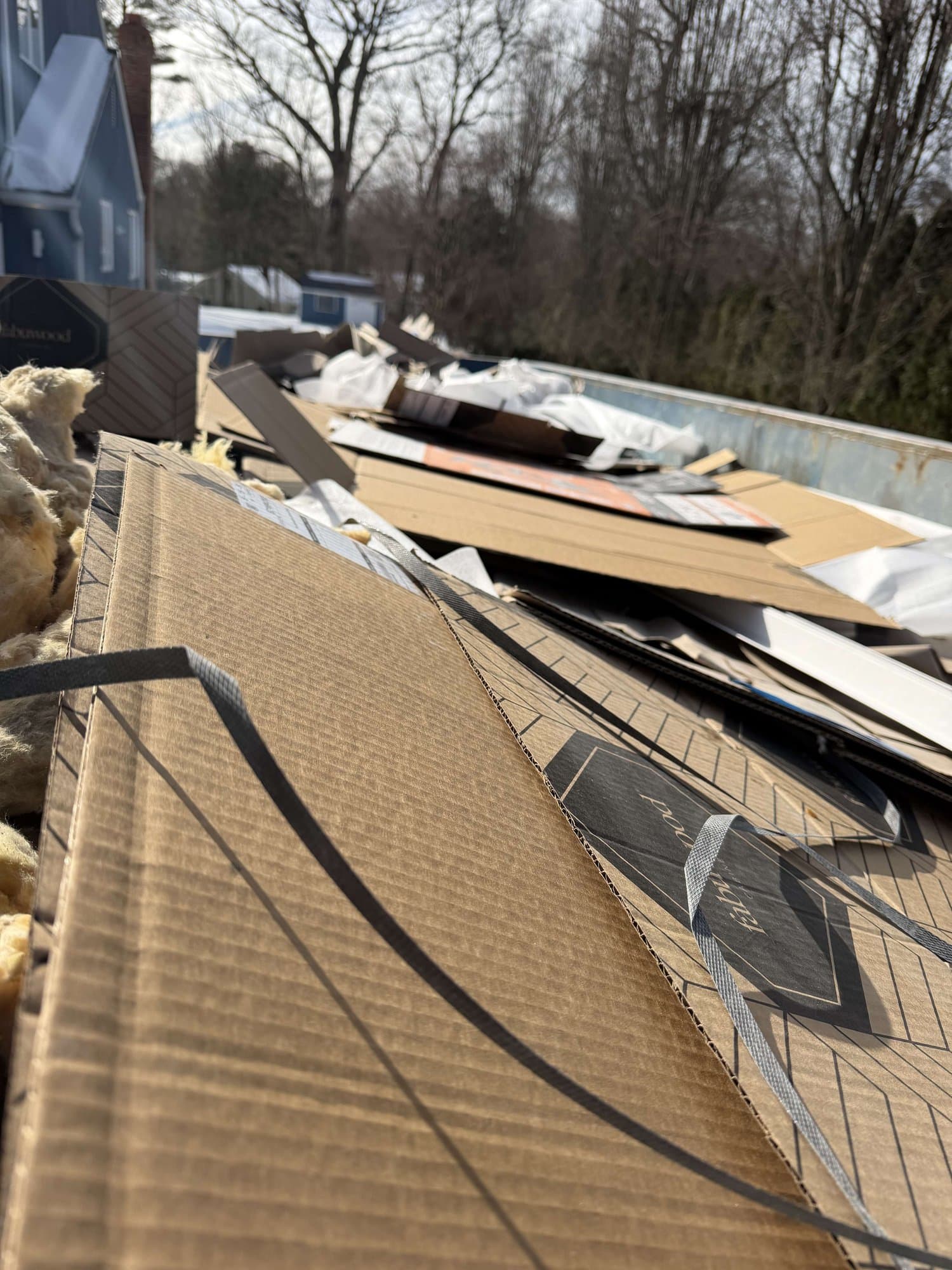
What rides in the cans — and what doesn't
The mixed construction debris a teardown produces — framing, roofing, sheathing, plaster, the general C&D stream — is exactly what Grizzly's cans exist for, and every load of it goes out in our own dumpsters at posted rates.
What comes out before the machines arrive is ours too, under a different name. Pre-demolition cleanouts are junk removal, which Grizzly's own teams run every day: furniture, contents, the attic and basement backlog, all gone before the survey and salvage decisions get made. And salvage deserves a plan — sound fixtures, hardwood worth pulling, doors and mantels with resale life. Flag what you want saved in the first call and it gets stacked instead of loaded; a house stripped of its heavy salvage also produces fewer loads.
Two streams stay out of our cans, stated plainly. Clean concrete and fill route the way the partner's excavation plan dictates — foundation material is its own stream with its own destinations. And abatement waste never rides in a standard C&D can: if the asbestos survey finds material, licensed specialists remove it under their own containment and manifests before demolition begins. The debris Grizzly hauls is the post-abatement teardown, full stop.
Two contracts, one starting phone call
The sequence runs the same in every county we serve. You bring us the project — address, whether it's a full teardown or a section, rough timeline, photos if you have them. From there the partner takes the demolition scope: a licensed, insured demolition contractor walks the property, quotes the teardown, and contracts it with you directly. That paper is between you and them, which is how a referral should look.
Before any machine day, three things happen in roughly this order, and the partner walks owners through all of them: the town issues a demolition permit; every utility that ever crossed the property line gets disconnected and confirmed by the utility itself; and older housing stock gets an asbestos survey, with licensed abatement before demolition if the survey finds anything. None of that is optional, and none of it is a surprise once you've seen it written down.
Then the teardown starts, and the debris pipeline is Grizzly's: cans placed before the first machine day, swapped as they fill, hauled at posted rates on a line item that is plainly ours. The demolition schedule drives the container schedule — never the other way around.
Why this page has no price grid
Every self-performed demolition page on this site opens with a starting-price grid. This one doesn't, on purpose. A full teardown is quoted per property by our licensed demolition partner — the contractor who walks the lot, weighs salvage and foundation questions, and puts the demolition contract in front of you under their own name. House size, construction era, access, and what the asbestos survey turns up move that number too much for a grid to be honest. Request a demolition quote and both halves of the project get scoped from one intake.
The half Grizzly prices openly is the debris. Here's the structural fact behind the whole arrangement: demolition companies rent their roll-off containers from someone. Grizzly owns a hundred — roll-off cans staged from two Connecticut yards, dispatched by the same people who answer the first phone call. Debris volume is the part of a teardown Grizzly controls end to end, and it moves at the same posted rates every dumpster customer on this site sees. You end up with two clean numbers instead of one blended one: the teardown from the contractor who performs it, the debris from the fleet that hauls it. If either number doesn't make sense, you can see exactly which one to question.
The drive decides the plan
In Litchfield County the access conversation starts at the road, not the house. Long gravel drives, grades that get honest in the rain, and parcels where the structure sits well out of sight of the mailbox — all normal here, and all things the partner's walk and our dispatcher settle before a can is committed. Where a drive won't carry a loaded truck, cans stage closer to the road and the machine plan adjusts; better to know that in week zero than on delivery morning.
Season matters too. Mud season can close a marginal drive to loaded trucks entirely, and we'd rather schedule around it than churn a client's driveway into a second demolition project. Figure about 45–90 minutes from our West Haven yard, and plan swaps in blocks accordingly.
House Demolition in Litchfield County — questions we actually get
Does Grizzly demolish the house?
No — and we say that plainly. Full teardowns are coordinated through our licensed demolition partner, who quotes and contracts the demolition directly. What Grizzly controls end to end is the debris: every load goes out in our own dumpsters, on our schedule, at our posted rates.
What has to happen before a house comes down?
A demolition permit from the town, utility disconnects confirmed by each utility, and — on older housing stock — an asbestos survey, with licensed abatement before demolition if the survey finds it. The partner walks the owner through that sequence as part of contracting; none of it is optional and none of it is skippable.
How many dumpsters does a house teardown generate?
House size, construction type, and how much gets stripped for salvage first all move the number — which is why loads are quoted per project at our posted rates rather than guessed here. The honest version of the math lives in our house demolition cost guide.
Can part of the house be saved?
Partial demolition — taking a wing, a fire-damaged section, or everything to the foundation — is common and the partner scopes it. Where a project is really interior gut work rather than structural teardown, that's its own service and its own page.
Who do I actually contract with?
The demolition contract is with the partner — a licensed, insured demolition contractor. The dumpster line is Grizzly's. You'll see both, plainly separated, which is how a referral should look on paper.
We're not at the property full-time — can a teardown be coordinated remotely?
Yes, and in this county it's routine — second-home owners run these projects from a distance all the time. Photos and a call start the intake, the partner walks the property and folds permitting into scope, and your building department answers the rest in one call. You'll see two contracts, plainly separated, without standing in the driveway for either.
Can loaded trucks handle a long gravel drive?
Usually — but it's checked, never assumed. The walk looks at grade, surface, and turning room, and if the drive can't carry a loaded can, we stage nearer the road and the partner adjusts the machine plan. Seasonal timing gets the same honesty: a drive that's fine in August can be off-limits in mud season.
Litchfield County towns we serve
WatertownThomastonPlymouthBethlehemHarwintonLitchfieldMorrisNew HartfordTorringtonWinchester / WinstedCornwallKentSalisburySharonWarrenNew MilfordRoxburyWoodburyBarkhamstedBridgewaterCanaan (Falls Village)ColebrookGoshenNorfolkNorth CanaanWashington
Drive times from our yard run ~45–90 min across the county.
More in Litchfield County
- Hot Tub Removal in Litchfield County
- Shed Removal in Litchfield County
- Above-Ground Pool Removal in Litchfield County
- Deck Removal in Litchfield County
- Fence Removal in Litchfield County
- Garage Demolition in Litchfield County
- In-Ground Pool Removal in Litchfield County
- Dumpster rental in Litchfield County
- House Demolition across Connecticut
- All demolition & removal services
Ready to book your delivery?
Same-day delivery when you call before 11 AM. Trucks dispatch Mon–Sat 8 AM – 4 PM (best-effort scheduling for earlier or later requests). Phones answered 8 AM – 10 PM, 7 days; live team Mon–Fri 8 AM – 4 PM, AI phone assistant other times.