Grizzly Junk Pros · Family-owned since 2014 · 4.99 ★ × 463 reviews · 20,000+ jobs
Garage Demolition in Litchfield County, CT
Up here the garage is one of several outbuildings, and often the one whose time has come — teardown through our licensed demolition partner, debris out in our own dumpsters.
On a Litchfield County parcel, the detached garage rarely stands alone. It shares the property with a barn, a run-in shed, a woodshed — the outbuilding ecosystem of the hills — and it's often the one in the worst shape, because it was built lighter than the barn and worked harder than the shed. Second-home buyers inherit them mid-collapse; longtime owners watch one more winter's snow load settle the roofline another inch and finally make the call.
Structures that have been standing crooked for a decade get read by a specialist, not guessed at: the teardown is coordinated through our licensed demolition partner, who walks the parcel and contracts the demolition directly. Grizzly's half is the debris, and out here it's the half with the interesting logistics — every load leaves in our own dumpsters, staged wherever the drive honestly allows.
If other structures are on the list — and up here they usually are — one intake covers them, and the container plan gets built for the whole corner of the property rather than one building at a time.
The drive, the grade, the season
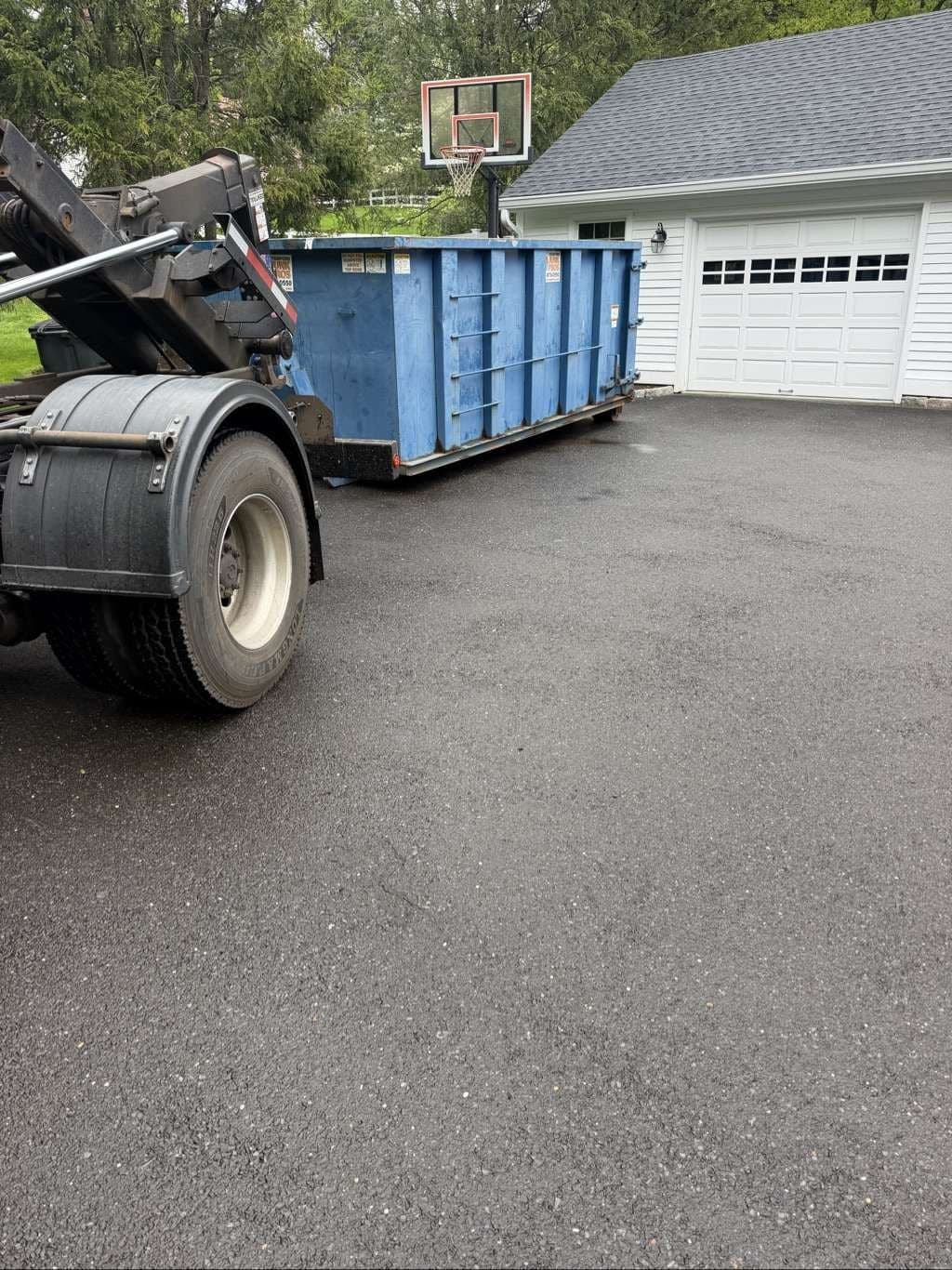
Litchfield County work gets planned from the driveway up. Gravel drives, steep grades, and tight wooded turnarounds decide where a loaded container can actually live for two demolition days — and in mud season, a soft drive can veto a plan the forecast can't. Where a loaded truck shouldn't climb, the can stages low and the debris comes down to it, which is slower, priced openly, and kinder than ruts in a drive you just regraded.
The county runs roughly 45–90 minutes from our yards, so swaps get scheduled deliberately and bundling earns its keep: a garage plus a leaning shed or a fence line makes the mobilization worth the drive in both directions. Flag the drive's condition and everything else on the removal list at intake, and both plans — the partner's and ours — get built around it.
Why this page has no price grid
A detached garage is a real building — footprint on the town's records, a roof carrying two or three generations of shingles, a slab underneath — and it is quoted per property by our licensed demolition partner, the contractor who walks the structure, scopes the teardown, and contracts it with you directly under their own license. Roof layers, interior finish, lofts, lean-tos, block half-walls, and lot lines move that number too much for a grid to be honest about it. Request a demolition quote and one intake scopes both halves of the project.
The half Grizzly prices openly is the debris. Here's the structural fact behind the whole arrangement: demolition contractors rent their roll-off containers from someone. Grizzly owns a hundred identical cans, staged out of two Connecticut yards and dispatched by the same people who answer the first call. Debris volume is the part of a garage project Grizzly controls end to end, and it moves at the same posted rates every dumpster customer on this site sees.
That split is worth more on a garage than on almost anything else, because a garage is mostly tonnage once it's down. Asphalt roofing weighs far more than its area suggests, a doubled-up roof means two roofs' worth of weight, and plaster interiors carry more than their footprint hints at. You end up with two clean numbers instead of one blended one — the teardown from the contractor who performs it, the debris from the fleet that hauls it. Clearing the contents first is Grizzly's own junk-removal service, quoted by volume, and it makes the partner's walk-through more accurate.
Utilities dead, permit confirmed, then the demolition
Garage demolition is mostly sequencing, and the teardown is the last act rather than the first. Act one: the electrical. Most detached garages carry at least one circuit from the house — lights, an opener, sometimes a subpanel that fed someone's workshop ambitions decades ago — and that feed must be disconnected and made safe at the source by a licensed electrician before a demolition date exists on the calendar. Not taped off in the garage; dead at the panel, confirmed rather than assumed. Same rule for any water or gas line that ever crossed the yard.
Act two: the permit. A detached garage is the accessory structure most likely to need a demolition permit — it's a real building in every Connecticut building department's eyes. The permit sequence rides inside the partner's contracting process, and one call to your building department settles what your address needs.
Act three: the demolition itself, performed by our licensed demolition partner on a schedule they set after the site walk. Grizzly's cans follow that schedule — placed before the first demolition day, swapped as they fill, hauled at posted rates. The demolition drives the container plan, never the reverse, so the site never sits buried waiting on an empty box.
Everything above the slab goes — the slab itself stays
The structure comes off the pad: walls, roof, framing, doors and tracks, sill plates, anchor hardware cut flush. What rides out in Grizzly's own dumpsters is the mixed construction stream that follows — framing, sheathing, siding, interior finish, and the roofing that made up most of the weight — hauled to state-permitted Connecticut transfer stations. Metal earns its keep along the way: garage doors, tracks, opener rails, and steel roofing get pulled aside for scrap recycling instead of paid disposal weight.
The slab is the firm line. Concrete never rides in our cans, and it stays put unless slab removal is written into the partner's scope — broken pad is dense clean-fill material with its own stream and its own hauler. A bare pad is rarely a problem anyway; it becomes the parking spot, the basketball half-court, the base for whatever replaces the garage. If bare ground is genuinely the goal, say so at intake so the concrete phase gets sequenced after the structure is gone, when the site is open and the work costs less.
Two more lines, stated plainly. Contents are Grizzly's own junk-removal service, quoted by volume and usually cleared before demolition day — but paint, oil, and fuel route through your town's hazardous-waste program rather than any truck of ours. And pre-1980 garages occasionally wear asbestos-cement siding or shingles; where suspect material turns up, licensed abatement comes first, and abatement waste never rides in a standard C&D can.
Garage Demolition in Litchfield County — questions we actually get
What about the slab?
The structure goes; the slab stays unless slab removal is written into the partner's scope. Concrete never rides in Grizzly's cans — broken slab is dense clean-fill material with its own stream and its own hauler. Most owners keep the pad as parking, a patio base, or the footprint for whatever replaces the garage.
The garage still has electricity — is that a problem?
It has to be dead before demolition starts — disconnected at the panel by a licensed electrician, not just switched off at the garage. Most detached garages are fed from the house panel by a buried or overhead run, and that disconnect gets confirmed, never assumed. Same rule for any water or gas line that ever crossed the yard.
Do I need a permit to demolish a detached garage?
Almost always yes — a detached garage is the accessory structure most likely to need a demolition permit, because every CT building department treats it as a real building on the records. The permit sequence is part of what the partner walks you through as they contract the job, and one call to your building department settles what your address needs.
Does Grizzly take the garage down?
No, and we'd rather say it plainly than blur it. A detached garage is a real building, and the teardown is coordinated through our licensed demolition partner — a licensed, insured demolition contractor who walks the structure, quotes the work, and contracts it with you directly. What Grizzly runs end to end is the debris: every load goes out in our own dumpsters at the same posted rates every customer on this site sees.
The garage is packed to the rafters — do I have to empty it first?
No, and this part is squarely Grizzly's own work. Clearing the contents is junk removal, which our teams run every day — same visit or the day before, quoted by volume. Pull out what you're keeping and leave the rest. Paint, oil, and fuel are the exception: those route through your town's hazardous-waste program rather than any truck of ours.
The garage has old knob-and-tube wiring from who knows when — is that a problem?
It's a sequencing item, not a dealbreaker. Old outbuildings up here carry mystery electrical more often than not — a feed somebody ran generations back, spliced and abandoned in stages — and the rule doesn't change: whatever ever fed that structure gets disconnected and made safe at the source by a licensed electrician before a demolition date is set. It gets confirmed, never assumed. If you don't know whether the garage is live, your electrician can trace it in one visit.
Can the garage and the collapsing shed behind it go in one project?
That's the right way to do it up here, and it's a good example of the two tracks working together. A shed is work Grizzly self-performs under its own service; the garage runs through our licensed demolition partner. One intake scopes both, the cans serve both, and clearing the whole corner of the parcel at once beats paying for two separate mobilizations at this county's distance.
Litchfield County towns we serve
WatertownThomastonPlymouthBethlehemHarwintonLitchfieldMorrisNew HartfordTorringtonWinchester / WinstedCornwallKentSalisburySharonWarrenNew MilfordRoxburyWoodburyBarkhamstedBridgewaterCanaan (Falls Village)ColebrookGoshenNorfolkNorth CanaanWashington
Drive times from our yard run ~45–90 min across the county.
More in Litchfield County
- Hot Tub Removal in Litchfield County
- Shed Removal in Litchfield County
- Above-Ground Pool Removal in Litchfield County
- Deck Removal in Litchfield County
- Fence Removal in Litchfield County
- House Demolition in Litchfield County
- In-Ground Pool Removal in Litchfield County
- Dumpster rental in Litchfield County
- Garage Demolition across Connecticut
- All demolition & removal services
Ready to book your delivery?
Same-day delivery when you call before 11 AM. Trucks dispatch Mon–Sat 8 AM – 4 PM (best-effort scheduling for earlier or later requests). Phones answered 8 AM – 10 PM, 7 days; live team Mon–Fri 8 AM – 4 PM, AI phone assistant other times.