Dumpster Weight Limits Explained
The can is never full when the weight runs out. Here's how included allowances, scale tickets, and overage actually work — from the operator who pays the transfer station.
20,000+
jobs completed
4.99 ★
463 reviews
Family-owned
since 2014 (12 years)
Licensed & insured
in Connecticut & New York
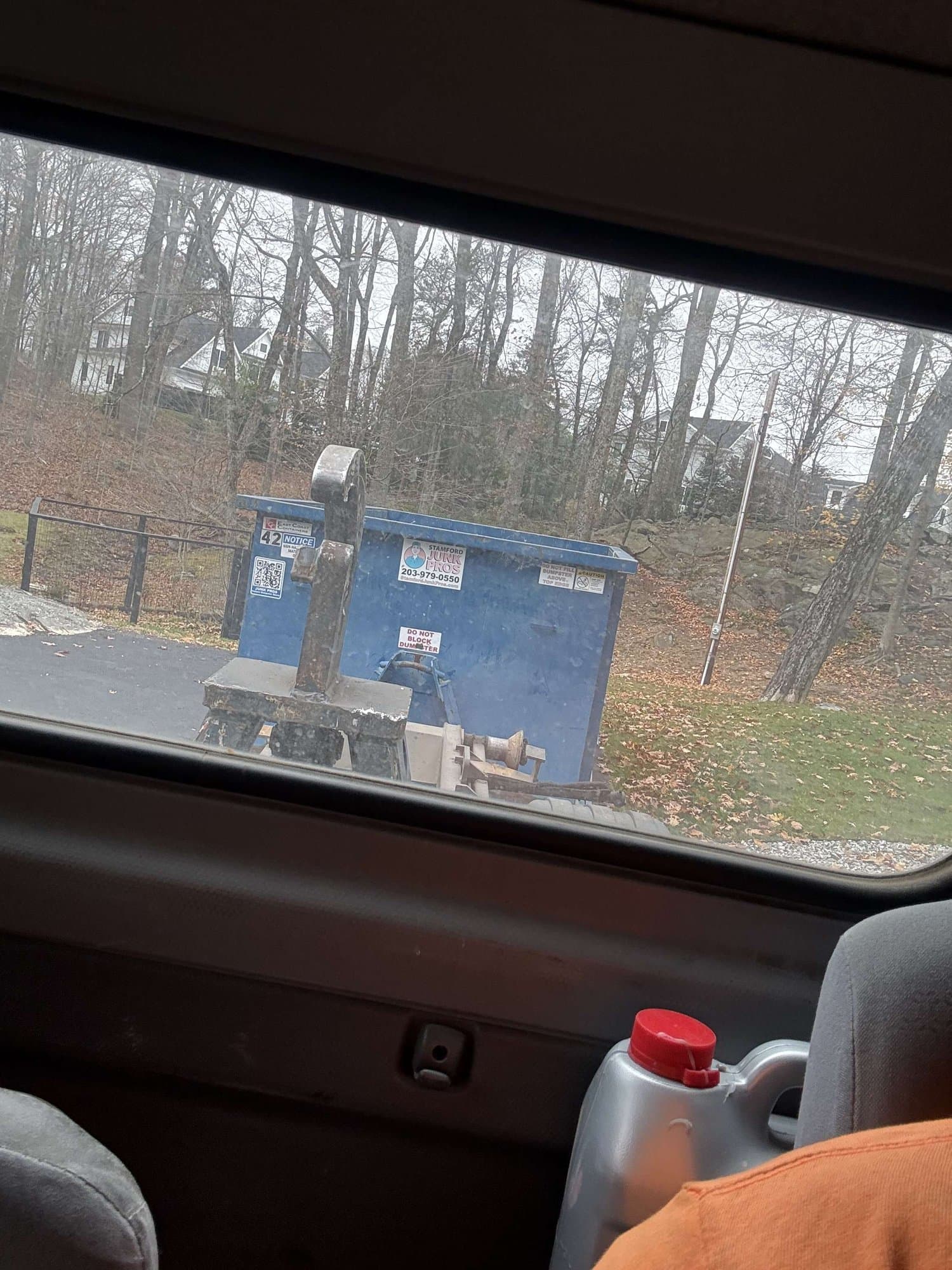
The most common misunderstanding in this business fits in one sentence: customers think they're renting space, but they're also renting weight. The can is a container; the bill is a scale ticket. Every roll-off that leaves your driveway crosses a certified scale at a licensed transfer station, and what it weighs — not how full it looks — is what disposal actually costs.
This post is the weight system explained from the operator's side: what's included, how overage is measured and billed, which materials are the repeat offenders, and how to budget a heavy job so the final invoice matches the plan.
The allowance system
Every size we run includes a disposal allowance in its flat rate:
- 10-yard — 1,000 lbs (half a ton) included
- 15-yard — 2,000 lbs (1 ton)
- 20-yard — 4,000 lbs (2 tons)
- 30/40-yard two-can tier — 6,000 lbs (3 tons) combined across the pair
Those allowances are calibrated to what each size's typical load actually weighs. A 15-yard of household cleanout junk — furniture, boxes, bagged clothes — almost never reaches 2,000 lbs. The allowance exists so that the majority of loads pay the flat rate and nothing else, while the genuinely heavy loads pay for exactly what they weigh past it.
The current rates, allowances, and the per-pound overage figure all live on one page: Dumpster Rental Prices in Connecticut. We don't reprint the numbers here so this guide can't drift out of date when pricing changes.
How overage is actually measured
There's no guessing involved, and no incentive for us to inflate it. The truck weighs in loaded and weighs out empty at the transfer station; the difference is your load, on a certified scale, printed on a ticket. Pounds past your allowance bill at our posted per-pound passthrough — which is the transfer station's own rate handed through without markup. We publish it because it isn't a profit center; it's the cost of dumping, redistributed to the loads that create it.
That passthrough framing matters when you compare quotes. Some haulers advertise a lower base rate and recover the difference with a marked-up overage schedule you discover after pickup. The math to run on any quote: base rate + (your realistic load weight − included allowance) × their per-pound rate. Our version of every input is on the pricing page.
The repeat offenders
After twelve years of scale tickets, the materials that overage cans are boringly predictable:
Asphalt shingles — about 300 lbs per square. A square is 100 sq ft of roof, so even a modest 15-square tear-off is roughly 4,500 lbs before the felt and drip edge. This is why roofs get sized by counting squares, not by looking at cubic yards — the full method is on the roofing dumpster page.
Plaster and lath. Connecticut's prewar housing gives up demo debris at roughly double the weight of the equivalent drywall. A plaster gut of two rooms can outweigh a drywall gut of a whole floor.
Tile and mortar bed. Old mud-set bathroom floors are two to three inches of concrete-like mortar under the tile. A single small bathroom floor can run several hundred pounds.
Flooring tear-up, wet debris, and "the basement layer." Waterlogged anything weighs double its dry self, and the bottom stratum of a long-occupied basement is always denser than the family remembers.
And one clarification worth repeating: the truly dense materials — concrete, brick, asphalt pavement, dirt, rock, sand, gravel — aren't overage items at all. They're excluded from every can entirely and need a clean-fill hauler; the construction debris page covers that boundary in detail.
Budgeting a heavy job honestly
Three moves, in order of preference:
1. Size by weight from the start. If the debris is dense, pick the size whose allowance fits the realistic load, even when the volume would fit a smaller can. A 20-yard with a 4,000-lb allowance is often the correct can for a load that would physically fit in a 15.
2. Split the streams. On renovations with mixed debris, dense material in one can and light material in the next keeps each load inside its allowance. The renovation dumpster page shows the volume-vs-density sizing logic per project type.
3. Budget the overage and stop worrying. Sometimes the honest answer is that your load is heavy and will cost what heavy loads cost. Because the rate is a published passthrough, you can compute the overage in advance to within a few dollars — which beats every alternative where the number is a surprise.
What the data says
We published the real distribution from our own job ledger — how often loads exceed their allowance, and what over-allowance loads typically weigh — in the Fairfield County Dumpster Cost Report. Short version: most loads don't overage at all, and the ones that do are overwhelmingly the dense-debris projects this post just described. Weight economics aren't a gotcha; they're the physics of disposal, and knowing them before the can arrives is the whole game.
Ready to talk through your project?
Call (203) 219-8855, 8 AM – 10 PM, 7 days; live team Mon–Fri 8 AM – 4 PM, AI phone assistant other times. Or use the instant-quote tools below.
Looking for service in your area?
We dispatch from two depots — Stamford and West Haven — across 5 CT counties + lower Westchester NY. Each county page rolls up the towns we cover with depot dispatch realities and same-day-vs-next-day framing.
Related posts
- Pricing11 min read
Dumpster Rental Cost in Connecticut
Real CT dumpster pricing from a Stamford-based hauler — four sizes from $447 to $899, what's included, what changes the price, and when junk removal beats a roll-off.
By Justin Hubbard - Pricing8 min read
What House Demolition Really Costs in Connecticut
Every printed house-demo price range online is too wide to plan with. Here's what actually moves the number, what has to happen before the first machine arrives, and the debris line — the one part with published rates.
By Justin Hubbard - Pricing8 min read
In-Ground Pool Removal Cost in Connecticut
Partial fill or full removal is the first decision, and it changes the price, the paperwork, and what you can build there later. The honest version of both options, plus the one budget line with published rates.
By Justin Hubbard
Answered 8 AM – 10 PM, 7 days; live team Mon–Fri 8 AM – 4 PM, AI phone assistant other times.