Grizzly Junk Pros · Family-owned since 2014 · 4.99 ★ × 463 reviews · 20,000+ jobs
In-Ground Pool Removal in Greenwich, CT
In-ground pool demolition coordinated through our licensed demolition partner — the excavation is theirs, and the debris goes out in our own dumpsters.
In Greenwich, this work runs from Old Greenwich out to Lucas Point and Round Hill.
Gunite is the default shell in this county's older backyards, and a gunite removal is a true demolition — breaking concrete before anything gets filled — which is why the excavation runs through our licensed demolition partner, scoped and contracted on the property. What breaks loose above the fill line is freight for our own dumpsters: decking tear-out where it's in scope, the equipment pad's heater and pump and plumbing, fencing due for retirement, and the mixed stream the dig produces. The partner settles the project's fork — partial fill-in or full shell removal — against what you want the yard to do next. Vinyl-liner pools turn up too; they give up their parts more easily.
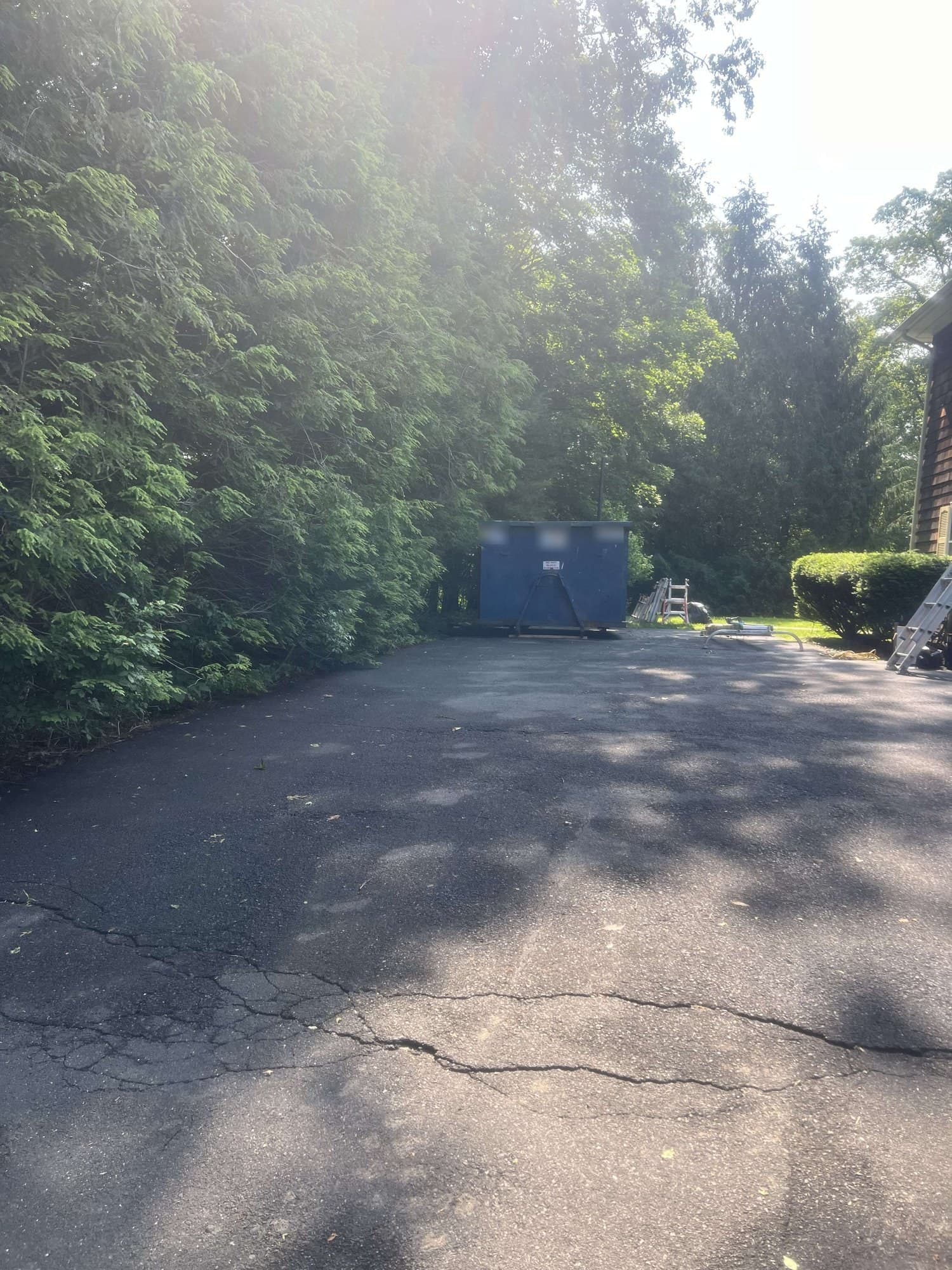
Pool debris on a tight Fairfield County lot
The pool is in the backyard; the can lives in the front. On this county's dense suburban lots, that gap — the wheelbarrow-and-machine path between where decking gets broken and where debris gets loaded — is the logistics conversation, and the partner's walk settles it alongside can placement before anything is scheduled.
Routing follows the county's one hard rule: the Merritt Parkway prohibits commercial vehicles, so cans arrive by I-95 or Route 7 and Route 8, about 30–75 minutes from our West Haven yard depending on the town. Pool-adjacent debris runs heavy — wet decking, tile, waterlogged equipment — so swaps get planned around weight as much as volume, and the math is stated before the dig starts.
Where Greenwich’s debris actually goes
The do-it-yourself route exists here: Greenwich’s station takes C&D at a published per-ton rate source (quoted in full in the disposal questions below), resident permit required. Our route: the debris leaves in the can that’s already on the job, weighed once, billed at posted rates — no permit line, no pickup-truck trips, no guessing what the scale will say.
How the job goes
The partner breaks or removes the shell and manages fill and compaction; our cans handle the surface debris around that plan.
What it costs
In-ground pool work is quoted per project by our licensed demolition partner — partial fill versus full removal drives the number, and the debris rides at Grizzly's posted rates.
What we take
Decking tear-out, equipment, and fencing move in our cans; the shell and fill belong to the partner's excavation scope, never our containers.
Disposal and permits in Greenwich — from the town’s own pages
Greenwich’s posted disposal point: Holly Hill Resource Recovery Facility source at 4 Holly Hill Lane source, with the posted schedule source in the questions below. It accepts construction and demolition debris source at the town’s published per-ton rate source, quoted in full in the disposal questions below. Station access requires a resident permit source (permit details).
Permits run through the Greenwich building department at 101 Field Point Road, Greenwich, CT 06830 source, 203-622-7700 source (department page).
A demolition permit is required for structure teardowns here source. The town publishes its demolition requirements — including any review or delay process for older structures — on its own page.
Our dumpsters in Greenwich
The demolition itself is partner-performed; the dumpsters and the disposal are Grizzly’s — and that’s the part Greenwich customers already know us for.
A “Friendly, professional, clean and courteous. Arrived on time and were efficient removing items. Reasonable value.”
A “Fast and professional! The crew was on time, easy to work with and got the job done fast and with great quality of service!”
A “Exc. Service. They were on time & had great pricing! Would highly recommend.”
In-Ground Pool Removal in Greenwich — questions we actually get
Full removal or partial fill-in — what's the difference?
Partial (the common route): the shell is broken up, the top portion demolished, and the hole filled and compacted. Full removal takes every piece of the shell out before filling. Full costs more and matters most when the future plan is building over the footprint. The partner scopes which one the property needs.
How long does an in-ground pool removal take?
Once permits are in hand, most fill-ins are measured in days — machine in, shell broken or removed per the scope, hole filled and compacted in lifts. The permit and scheduling runway in front of that is longer than the dig itself. The partner gives the working timeline when it scopes the property.
Will the yard be usable after?
A properly filled and compacted pool footprint becomes lawn. The honest caveat every homeowner should hear: many towns record the filled pool on the property file, and building later over a partial fill has rules. Ask the partner to put the fill spec in writing.
How does the machinery get to a backyard pool?
That's one of the first things the partner scopes on a walk-through. An excavator needs a path — commonly a fence section out and a run of protective mats across the yard. Some turf repair along the machine path is a normal part of any pool job, and it's worth asking the partner to spell out site restoration in the scope.
Anything I should handle before the work starts?
Know your yard. Where the septic and its leach field sit, where the well is, what's buried along the machine path — the partner needs all of it before an excavator moves. Keep the pool area secured until work begins, and decide early what happens to plantings in the access path. Everything else belongs to the scope.
Most pools around here are older gunite — does that change the removal?
It makes the project a demolition in the literal sense: a gunite shell has to be broken before anything gets filled, where a vinyl-liner pool gives up its liner and plumbing more easily. The partner scopes which route — partial fill-in or full shell removal — fits the property and what you plan to do with the yard. The broken-shell debris math is exactly why the dumpster side runs first-party here.
What does it cost to dump in-ground pool removal debris at the Greenwich transfer station?
Greenwich's published rate for residential construction and demolition material at Holly Hill Resource Recovery Facility (as published September 2026): Resident cars $0.00; Resident cars with a trailer $4.75/100 lbs or portion thereof; Resident trucks $4.75/100 lbs or portion thereof; Commercial cars & trucks $4.75/100 lbs or portion thereof. Towns repost these schedules on their own timetable, so check the source link before you budget against it. That's the do-it-yourself route; on our jobs the debris rides out in the can that's already on site, weighed once and billed at our posted rates.
Do I need a permit to use the Greenwich transfer station?
Yes — Greenwich requires a resident permit for station access, per the town's posted rules. Factor the permit into any DIY disposal math; our trucks don't need one because we don't use the resident line.
When is the Greenwich transfer station open?
The town posts (as published September 2026): Monday - Friday 7 am - 2:30 pm; Sat 7 am - 12 pm. Holiday closures apply — check the town's page before you load, or skip the trip entirely and let the can take the schedule problem off your plate.
Nearby towns we serve
Same trucks, same rates — the Greenwich routes share dispatch with the towns next door. No zone pricing anywhere in our service area.
Full county coverage, town by town: in-ground pool removal across Fairfield County.
More removal in Greenwich
Ready to book your delivery?
Same-day delivery when you call before 11 AM. Trucks dispatch Mon–Sat 8 AM – 4 PM (best-effort scheduling for earlier or later requests). Phones answered 8 AM – 10 PM, 7 days; live team Mon–Fri 8 AM – 4 PM, AI phone assistant other times.