Shed Demolition Cost in Connecticut
The four things that actually set a shed demo quote — size, foundation, contents, access — explained by the crew that writes the quotes. Plus honest DIY math.
20,000+
jobs completed
4.99 ★
463 reviews
Family-owned
since 2014 (12 years)
Licensed & insured
in Connecticut & New York
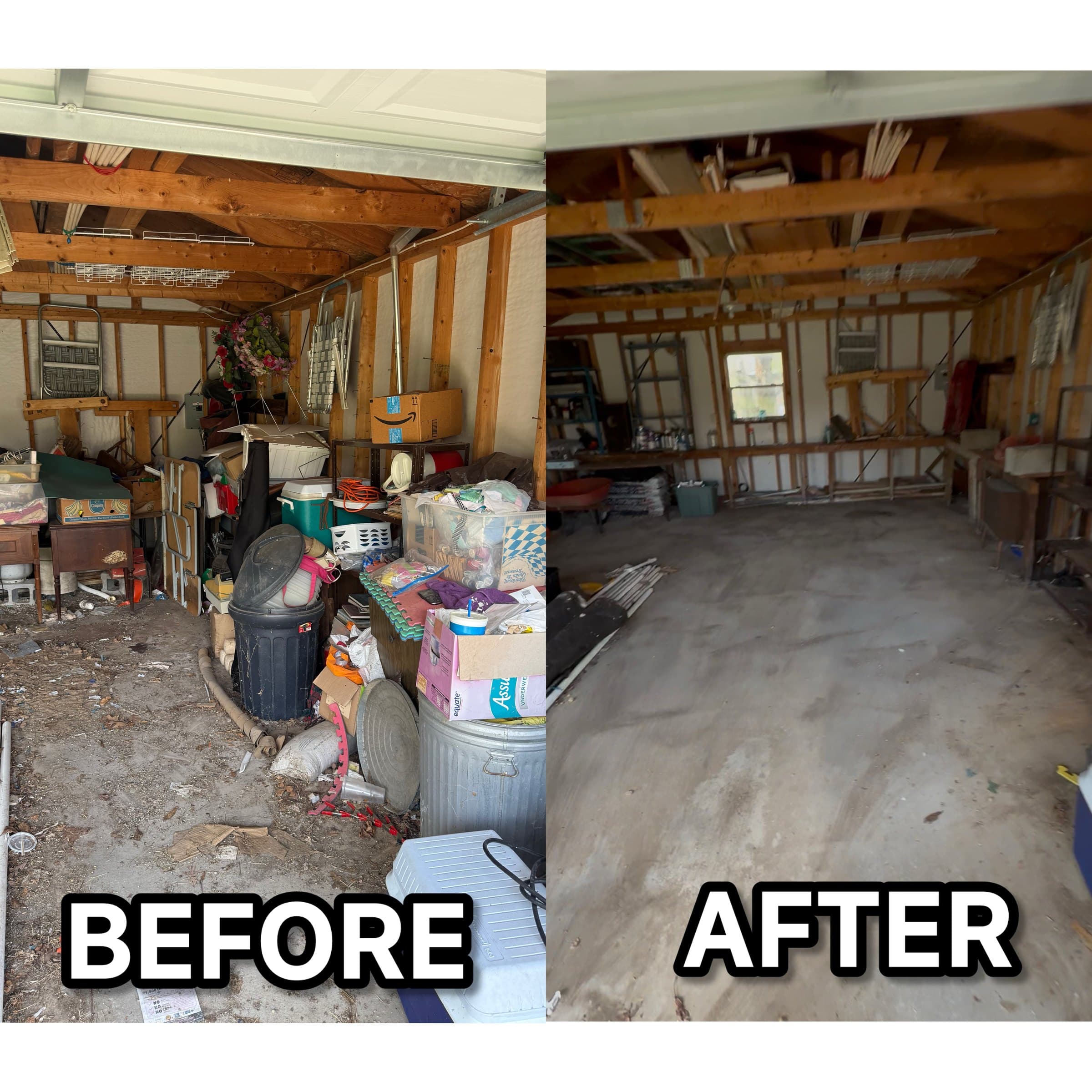
Shed demolition cost in Connecticut is set by four drivers: the shed's size class (garden sheds roughly 8x10 to 10x12, versus 12x16-and-up outbuildings), what it sits on, whether it's empty, and how close a truck can park. Our published starting prices for both size classes are on the shed removal page, and the number you actually pay gets fixed in writing at a free walkthrough.
Somewhere in the back of a lot of Connecticut yards stands a shed that has quietly crossed the line from storage to liability. The floor's gone spongy, the door binds in July, and the question has shifted from "should we fix it" to "what does it cost to make it disappear." A starting price can't tell you which drivers apply to your shed — that's what this post covers, driver by driver.
What drives the price
| Driver | How it moves the quote |
|---|---|
| Size | Two classes: garden sheds and 12x16-and-up outbuildings. A couple of feet within a class barely matters; crossing between classes does. |
| Material | Wood frame is the baseline. Metal sheds come apart fast; a shingled roof adds real disposal weight. |
| Access | Every extra fifty feet between the shed and the truck is hand-carried labor, repeated per armload. |
| Contents | Starting prices assume empty. A full shed is two jobs — cleanout plus demolition — quoted as two visible line items. |
| Concrete slab | The slab stays. Slab and footings never ride in our cans; if you need bare earth, that's a concrete contractor after we've cleared the structure. |
Driver one: size, but not the way you'd think
Shed pricing splits into two classes: the garden-shed range (roughly 8x10 to 10x12) and the outbuilding range (12x16 and up). Within a class, a couple of feet either way barely matters. Crossing between classes matters a lot, because the bigger structures aren't just more square footage — they're taller walls, heavier framing, often a loft, and sometimes enough structure that the teardown sequence changes.
What surprises people: a small shed in bad shape can cost more than a big shed in good shape. A partially collapsed structure comes apart in no predictable order — nothing can be dropped in clean sections, so everything gets handled piece by piece, slowly, from the outside in. If your shed is already leaning hard, expect the quote to land above the floor for its size class, and don't prop it up before we get there. Just keep people out of it.
Driver two: what it sits on
The walls come down the same way on every shed. The foundation is where quotes diverge:
- Skids on grade — the classic CT backyard setup. The pressure-treated runners come out with the structure (they're usually half-rotted anyway), and you're left with plantable ground. This is the baseline the starting price assumes.
- Gravel pad — arguably easier. Structure off, pad raked level, your choice whether the gravel stays for the next project.
- Concrete slab — here's the rule that matters: the slab stays. We don't cut, break, or haul concrete on any demo job; broken slab is clean-fill material for a different kind of hauler. The slab itself doesn't add to our price — but if your plan for the space requires bare earth, budget separately for a concrete contractor after we've cleared the structure. Plenty of customers keep the pad for the replacement shed and skip that cost entirely.
- Deck-block piers — usually come out with the floor framing at no meaningful change to the number.
If you don't know what your shed sits on, that's fine — it's the first thing we check at the walkthrough.
Already know your shed's size class and what it sits on? That's most of the quote. The published starting price for each class, the slab rule in full, and the two-minute path to a real number are all on the shed removal page.
Driver three: what's inside
Starting prices assume an empty structure. A shed full of thirty years of accumulation is really two jobs — a cleanout and a demolition — and we quote them as two visible line items at the same walkthrough, so you can decide whether the carrying is worth your weekend or ours. The cleanout half prices by truck volume, same as any junk removal call.
One category doesn't get a line item because it can't ride with us at all: paint, fuel, solvents, pool chemicals, and the rest of the hazardous shelf. Connecticut towns run household-hazardous-waste collection for exactly this; clear that shelf before demo day, because we can't load it and won't bury it in the debris.
Driver four: access
Every extra fifty feet between the shed and where the truck can park is labor, repeated for every armload of debris. A shed beside the driveway and the same shed at the bottom of a terraced backyard are different quotes. Fenced yards with narrow gates, slopes, landscaping we're protecting — all of it shows up in the walkthrough number, none of it shows up as a surprise afterward.
That's the actual reason we quote in person instead of over the phone: three of the four drivers can't be judged from a phone description, and we'd rather hand you one fixed number than a range with an asterisk.
What the quote includes
When we write a shed number, it covers the teardown (hand demo — saws and bars, not machines, which is why the flowerbed next to the shed survives), loading as we go, haul-out in our own trucks, disposal at licensed CT transfer stations, and metal pulled for recycling. Disposal is inside the price — there's no dump-fee line waiting on the invoice. Doors, windows, or hardware you want saved come off first if you flag them at the walkthrough.
No second company in the chain
There's a structural reason our shed numbers land where they do. A lot of shed removals run through a chain: one outfit swings the bars, another rents them the roll-off, and the dump fee picks up a markup at every handoff before it reaches your invoice. We cut the chain out. Our crew tears the shed down, the debris goes straight into our own can on our own truck, and that truck runs our own disposal route — the same one it runs every day. No rented roll-off sitting in your driveway on someone else's calendar, no per-load dump-fee markup, no second company billing the first before the first bills you. One crew, one truck, one number.
The DIY math, honestly
A small, dry, empty shed with truck access is a legitimate weekend project, and we'll say so at the walkthrough if that's what you've got. The realistic DIY tally: a reciprocating saw and blades, a pry bar, gloves and eye protection, a truck or trailer, transfer-station fees for several hundred pounds of mixed debris (the per-town rules and permit requirements are in our Connecticut transfer station guide), and — the line everyone forgets — multiple trips, because shed debris is bulkier than it looks stacked in a bed. A roll-off dumpster in the driveway collapses those trips into one container and is the honest middle path: you swing the bar, we handle the debris. Mind the weight allowance if the shed has shingles — roofing is dense, and every can size carries a weight cap before overage pricing kicks in.
Where DIY stops making sense: rot (nothing unscrews, everything crumbles), lofts and tall walls (gravity is now involved), suspect old roofing panels (some very old sheds carry asbestos-cement material — if you even suspect it, stop and get it assessed; we hold the same line and refer to licensed abatement), and any structure big enough that "a weekend" was always a lie.
Getting to a real number
Photos plus rough dimensions to the demolition quote form, or call and describe it — then a free walkthrough where the four drivers get checked against your actual shed and the price gets fixed in writing. The full starting-price grid for every structure type we take down, sheds included, is on the demolition overview, and the shed-specific process detail lives on the shed removal page.
We run shed demolition across the state, and each county page carries the local dispatch and disposal detail: Fairfield, New Haven, Hartford, Litchfield, Middlesex, and New London.
If the shed is one item on a longer teardown list, the Connecticut demolition cost guide covers how pricing works across every structure we take down.
The shed stopped earning its footprint years ago. The quote is free, and the walkthrough usually happens the same week.
Ready to talk through your project?
Call (203) 219-8855, 8 AM – 10 PM, 7 days; live team Mon–Fri 8 AM – 4 PM, AI phone assistant other times. Or use the instant-quote tools below.
Looking for service in your area?
We dispatch from two depots — Stamford and West Haven — across 5 CT counties + lower Westchester NY. Each county page rolls up the towns we cover with depot dispatch realities and same-day-vs-next-day framing.
Related posts
- Pricing8 min read
What House Demolition Really Costs in Connecticut
Every printed house-demo price range online is too wide to plan with. Here's what actually moves the number, what has to happen before the first machine arrives, and the debris line — the one part with published rates.
By Justin Hubbard - Pricing8 min read
In-Ground Pool Removal Cost in Connecticut
Partial fill or full removal is the first decision, and it changes the price, the paperwork, and what you can build there later. The honest version of both options, plus the one budget line with published rates.
By Justin Hubbard - Pricing7 min read
What Mobile Home Demolition Costs in Connecticut
A mobile home teardown isn't a big shed job — there's a steel chassis under it, a title behind it, and sometimes a park with its own rules. Here's what moves the number, and the debris line you can price today.
By Justin Hubbard
Answered 8 AM – 10 PM, 7 days; live team Mon–Fri 8 AM – 4 PM, AI phone assistant other times.