How Transfer Stations Price Your Dumpster Load
Every can we haul ends its day on a certified scale. Understanding the scale house — the weigh-in, the tip fee, the material rules — explains almost everything about dumpster pricing.
20,000+
jobs completed
4.99 ★
463 reviews
Family-owned
since 2014 (12 years)
Licensed & insured
in Connecticut & New York
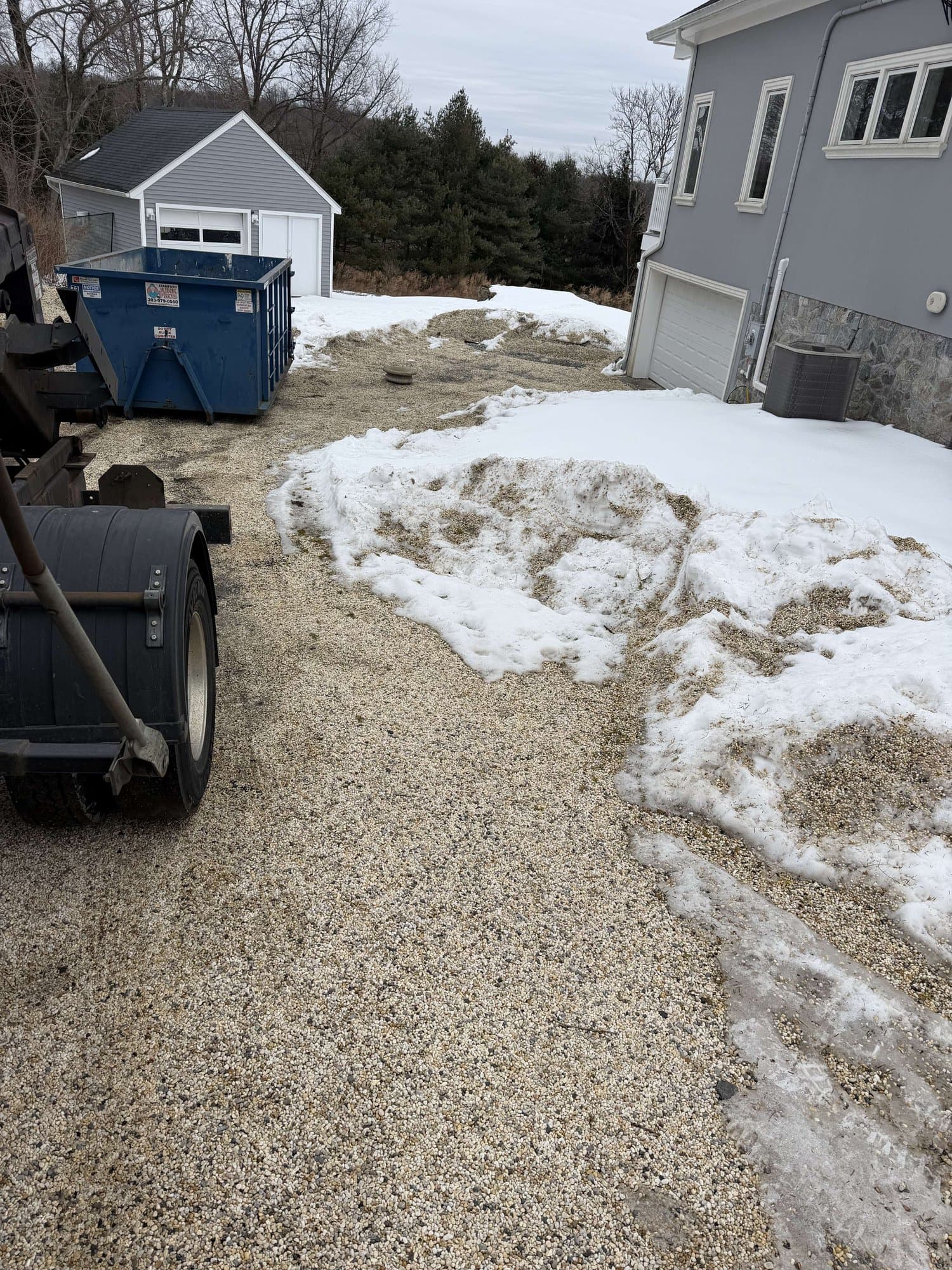
Every dumpster story ends in the same place: a scale house at a licensed transfer station, where our truck rolls onto a certified scale loaded and rolls off empty, and the difference — printed on a ticket — becomes the cost of your debris. If you understand that thirty-second transaction, almost everything about dumpster pricing stops being mysterious: why weight allowances exist, why overage is billed per pound, why some materials carry per-item fees, and why "unlimited weight" marketing is always hiding the ton somewhere.
This is the plainest tour of disposal economics we can give you, from the side of the counter that pays the tip fees.
The scale house transaction
A transfer station is a consolidation point, not a destination. Loads come in one truck at a time, get weighed, tipped onto the floor, sorted, and reloaded into long-haul transport toward wherever each material stream actually ends up — recyclers, waste-to-energy plants (which handle a large share of Connecticut's municipal trash), and out-of-region landfills.
The mechanics of the charge are simple: weigh in loaded, weigh out empty, pay the tip fee on the difference. By the ton, at posted rates, on certified scales. There's no negotiation at the window and no eyeballing — which, from your side, is a feature. When we bill weight overage on a can, we're passing through a number a certified scale produced, and the ticket exists.
Why the ton rules everything
Everything downstream of the tip floor is bought and sold by weight. Onward hauling is priced per ton. Waste-to-energy processing is priced per ton. Landfill capacity — increasingly out-of-state for Connecticut waste — is priced per ton. Volume constrains how much fits on a truck, but tonnage is the unit the entire disposal chain runs on.
That's the whole explanation for how roll-off pricing works, ours included. A flat rental rate can absorb a predictable amount of tonnage — that's your included weight allowance. Past it, every additional pound has a real, literal cost at the scale house, which is why honest operators bill overage per pound as a passthrough and dishonest ones bury a padded average in the base rate and let light loads subsidize heavy ones. The full allowance-and-overage system is covered in Dumpster Weight Limits Explained.
Why materials have rules
The tip floor also explains the material rules that surprise first-time renters:
Clean fill is a different industry. Concrete, brick, asphalt pavement, dirt, rock, sand, gravel — aggregate materials route to crushing and reuse operations, not to C&D transfer floors. That's why they're excluded from our cans outright rather than surcharged: a load mixed with clean fill is a problem at the scale house, not a premium. The boundary line lives on the construction debris page.
Per-item fees are real downstream costs. Mattresses require dismantling for recycling; CFC appliances require certified refrigerant reclaim before scrapping; tires have their own regulated stream. The processors charge per unit, so we do too — passthroughs, disclosed before booking, listed on the pricing page.
Hazmat never enters the stream. Paint, solvents, chemicals, batteries, and liquids are excluded at every link in the chain, which is why the answer is always CT DEEP household-hazardous-waste routes and town collection days, never "hide it in the middle of the can." Transfer stations inspect loads; a rejected load is everyone's bad day.
The municipal option, honestly
Many Connecticut towns run their own transfer stations with resident drop-off — permit-based access, posted hours, material limits, sometimes free for household bulky waste. For a single couch or a carload of cleanout debris, your town's station can genuinely beat renting anything, and our town pages say so wherever it's true, with each town's specifics sourced from the town's own site.
The math flips at project scale. A renovation or whole-house cleanout means many trips, vehicle wear, per-trip fees, and your weekend — against one can, one flat rate, one pickup. Where exactly the flip happens depends on your town's rules and your project; both options are legitimate, and knowing how the scale house works is what lets you choose with open eyes.
For the real-world outcomes of all this — how often loads exceed allowances, what over-allowance loads actually weigh across our own ledger — the Fairfield County Dumpster Cost Report publishes the medians. The scale house isn't a mystery; it's just arithmetic with a conveyor belt attached.
Ready to talk through your project?
Call (203) 219-8855, 8 AM – 10 PM, 7 days; live team Mon–Fri 8 AM – 4 PM, AI phone assistant other times. Or use the instant-quote tools below.
Looking for service in your area?
We dispatch from two depots — Stamford and West Haven — across 5 CT counties + lower Westchester NY. Each county page rolls up the towns we cover with depot dispatch realities and same-day-vs-next-day framing.
Related posts
- Informational8 min read
What Can Go in a CT Dumpster
What's allowed and what's banned from CT roll-off dumpsters — the hazmat list, electronics rules, mattress program, tire fees, and where the free-disposal alternatives are.
By Justin Hubbard - Pricing8 min read
Dumpster Weight Limits Explained
The can is never full when the weight runs out. Here's how included allowances, scale tickets, and overage actually work — from the operator who pays the transfer station.
By Justin Hubbard - Service Guides7 min read
Appliance Disposal in Connecticut: Every Route That Works
Five legitimate ways to get rid of an old appliance in Connecticut, what each one costs you in effort, and the federal refrigerant rule that sorts fridges from stoves.
By Justin Hubbard
Answered 8 AM – 10 PM, 7 days; live team Mon–Fri 8 AM – 4 PM, AI phone assistant other times.