Appliance Disposal in Connecticut: Every Route That Works
Five legitimate ways to get rid of an old appliance in Connecticut, what each one costs you in effort, and the federal refrigerant rule that sorts fridges from stoves.
20,000+
jobs completed
4.99 ★
463 reviews
Family-owned
since 2014 (12 years)
Licensed & insured
in Connecticut & New York
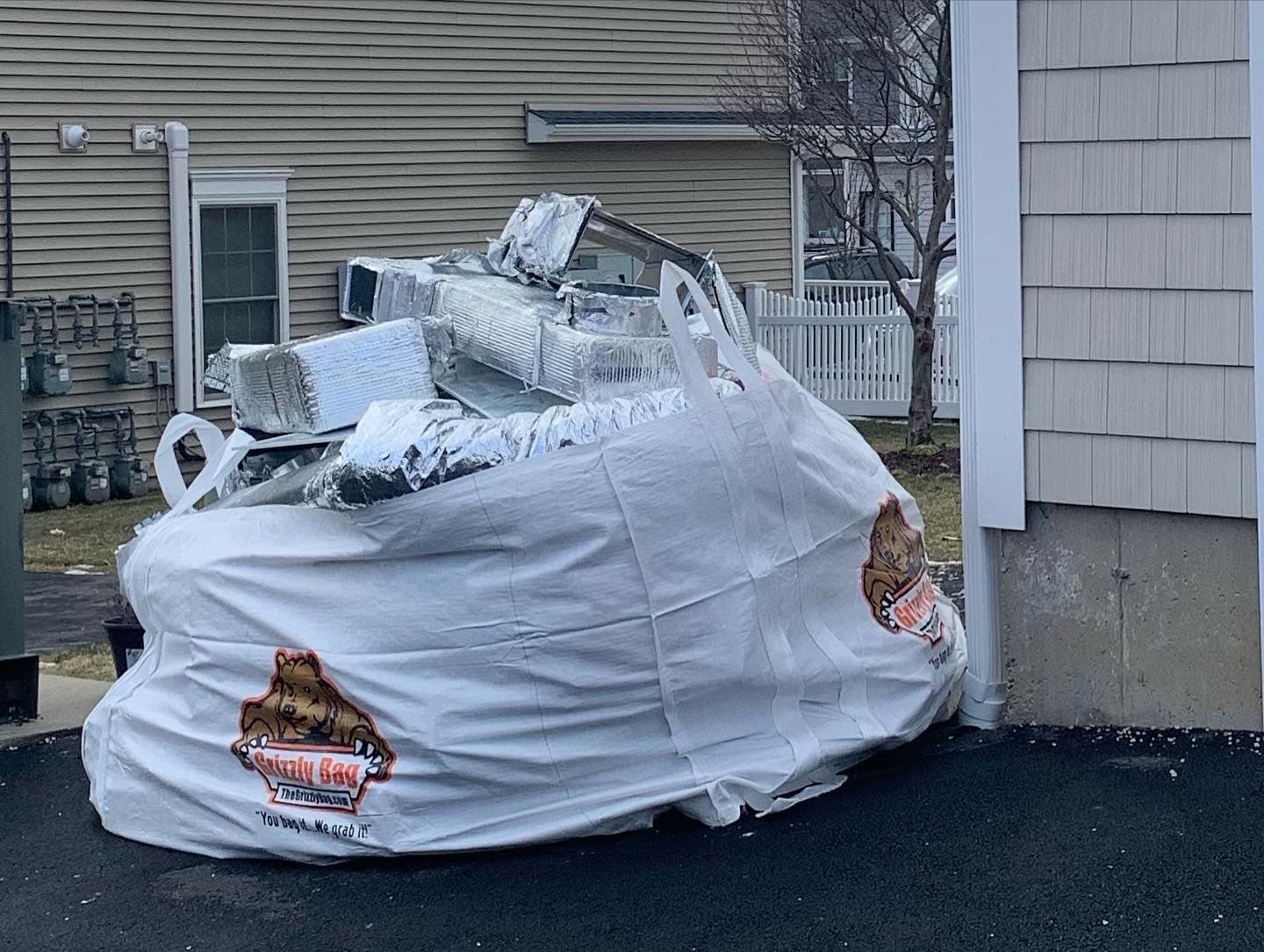
The dead appliance is a uniquely annoying category of junk. Too heavy for the trash, too worthless to sell, too big for the car, and — if it's a refrigerator — legally distinct from the stove sitting next to it. Connecticut homeowners have about five legitimate routes for getting rid of one, and the right pick depends on what the appliance is, whether it works, and how much of your own back you're willing to spend.
We run one of those routes ourselves — full detail on the appliance removal page — but this post covers all five honestly, including the ones where you don't pay us anything.
First, the rule that sorts everything: refrigerant
Before comparing routes, one distinction controls them all. Refrigerators, standalone freezers, window and portable air conditioners, and dehumidifiers all contain a sealed loop of refrigerant, and federal EPA regulations require that refrigerant to be recovered by a certified technician before the unit is scrapped. Venting it to the atmosphere is illegal — for haulers, for scrapyards, and for homeowners with a Sawzall and a plan.
That one rule explains almost every quirk of appliance disposal: why your town's transfer station has a separate area and often a separate fee for "white goods with refrigerant," why scrapyards won't take an intact fridge the way they'd take a washer, and why every hauler — us included — discloses a per-unit recovery fee on refrigerant-bearing units. The fee isn't a fridge tax; it pays for the certified evacuation step the law requires before the steel can be recycled.
Washers, dryers, dishwashers, ranges, ovens, microwaves, water heaters: no refrigerant, no special step, no extra fee on any route. They're just heavy.
Route one: your town
Most Connecticut towns will take appliances — through bulky-waste pickup, a transfer station drop-off, or both. And here's where we stay general on purpose: the rules vary town to town, in scheduling (some towns do call-ahead bulky pickup, some do seasonal collection, some require a permit sticker), in fees, and especially in refrigerant handling — some towns require documentation that the refrigerant was already recovered, others handle it on their end for a fee. Your town's public works or transfer station page is the authority; check it before you wrestle anything to the curb, because an appliance rejected at the curb is the worst of all outcomes — you've done the carrying and it's still yours.
The town route is usually the cheapest option. Its cost is paid in logistics: you do the moving, on the town's schedule, by the town's rules.
Route two: retailer haul-away
Buying a replacement? The delivery crew for the new unit will often take the old one — sometimes free with delivery, sometimes for a modest fee, with policies varying by retailer. If your timeline lines up, this is the most efficient route in existence: the appliance leaves the same doorway the new one entered, carried by people already standing there. Ask when you order, not when they arrive, and confirm whether the old unit needs to be disconnected first (it usually does).
Route three: scrap value
An appliance is mostly steel, with copper windings and aluminum bits that recyclers actually want. So can you sell it? Technically. Realistically, scrap prices fluctuate, a single appliance weighs a lot relative to what it pays, and the yard is rarely around the corner — for most homeowners the math nets out near zero once the truck, the gas, and the lifting are counted. The route earns its keep for the already-equipped: truck owners, multi-unit cleanouts, people who were driving past the scrapyard anyway. Refrigerant units still need certified recovery before any yard takes them — the rule follows the fridge everywhere it goes.
Route four: donation
A genuinely working, reasonably current appliance can sometimes get a second life through charity resale operations — but acceptance is selective, varies by location and by how full their floor is, and nobody enjoys hauling a dryer to a donation dock to be told no. Call first, describe the unit and its age, and get a yes before lifting anything. When we handle a pickup, the same honesty applies in reverse: tell us it works, and if it's donatable we route it to our charity partners rather than the scrap stream — and if it isn't, we'll say so instead of making a promise the donation dock won't keep.
Route five: a hauler
What you're buying from us is the carrying, the routing, and the compliance in one visit: crew with appliance dollies, door-jamb protection, the stairs problem solved, refrigerant-bearing units routed to certified recovery and everything else straight to the metal stream. Pricing is truck-space on the standard junk removal ladder, plus the disclosed per-unit recovery fee on refrigerant units only — current numbers on the appliance removal page, confirmed out loud before loading. It's the right route when the appliance is in a basement, when there are several of them, when it's part of a bigger cleanout, or when the value of your Saturday exceeds the cost of the pickup.
One boundary worth knowing: appliances aren't electronics
TVs, computers, monitors, and printers live under a completely different Connecticut system — the state's e-waste law has banned them from the trash since 2011 and gives residents free covered drop-off through municipal collection. Different rules, different routing, different page: electronics disposal in CT. The microwave is an appliance; the TV next to it is e-waste. Sort accordingly and both leave your life the right way.
A word on the driveway fridge
Whichever route you choose, don't let a refrigerator or freezer wait outside with its doors on. An old unit with a working latch sitting by the curb for days is a real hazard with a long history behind the old advice — take the doors off, or strap them shut, the day it leaves the house. It's a two-minute screwdriver job that removes the one genuinely dangerous thing about appliance disposal, and it applies no matter who's coming to get it or when.
The short version
Working and current: try donation or retailer haul-away. Dead and you own a truck: your town's route is cheapest. Dead, heavy, downstairs, or plural: that's the job we built the appliance removal service for. And whatever route you pick, the fridge plays by its own federal rules — plan for the refrigerant step, because every legitimate handler will.
Ready to talk through your project?
Call (203) 219-8855, 8 AM – 10 PM, 7 days; live team Mon–Fri 8 AM – 4 PM, AI phone assistant other times. Or use the instant-quote tools below.
Looking for service in your area?
We dispatch from two depots — Stamford and West Haven — across 5 CT counties + lower Westchester NY. Each county page rolls up the towns we cover with depot dispatch realities and same-day-vs-next-day framing.
Related posts
- Service Guides5 min read
Mattress Disposal in Connecticut
CT has a free statewide mattress takeback program most people don't know exists. Here's how it works, where to drop off, and when hiring a hauler beats the DIY drop.
By Justin Hubbard - Service Guides8 min read
Estate Cleanout Checklist for Connecticut Executors
The order of operations matters more than the effort. A working checklist for executors clearing a Connecticut property — from securing the house to the final walkthrough.
By Justin Hubbard - Service Guides7 min read
Hot Tub Removal Cost in Connecticut
Hot tub removal is the service nobody wants to do — which is why we do it. Honest CT pricing, real process, and the access challenges that change the cost.
By Justin Hubbard
Answered 8 AM – 10 PM, 7 days; live team Mon–Fri 8 AM – 4 PM, AI phone assistant other times.