Grizzly Junk Pros · Family-owned since 2014 · 4.99 ★ × 463 reviews · 20,000+ jobs
Garage Cleanout in Greenwich, CT
Priced by truck space. The paint and the gas can get routed, not loaded. Fairfield County.
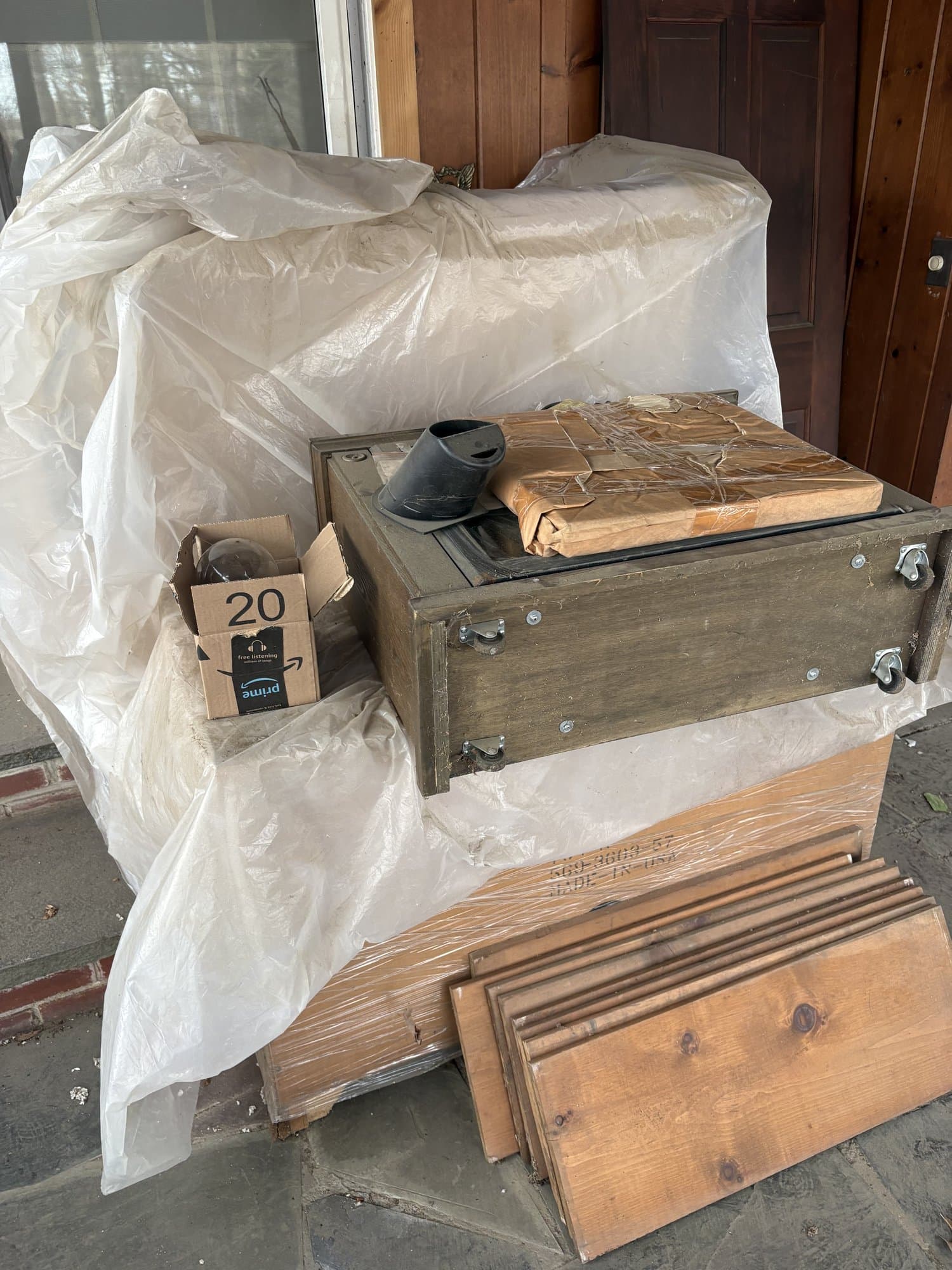
Of every space we clear, the garage has the highest overlap with things that can't ride in a truck. Paint, solvents, fuel, propane, motor oil, antifreeze, pool chemicals, tires. A Greenwich garage cleanout is therefore two jobs: the ordinary volume, which is easy, and the sorting of what has to be routed elsewhere, which is where the care goes. Both are covered here.
20,000+
jobs completed
4.99 ★
463 reviews
Family-owned
since 2014 (12 years)
Licensed & insured
in Connecticut & New York
What Greenwich garages tend to hold
Greenwich garages are usually detached, frequently large, and often older than the house's last renovation. Backcountry, Round Hill and Mid-Country properties have outbuildings that function as garages and hold estate-scale accumulation: lawn tractors, pool chemicals, decades of paint. Belle Haven and Field Point Park add gated access that has to be arranged before the truck arrives. Old Greenwich, Riverside and Cos Cob are more conventional attached and detached one- and two-car garages. Byram, Glenville and Pemberwick run smaller and denser, where the constraint is where the truck can legally sit rather than how much is inside.
We work across Downtown Greenwich, Old Greenwich, Riverside and Cos Cob, in a town of about 63,500.
We have 2,011 job records in Greenwich since 2019 — dumpster drops, junk removal and cleanouts of every kind, not garages specifically. It's why the paragraph above is a description rather than a guess.
How a garage job runs
We sort at the door, not at the dump. The crew stages everything at the garage entrance in two piles: what goes on the truck, and what can't. The second pile is smaller than people fear and larger than they expect — usually paint, a fuel can, a propane cylinder and some old chemicals.
You see the second pile before we leave. Nothing gets quietly left in a corner or quietly loaded. We tell you what each item is and where it actually goes, and most of those destinations are free at your own town facility.
Shelving comes apart. Steel racking, plywood workbenches and wall units are the single most common thing that has to be dismantled to leave the building. That's included; it isn't an extra.
Then it's a normal haul. Truck space priced off the ladder, confirmed before the crew loads.
What we can't take out of a garage
This is the part that makes a garage different from every other cleanout. More prohibited material turns up here than in a basement, an attic or a whole house — and none of it can ride in our truck or in a rented can:
- Paint, stain, solvent, thinner. Connecticut runs PaintCare drop-off sites that take leftover architectural paint free. Fully dried-out latex with the lid off is usually acceptable as ordinary waste — check your town's rule first.
- Gasoline, diesel, kerosene, motor oil, antifreeze. Household hazardous waste collection, or in many towns a waste-oil tank at the transfer station.
- Anything with fuel still in it. Mowers, blowers, trimmers, generators, chainsaws. Drain the tank and we can take the machine.
- Propane cylinders. Grill tanks and camping canisters. Many Connecticut towns now take these free through cylinder-recycling programmes.
- Pool and lawn chemicals, pesticides, fertiliser. Household hazardous waste, always.
- Car batteries and tires. Accepted at most town facilities, frequently free, but never in a general load.
- Asbestos-containing material. Old siding or pipe wrap in a detached garage. Licensed abatement first — we stop and tell you.
We separate this as we work and show you what's left before we leave. Nothing gets quietly loaded, and nothing gets abandoned in a corner without you knowing it's there. The full reference is what can and can't go in a dumpster.
What a garage costs
Garages are the most predictable cleanout we price, because the space has a fixed footprint and the contents are visible.
- One-car garage, moderate contents — usually the 1/4 Truckload (~5 yd³) tier at $359.
- Two-car garage, well filled — usually 1/2 Truckload (~10 yd³) at $559.
- A few items, not a full clear — the Minimum Load at $179.
Three-car garages and any garage doubling as a workshop run above the half-truck line. The tier is confirmed on site before the crew loads, and shelving disassembly is included rather than added.
Should you just do it yourself?
Often, yes — and we'd rather say so than sell you a job you don't need.
Greenwich's own option — at 4 Holly Hill Lane, open Monday - Friday 7 am - 2:30 pm; Sat 7 am - 12 pm. A town permit or sticker is required. Details and the source link are in the disposal section further down this page.
Self-haul makes sense when the contents fit in two or three car loads, you have a vehicle that takes them, and nothing needs dismantling to leave the building.
Hiring makes sense when there's heavy steel shelving or a built-in workbench, when the volume is past what a few trips can move, when there's no suitable vehicle, or when the timeline is a closing date rather than a free weekend.
Disposal in Greenwich
Verified from Greenwich’s own municipal pages — every fact links its source.
Greenwich’s posted disposal point: Holly Hill Resource Recovery Facility source at 4 Holly Hill Lane source, with the posted schedule source in the questions below. It accepts construction and demolition debris source at the town’s published per-ton rate source, quoted in full in the disposal questions below. Station access requires a resident permit source (permit details).
Permits run through the Greenwich building department at 101 Field Point Road, Greenwich, CT 06830 source, 203-622-7700 source (department page).
A demolition permit is required for structure teardowns here source. The town publishes its demolition requirements — including any review or delay process for older structures — on its own page.
See the full Connecticut Transfer Station Guide →
Street placement? The dumpster-permit answer, statewide. Loading rules? What can’t go in — and the law behind each item.
From Greenwich customers
A “Friendly, professional, clean and courteous. Arrived on time and were efficient removing items. Reasonable value.”
A “Fast and professional! The crew was on time, easy to work with and got the job done fast and with great quality of service!”
A “Exc. Service. They were on time & had great pricing! Would highly recommend.”
Garage cleanout questions, Greenwich
What does a garage cleanout cost in Greenwich?
A one-car garage usually lands on the quarter-truck tier at $359; a filled two-car at the half-truck tier at $559. Garages estimate well from photographs, so you can have a tier before anyone drives out.
Can you take the paint and the gas can?
No — and neither can a rented dumpster. Paint, solvent, fuel, motor oil, antifreeze, propane cylinders, pool and lawn chemicals, tires and car batteries all need a different route, usually your town's household hazardous waste collection or a designated drop-off. We separate them as we work and tell you exactly what's left and where each item goes before we leave.
What about the lawnmower?
Drain the fuel and we'll take it. A mower, blower, trimmer, generator or chainsaw with fuel still in the tank can't go on the truck; empty, it's ordinary scrap and often has a free metal-recycling route at a town facility.
Do I have to take the shelving apart first?
No. Steel racking, plywood workbenches and overhead storage almost never fit through a garage door assembled, so dismantling them is part of the job rather than an extra charge.
Would it be cheaper to haul it myself?
Possibly, and we'll say so. Greenwich has its own facility — the details and hours are in the disposal section on this page. If the contents fit in two or three car loads and nothing is bolted down, self-hauling costs you a weekend. Heavy shelving, real volume, or no suitable vehicle is what tips it the other way.
Related
- Garage cleanouts across Connecticut — the full service and how the pricing works
- Junk removal in Greenwich — when it's more than the garage
- Estate cleanout in Greenwich — clearing a whole property rather than one space
- Whole-home cleanout in Greenwich — the whole property, scheduled around a moving or closing date
- Dumpster rental in Greenwich — load it yourself over a week instead
- What can't go in a dumpster — the full prohibited list, which a garage tests harder than any other room
Clearing a garage in Greenwich?
Call (203) 219-8855, 8 AM – 10 PM, 7 days; live team Mon–Fri 8 AM – 4 PM, AI phone assistant other times. Send photos and we'll give you a tier before anyone drives out.