Grizzly Junk Pros · Family-owned since 2014 · 4.99 ★ × 463 reviews · 20,000+ jobs
Garage Cleanout in Monroe, CT
Priced by truck space. The paint and the gas can get routed, not loaded. Fairfield County.
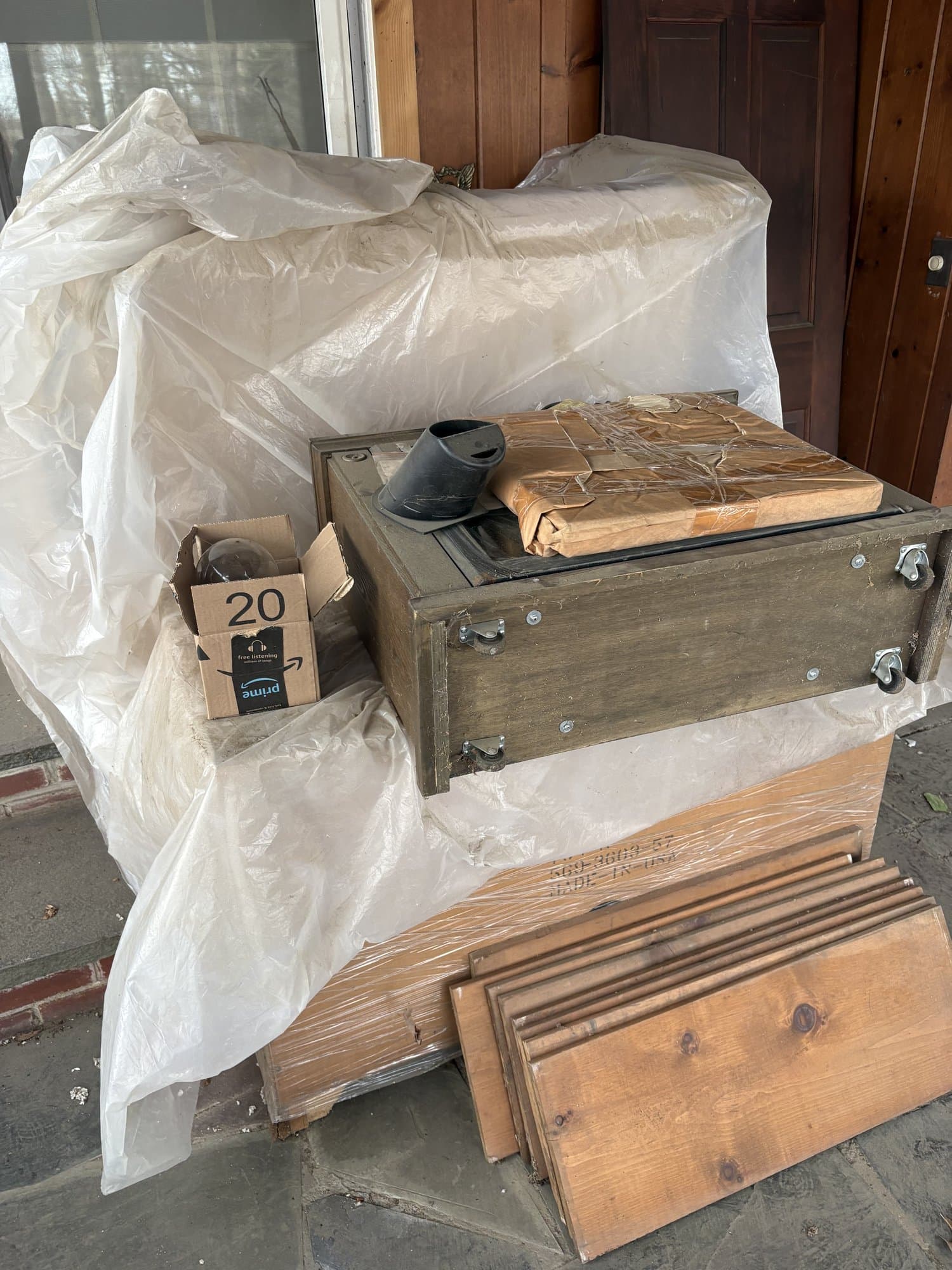
A garage cleanout is the most predictable job we quote and the one most likely to contain something we can't legally take. Those two facts sit together: the volume in a Monroe garage is easy to estimate from a photo, and the shelf above the workbench is where the paint, the solvent and the half-full gas can live. This page covers both — what a garage here actually runs, and what has to go somewhere other than our truck.
20,000+
jobs completed
4.99 ★
463 reviews
Family-owned
since 2014 (12 years)
Licensed & insured
in Connecticut & New York
What Monroe garages tend to hold
Monroe garages are mostly attached two-car on suburban lots with straightforward driveway access — Monroe Center, Stepney, Upper Stepney and the Pepper Street corridor all take a full-size truck without difficulty. Volume runs conventional. The rural edge around Stevenson and Webb Mountain adds larger parcels where a detached garage or barn holds its own separate accumulation, and those behave more like Easton than like the rest of Monroe. Asking about outbuildings before quoting is the difference between one visit and two.
We work across Stepney, Stevenson, Monroe Center and Upper Stepney, in a town of about 18,800.
The process, and the part most companies skip
Clearing the volume is easy. A two-car garage empties in a few hours, and the price comes off a ladder you can read in advance.
The part that takes judgment is the shelf above the bench. That's where paint cans, solvent, thinner, a fuel container, maybe a propane cylinder and a box of unlabelled chemicals sit. None of that goes on our truck. What we do is separate it as we work, identify it for you, and tell you where it goes — usually your own town's household hazardous waste collection, usually free.
Shelving and built-ins come apart as part of the job. Steel racking and plywood benches almost never fit through a standard garage door assembled.
Everything else is an ordinary haul, priced by truck space and confirmed before loading.
What we can't take out of a garage
This is the part that makes a garage different from every other cleanout. More prohibited material turns up here than in a basement, an attic or a whole house — and none of it can ride in our truck or in a rented can:
- Paint, stain, solvent, thinner. Connecticut runs PaintCare drop-off sites that take leftover architectural paint free. Fully dried-out latex with the lid off is usually acceptable as ordinary waste — check your town's rule first.
- Gasoline, diesel, kerosene, motor oil, antifreeze. Household hazardous waste collection, or in many towns a waste-oil tank at the transfer station.
- Anything with fuel still in it. Mowers, blowers, trimmers, generators, chainsaws. Drain the tank and we can take the machine.
- Propane cylinders. Grill tanks and camping canisters. Many Connecticut towns now take these free through cylinder-recycling programmes.
- Pool and lawn chemicals, pesticides, fertiliser. Household hazardous waste, always.
- Car batteries and tires. Accepted at most town facilities, frequently free, but never in a general load.
- Asbestos-containing material. Old siding or pipe wrap in a detached garage. Licensed abatement first — we stop and tell you.
We separate this as we work and show you what's left before we leave. Nothing gets quietly loaded, and nothing gets abandoned in a corner without you knowing it's there. The full reference is what can and can't go in a dumpster.
Cost, and the honest comparison
A one-car garage typically lands at $359 (1/4 truckload (~5 yd³)); a full two-car at $559 (1/2 truckload (~10 yd³)); a small clear-out at $179.
Compare that against doing it yourself before you book. If the contents fit in two or three car loads and your town takes the material, self-hauling costs you a weekend and little else. What tips it the other way is heavy shelving, anything needing disassembly, no vehicle that fits the load, or a stack of items your town facility won't accept anyway.
A 10-yard roll-off at $447 is the third option — you load at your own pace over the rental window instead of in one afternoon.
The do-it-yourself option, honestly
Monroe's own option. Details and the source link are in the disposal section further down this page.
A garage is one of the few spaces where self-hauling genuinely competes. The contents are mostly light, they're already at ground level, and they're next to where you'd park the car.
Where that breaks down: steel racking bolted to studs, plywood benches built in place, and anything you can't lift alone. Those are what turn a free weekend into three weekends. The other break point is the hazardous pile — that's a separate trip to a separate facility on a separate schedule regardless of who does the rest.
Disposal in Monroe
Verified from Monroe’s own municipal pages — every fact links its source.
Monroe’s posted disposal point: Two town facilities rather than one transfer station — the town's page refers to ‘The Spring Hill Road Transfer Station and Garder Road Landfill’. Monroe is one of the three towns (with Trumbull and Easton) served by the shared TEaM transfer station on Spring Hill Road; the town publishes a separate ‘Rules for Disposal - Garder Road & Spring Hill Road’ document and an annual Bulky Waste Pickup Program. source
For furniture-scale material: The town runs an annual bulky waste pickup through Public Works — the Highway division ‘participates in the annual bulky waste pickup and collection of waste motor oil’ — alongside the two drop-off sites. Public Works: 7 Fan Hill Road, Monroe, CT 06468, (203) 452-2800. source (program info)
See the full Connecticut Transfer Station Guide →
Street placement? The dumpster-permit answer, statewide. Loading rules? What can’t go in — and the law behind each item.
From Monroe customers
A “We love dumpsters!! Everyone has always been super friendly and helpful with all of our dumpster needs. Thank you a zillion!!”
Garage cleanout questions, Monroe
What does a garage cleanout cost in Monroe?
A one-car garage usually lands on the quarter-truck tier at $359; a filled two-car at the half-truck tier at $559. Garages estimate well from photographs, so you can have a tier before anyone drives out.
Can you take the paint and the gas can?
No — and neither can a rented dumpster. Paint, solvent, fuel, motor oil, antifreeze, propane cylinders, pool and lawn chemicals, tires and car batteries all need a different route, usually your town's household hazardous waste collection or a designated drop-off. We separate them as we work and tell you exactly what's left and where each item goes before we leave.
What about the lawnmower?
Drain the fuel and we'll take it. A mower, blower, trimmer, generator or chainsaw with fuel still in the tank can't go on the truck; empty, it's ordinary scrap and often has a free metal-recycling route at a town facility.
Do I have to take the shelving apart first?
No. Steel racking, plywood workbenches and overhead storage almost never fit through a garage door assembled, so dismantling them is part of the job rather than an extra charge.
Would it be cheaper to haul it myself?
Possibly, and we'll say so. Monroe has its own facility — the details and hours are in the disposal section on this page. If the contents fit in two or three car loads and nothing is bolted down, self-hauling costs you a weekend. Heavy shelving, real volume, or no suitable vehicle is what tips it the other way.
Related
- Garage cleanouts across Connecticut — the full service and how the pricing works
- Junk removal in Monroe — when it's more than the garage
- Estate cleanout in Monroe — clearing a whole property rather than one space
- Whole-home cleanout in Monroe — the whole property, scheduled around a moving or closing date
- Dumpster rental in Monroe — load it yourself over a week instead
- What can't go in a dumpster — the full prohibited list, which a garage tests harder than any other room
Clearing a garage in Monroe?
Call (203) 219-8855, 8 AM – 10 PM, 7 days; live team Mon–Fri 8 AM – 4 PM, AI phone assistant other times. Send photos and we'll give you a tier before anyone drives out.