Grizzly Junk Pros · Family-owned since 2014 · 4.99 ★ × 463 reviews · 20,000+ jobs
Garage Cleanout in Deep River, CT
Priced by truck space. The paint and the gas can get routed, not loaded. Middlesex County.
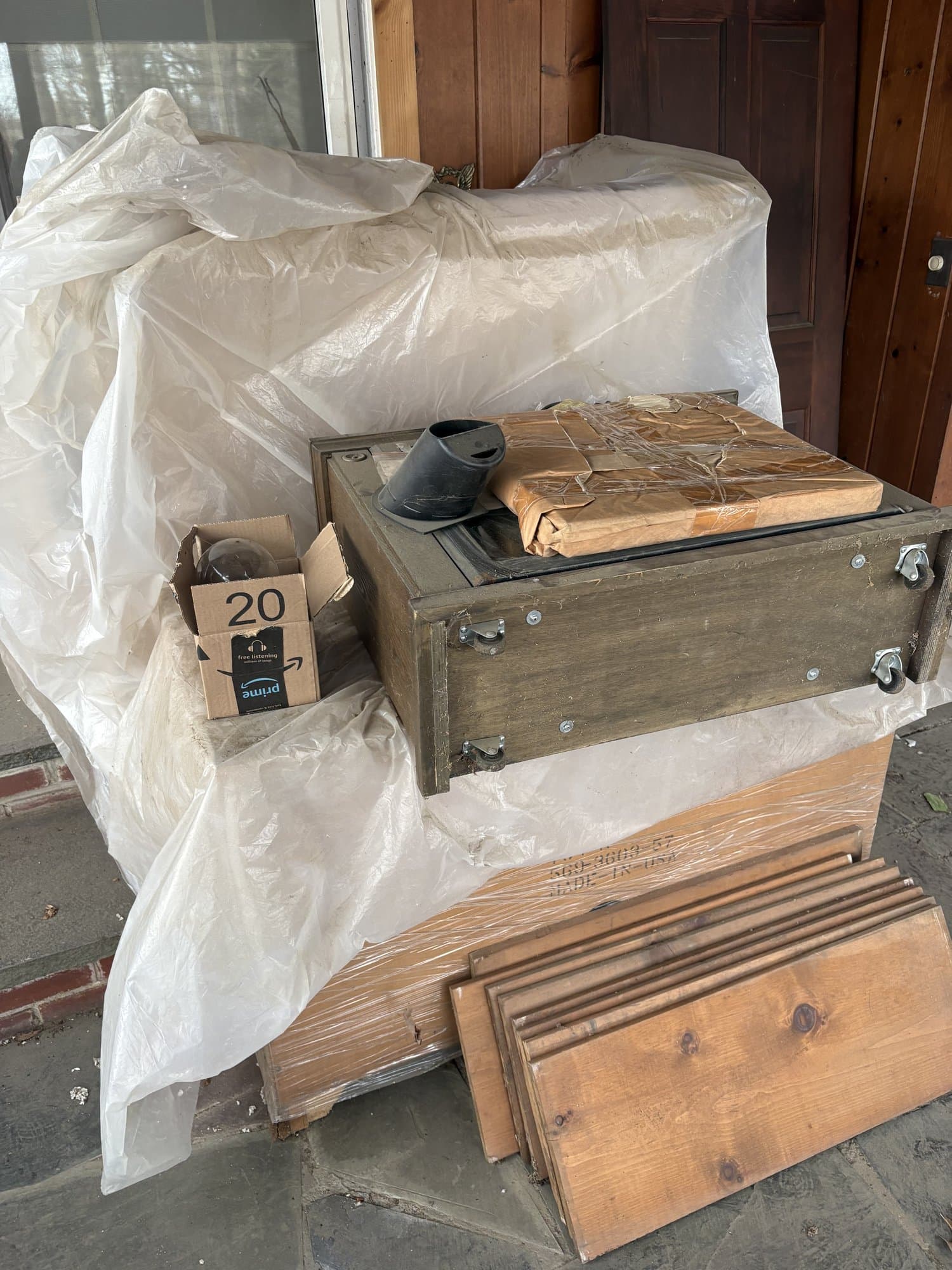
The honest framing for a Deep River garage cleanout is that you may not need us. A single carload of ordinary junk is a trip to your own transfer station and an afternoon. What changes the maths is volume, heavy shelving, anything that needs disassembly, and the pile of paint and fuel containers that a town facility handles differently from household waste. We've put all of that below rather than just the phone number.
20,000+
jobs completed
4.99 ★
463 reviews
Family-owned
since 2014 (12 years)
Licensed & insured
in Connecticut & New York
What Deep River garages tend to hold
Deep River garages are typically one- and two-car detached structures. The village housing around Deep River Center, Main Street and the Landing is compact, with narrow openings and short driveways. Winthrop, Plattwood, Cedar Swamp and the Devitt's Field area are more rural, with larger detached garages that carry tools, lawn equipment and stored materials as well as the car. A typical Deep River garage lands in the quarter-truck band; the rural ones run to half.
We work across Deep River Center/Main Street, Deep River Landing, Plattwood area and Winthrop, in a town of about 4,600.
How we work a garage
The volume is the simple half. A crew arrives, stages at the door, dismantles the shelving that won't fit through it assembled, and loads. Most garages are done inside half a day.
The other half is separation. A garage is the household's unofficial chemical store — paint from every repaint, solvent, fuel for equipment that may or may not still run, propane, oil, antifreeze, sometimes pool or lawn chemicals. None of it belongs in a general load, ours or a rented can's.
So the crew separates as it goes and walks you through what's left before leaving. Nothing gets loaded that shouldn't be, and nothing gets abandoned in a corner without you knowing it's there and what to do with it.
What we can't take out of a garage
This is the part that makes a garage different from every other cleanout. More prohibited material turns up here than in a basement, an attic or a whole house — and none of it can ride in our truck or in a rented can:
- Paint, stain, solvent, thinner. Connecticut runs PaintCare drop-off sites that take leftover architectural paint free. Fully dried-out latex with the lid off is usually acceptable as ordinary waste — check your town's rule first.
- Gasoline, diesel, kerosene, motor oil, antifreeze. Household hazardous waste collection, or in many towns a waste-oil tank at the transfer station.
- Anything with fuel still in it. Mowers, blowers, trimmers, generators, chainsaws. Drain the tank and we can take the machine.
- Propane cylinders. Grill tanks and camping canisters. Many Connecticut towns now take these free through cylinder-recycling programmes.
- Pool and lawn chemicals, pesticides, fertiliser. Household hazardous waste, always.
- Car batteries and tires. Accepted at most town facilities, frequently free, but never in a general load.
- Asbestos-containing material. Old siding or pipe wrap in a detached garage. Licensed abatement first — we stop and tell you.
We separate this as we work and show you what's left before we leave. Nothing gets quietly loaded, and nothing gets abandoned in a corner without you knowing it's there. The full reference is what can and can't go in a dumpster.
The numbers
| Scope | Typical tier |
|---|---|
| A few items | Minimum Load — $179 |
| One-car garage | 1/4 Truckload (~5 yd³) — $359 |
| Filled two-car | 1/2 Truckload (~10 yd³) — $559 |
Above that — three-car garages, workshop conversions, anything with a mezzanine — runs past the half-truck line and we'll say so from the photos.
No garage surcharge. Shelving disassembly, the carry from the back wall, and separating the material we can't take are all part of the job rather than line items on top of it.
Is it worth hiring for?
Straight answer: for a light garage, probably not.
Deep River's own option — at 220 Winthrop Road, Deep River, CT 06417 (phone 860-526-6047), open Wed 8:00am to 4:00pm; Fri - Sun 8:00am to 4:00pm. A town permit or sticker is required. Details and the source link are in the disposal section further down this page.
The tipping points are physical rather than financial. Heavy shelving, built-in benches, overhead storage racks and anything requiring two people are what make a garage a job rather than an errand. So is a garage that's been accumulating for twenty years, where the volume genuinely exceeds a few car loads.
If you're on the fence, send photos. We'll give you a tier and tell you honestly whether it's worth the money.
Disposal in Deep River
Verified from Deep River’s own municipal pages — every fact links its source.
Deep River’s posted disposal point: Deep River Transfer Station source at 220 Winthrop Road, Deep River, CT 06417 (phone 860-526-6047) source, with the posted schedule source in the questions below. Station access requires a resident permit source (permit details).
For furniture-scale material: Resident sticker required — ‘You must have a current Resident sticker to be able to dump at the Deep River Transfer Station. If you do not have a current sticker, please see the Town Clerk. You will need to show your current motor vehicle registration with Deep River listed as the Tax Town in order to qualify for a sticker.’ source (program info)
See the full Connecticut Transfer Station Guide →
Street placement? The dumpster-permit answer, statewide. Loading rules? What can’t go in — and the law behind each item.
Garage cleanout questions, Deep River
What does a garage cleanout cost in Deep River?
A one-car garage usually lands on the quarter-truck tier at $359; a filled two-car at the half-truck tier at $559. Garages estimate well from photographs, so you can have a tier before anyone drives out.
Can you take the paint and the gas can?
No — and neither can a rented dumpster. Paint, solvent, fuel, motor oil, antifreeze, propane cylinders, pool and lawn chemicals, tires and car batteries all need a different route, usually your town's household hazardous waste collection or a designated drop-off. We separate them as we work and tell you exactly what's left and where each item goes before we leave.
What about the lawnmower?
Drain the fuel and we'll take it. A mower, blower, trimmer, generator or chainsaw with fuel still in the tank can't go on the truck; empty, it's ordinary scrap and often has a free metal-recycling route at a town facility.
Do I have to take the shelving apart first?
No. Steel racking, plywood workbenches and overhead storage almost never fit through a garage door assembled, so dismantling them is part of the job rather than an extra charge.
Would it be cheaper to haul it myself?
Possibly, and we'll say so. Deep River has its own facility — the details and hours are in the disposal section on this page. If the contents fit in two or three car loads and nothing is bolted down, self-hauling costs you a weekend. Heavy shelving, real volume, or no suitable vehicle is what tips it the other way.
Related
- Garage cleanouts across Connecticut — the full service and how the pricing works
- Junk removal in Deep River — when it's more than the garage
- Estate cleanout in Deep River — clearing a whole property rather than one space
- Whole-home cleanout in Deep River — the whole property, scheduled around a moving or closing date
- Dumpster rental in Deep River — load it yourself over a week instead
- What can't go in a dumpster — the full prohibited list, which a garage tests harder than any other room
Clearing a garage in Deep River?
Call (203) 219-8855, 8 AM – 10 PM, 7 days; live team Mon–Fri 8 AM – 4 PM, AI phone assistant other times. Send photos and we'll give you a tier before anyone drives out.