Grizzly Junk Pros · Family-owned since 2014 · 4.99 ★ × 463 reviews · 20,000+ jobs
Estate Cleanout in Killingworth, CT
Executor-led cleanouts, sorted before they're hauled. Middlesex County.
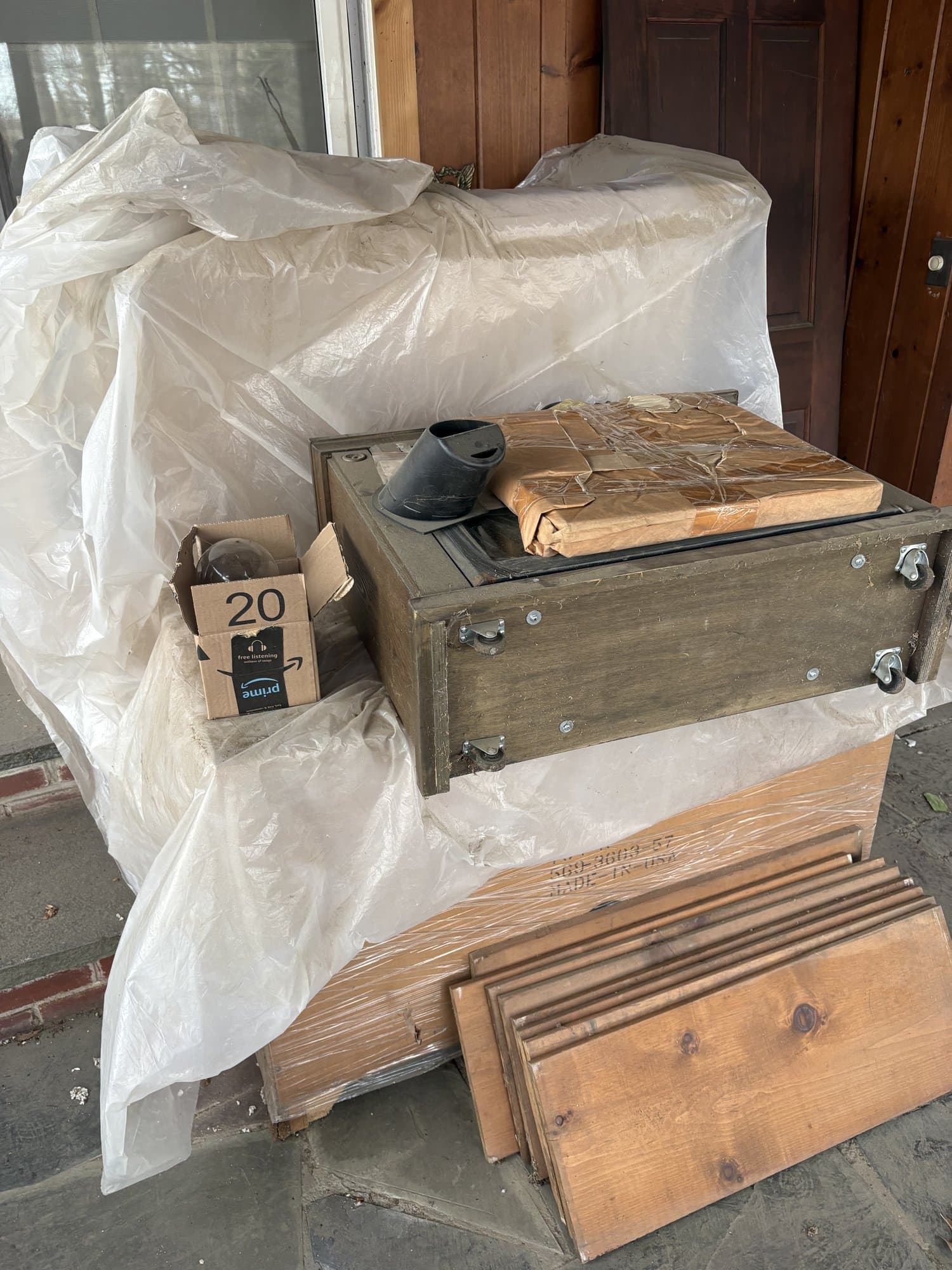
Most people who call us about an estate in Killingworth are doing it from somewhere else. A parent has died, the house has to be emptied before it can be listed or transferred, and the person responsible is an executor working through a to-do list written by a probate court. We do this work the way that situation actually needs it done: a walkthrough first, a written number before anything moves, and a crew that sorts before it hauls.
20,000+
jobs completed
4.99 ★
463 reviews
Family-owned
since 2014 (12 years)
Licensed & insured
in Connecticut & New York
About Grizzly Junk Pros
Grizzly Junk Pros is a family-owned junk removal and dumpster rental company in Connecticut. Justin Hubbard started it in Stamford in 2014 with one box truck. Today we run two depots, in Stamford and West Haven, and have completed 20,000+ jobs. Licensed and insured. Call (203) 219-8855.
What Killingworth properties tend to hold
Killingworth is rural, large-parcel and long-driveway nearly everywhere — Roast Meat Hill, Pond Meadow, Parker Hill, the Chatfield Hollow area. Barns and workshops are common and they carry their own volume, frequently tools, equipment and materials rather than household goods, which is a slower sort. That makes the walkthrough matter more here than it does in a subdivision town: quoting a Killingworth estate from the house alone would understate it most of the time. Killingworth Center is the densest part of town and still generous by county standards. Truck staging on a long dirt or gravel approach is worth confirming in advance.
We work across Killingworth Center, Roast Meat Hill, Chatfield Hollow area, Pond Meadow and Beckwith Cemetery area, in a town of about 6,500.
What actually happens, in order
- Someone walks it. In person, or on video if you're not in the state. No number goes out before this.
- You get it in writing. Load count, days, what's included, what isn't.
- The crew sorts as it goes. Room by room. Papers, photographs, anything from a safe, jewellery, service medals, anything with an account number — those come out and sit on a table for you, not on the truck. We set the bar low deliberately: if it's arguable, it's set aside.
- Donations get routed. Usable furniture and household goods can go to a charity partner rather than a transfer station. Same labour cost, better outcome, receipts where the charity issues them.
- We finish the property, not the day. Two to four days is typical for a full house. The same crew comes back each morning so nobody re-explains the basement.
If there's a closing or a listing date, say so at step one and we schedule backwards from it.
The numbers
- Minimum Load — $179. A few small items: bags, boxes, or one small piece of furniture
- 1/4 Truckload (~5 yd³) — $359. Small bedroom contents, or a few bulky items
- 1/2 Truckload (~10 yd³) — $559. Small apartment contents or several large furniture items
- Full Truckload (~20 yd³) — $979. Full home cleanout or major renovation debris
Estates are priced the same way as everything else we do: by how much of the truck you fill, agreed before the crew starts. What's different is the count. A single room might be one load. A full house with a finished basement is rarely fewer than four, often more, and spread over two to four working days. Anyone quoting a single "whole house" figure before walking it is guessing, and the guess is usually revised upward on day two. Where the volume justifies it, a 20-yard roll-off at $647 on site alongside the crew handles the bulk in parallel.
Working remotely
Many of these calls come from three states away, and the process is built for it rather than adapted to it.
We'll walk the property and record it — video for the whole thing, photographs for anything specific. The quote is emailed, in writing, with the numbers on it. We take direction from whoever you nominate, whether that's a realtor, an estate attorney or a family member who lives closer. Anything the crew sets aside gets photographed before we leave, so nothing gets a decision made about it without you. Invoicing happens after the work, itemised by what left and where it went.
Disposal in Killingworth
Verified from Killingworth’s own municipal pages — every fact links its source.
Killingworth’s posted disposal point: Killingworth Transfer Station — ‘Use of the Transfer Station is open to Killingworth residents at no charge.’ ‘Only residents of Killingworth may use the Transfer Station, and only for private household waste. Do not bring waste generated by a commercial enterprise.’ source. Address: Recycle Way, off Route 81, Killingworth, CT (‘just north of the library, behind Rocco Reale Field’); phone 860-391-5527 source, with the posted schedule source in the questions below. It accepts construction and demolition debris source. Station access requires a resident permit source (permit details).
For furniture-scale material: Free to residents with a town sticker; construction material is handled separately — ‘Demolition Materials: Asphalt, concrete, tile, brick, etc. go behind the scrap metal bin. No stones or dirt. Limited amounts of lumber, wallboard, and other large building materials may be discarded at the town garage. Call 860-663-1765 to arrange.’ ‘Bulky Waste: Large items such as furniture, mattresses and box springs, and large toys go in the bulky waste bin; no electronics.’ ‘Residents may dispose of regular household garbage, all paper (newspaper, cardboard, office paper), bottle and cans including plastics #1 -#7 without additional fees.’ source (program info)
See the full Connecticut Transfer Station Guide →
Street placement? The dumpster-permit answer, statewide. Loading rules? What can’t go in — and the law behind each item.
Estate cleanout questions, Killingworth
How long does an estate cleanout in Killingworth take?
A full property is usually two to four working days. A single room or a condo can be a morning. The walkthrough is what turns that range into a date — we count loads, look at the access, and tell you the schedule before you commit.
What happens to things that might be valuable?
They come out and get set aside for you to look at. Documents, photographs, anything in a safe or lockbox, jewellery, military items, paperwork with account numbers. We're not appraisers, so the bar is deliberately low: if a reasonable person might want to see it first, it doesn't go on the truck.
Can you do this if I live out of state?
Yes, and it's common. We walk the property and send photos or video, quote in writing by email, and coordinate with whoever holds the key — an agent, an attorney, a neighbour. You don't need to fly in for it.
Is there a single set price for a whole house?
No, and we'd be guessing if we gave you one. Estate cleanouts price by truck space on the same ladder as every other job — $179 for a minimum load through $979 for a full truck — and most full properties run several loads. The walkthrough produces the number.
Do you take donations somewhere rather than the dump?
Where the goods are in usable condition, yes. It doesn't reduce the price — the labour is identical — but it's a better outcome, and charities issue receipts where they can.
Related
- Estate cleanouts across Connecticut — the full service, the process, and how we work with executors and attorneys
- Junk removal in Killingworth — when the job is a room rather than a property
- Dumpster rental in Killingworth — when you'd rather load it yourself over a week
- Garage cleanout in Killingworth — the one space with the most that can't go on a truck
- Whole-home cleanout in Killingworth — the same scope when the owner is alive and deciding
- Connecticut transfer station guide — where Killingworth's municipal disposal actually happens
Clearing a property in Killingworth?
Call (203) 219-8855, 8 AM – 10 PM, 7 days; live team Mon–Fri 8 AM – 4 PM, AI phone assistant other times. Walkthrough first, written number before anything moves.