Kitchen and Bath Gut Dumpster Sizing for Contractors
Kitchen debris is bulky and light; bath debris is small and dense. Sizing a gut job means planning for both — here's the working logic we use with CT contractors.
20,000+
jobs completed
4.99 ★
463 reviews
Family-owned
since 2014 (12 years)
Licensed & insured
in Connecticut & New York
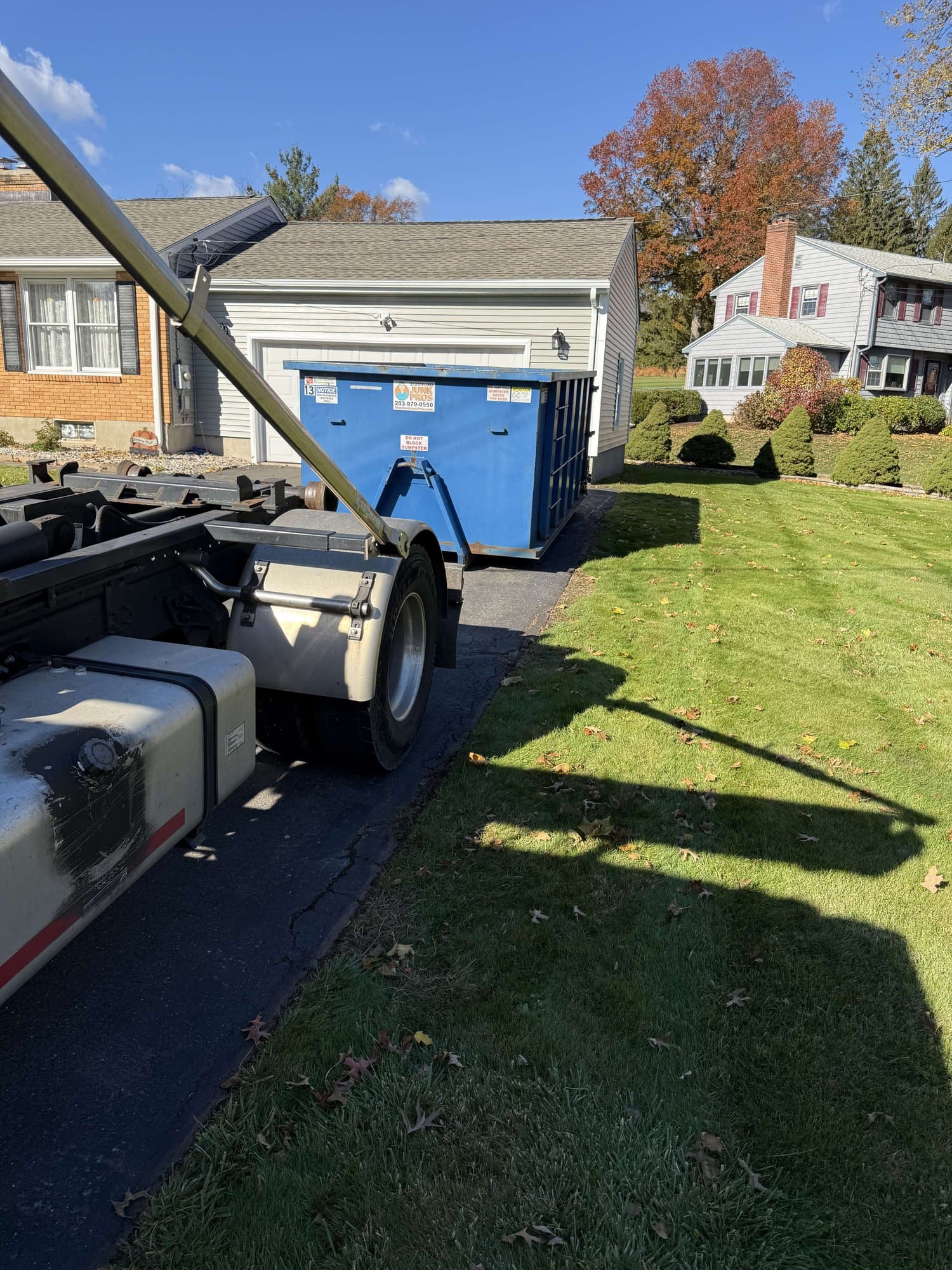
Every kitchen-and-bath contractor has eaten a sizing mistake at least once — the can that filled by noon on demo day, or the big can that shipped out half empty after a job that never generated the volume. Kitchens and baths punish sizing errors more than other residential scopes because they produce two opposite kinds of debris at once, and the right size depends on which kind your phase is actually making.
The published rates and full size specs live on the dumpster page, and the contractor-specific logistics live on the contractor page. This post is the sizing logic between them.
The two-debris problem
Kitchen debris is bulky and light. Cabinet boxes, counter sections, appliance shells, trim — it's mostly air in a rigid shape. Cabinets especially eat volume: a run of uppers and lowers that came out of a modest kitchen stacks into a startling pile unless someone breaks the boxes down. Crews that flat-pack cabinet carcasses as they demo fit noticeably more job into the same can.
Bath debris is small and dense. A gutted bathroom fits in a corner of a can by volume — and then the scale ticket tells a different story. Ceramic tile, the mortar bed under it, a cast-iron tub, plaster walls in older stock: that little pile is weight, and weight is what dumpster allowances actually meter.
A combined kitchen-and-bath gut produces both at once, which is why "how many yards is the job" is the wrong first question. The right one: which cap does this phase hit first — volume or weight?
The working size logic
Our standing recommendations, consistent with the sizing guidance across the site:
- Single bath gut → 10-yard. Dense debris, low volume. The 10's included allowance runs a half ton, and past any can's cap the overage passes through by the pound — on a bath, a modest planned overage on a small can usually beats renting volume you won't fill.
- Single kitchen gut → 15-yard. The sweet spot for a cabinets-counters-appliances-flooring scope, with a 1-ton allowance that absorbs mixed debris. This is the size we recommend most when a customer says the words "kitchen reno."
- Kitchen plus bath, or whole-floor scope → 20-yard. Two-ton allowance, real volume headroom. One flag whenever the 20 comes up: if the scope includes roofing or other heavy tear-off debris, remember the weight cap comes first — shingles and mud-set tile are the two materials that most reliably max a can's tonnage before its walls.
- Full gut-rehab → the 30/40-yard tier. Which, at our shop, means something specific: two 20-yard cans, delivered side by side or one-at-a-time with a swap when the first fills. For kitchen-bath work the swap configuration is usually the right shape — a 20's footprint fits the driveways you actually work in, and the second can arrives when the demo calendar says so, not before.
The older-housing-stock multiplier
A lot of Connecticut's renovation inventory predates drywall. Plaster-and-lath walls and mud-set tile floors are the two discoveries that most often blow up a sizing plan mid-job — same room dimensions, double-plus the tonnage of their modern equivalents. The tell is usually the house's age, and the cheap insurance is assuming the heavy version until the first opened wall proves otherwise. When a walkthrough surprise turns a drywall estimate into a plaster reality, same-day delivery (call before 11 AM) exists for exactly that morning.
Swap logic for phased jobs
Kitchen-bath renovations don't generate debris evenly — they front-load it. Demo week fills cans; the following weeks of rough-in and fit-out produce a trickle of offcuts and packaging. The efficient pattern we see from contractors who run this well:
- Size the first can for the demo phase, not the whole job. That's where the volume is.
- Call the swap at three-quarters full, not at overflowing. Same-day swap runs when you call before 11 AM and the morning route has capacity; next-day otherwise. The margin call you make at three-quarters is what keeps the tile crew from standing around.
- Downsize or release for the long tail. Fit-out debris often doesn't justify a can sitting on the clock — the 7-day included window and extension pricing are on the dumpster page, and sometimes the right answer for the last phase is a smaller can or none at all.
Tell dispatch at booking that the job will need swaps. A heads-up at the start of a project is how capacity stays available for your Tuesday-noon call.
What doesn't change for contractors
Rates. Same published pricing as the residential pages — no contractor surcharge, no volume discount, same up-front structure. What a commercial account changes is operational: a COI for the project file, dispatch that knows your default size, Friday-call-Monday-drop scheduling for job starts, and photo texts at swap-outs if you want them for the project record. That's all covered on the contractor page.
For the homeowner-facing version of what leaves a kitchen job and what stays, there's a dedicated kitchen renovation debris page; for the broader per-trade weight math beyond kitchens and baths, the construction debris guide for CT contractors goes deeper.
Placement, while we're at it
Sizing decides the can; placement decides how much the crew loves or hates it. On kitchen-bath jobs the debris path matters more than on exterior work — everything exits through a doorway, and every foot between that doorway and the can's rear gate is carried, not wheeled. Put the can rear-gate-toward-the-exit so heavy fractions walk in rather than get lifted over the wall, leave the driveway side the truck needs for the swap, and warn the homeowner that the can sits where the cars usually do. Thirty seconds of placement thought at delivery saves demo-day hours, and the driver will happily adjust on day one if the first placement fights the workflow — say so at the swap call, not after the job.
The thirty-second version
Bath: small can, plan for weight. Kitchen: 15-yard, break down the boxes. Both, or a floor: 20-yard, watch the tonnage. Gut-rehab: two-can tier with swaps timed to your demo calendar. And when the wall you opened turns out to be plaster — call before 11 AM, and there's a can there the same day. Book through the dumpster instant quote or call it in like most of our contractors do.
Ready to talk through your project?
Call (203) 219-8855, 8 AM – 10 PM, 7 days; live team Mon–Fri 8 AM – 4 PM, AI phone assistant other times. Or use the instant-quote tools below.
Looking for service in your area?
We dispatch from two depots — Stamford and West Haven — across 5 CT counties + lower Westchester NY. Each county page rolls up the towns we cover with depot dispatch realities and same-day-vs-next-day framing.
Related posts
- Industry Guides9 min read
Roof Tear-Off Dumpster Size Guide
How CT roofers size dumpsters by tear-off type — per-square weight math, single vs. double layer reality, same-day swaps for tight schedules, account setup for repeat dispatches.
By Justin Hubbard - Industry Guides9 min read
Construction Debris Removal in CT
A working contractor's guide to CT debris hauling — sizing by material type, weight-cap math, same-day swaps for active job sites, and what commercial accounts actually unlock.
By Justin Hubbard - Industry Guides10 min read
Realtors: The Pre-Listing Cleanout Playbook
How CT realtors win pre-listing cleanouts in the first 48 hours — timeline, donation routing for seller tax basis, vacant home coordination, repeat-work account setup.
By Justin Hubbard
Answered 8 AM – 10 PM, 7 days; live team Mon–Fri 8 AM – 4 PM, AI phone assistant other times.