Grizzly Junk Pros · Family-owned since 2014 · 4.99 ★ × 463 reviews · 20,000+ jobs
How to Avoid a Dumpster Trip Charge
Trip charges hit about 1 in 80 rentals in our books, and every one has the same cause. Five habits on pickup day make yours the other seventy-nine.
20,000+
jobs completed
4.99 ★
463 reviews
Family-owned
since 2014 (12 years)
Licensed & insured
in Connecticut & New York
Last updated: September 6, 2026 · Grizzly Junk Pros job data, 2023–2025 · Refreshed annually
Most dumpster fees are about weight — the overage guide covers those. The trip charge — $95 on our fee schedule — is different: it's the only fee on the invoice that's 100% preventable, because it has exactly one cause.
One cause, every time
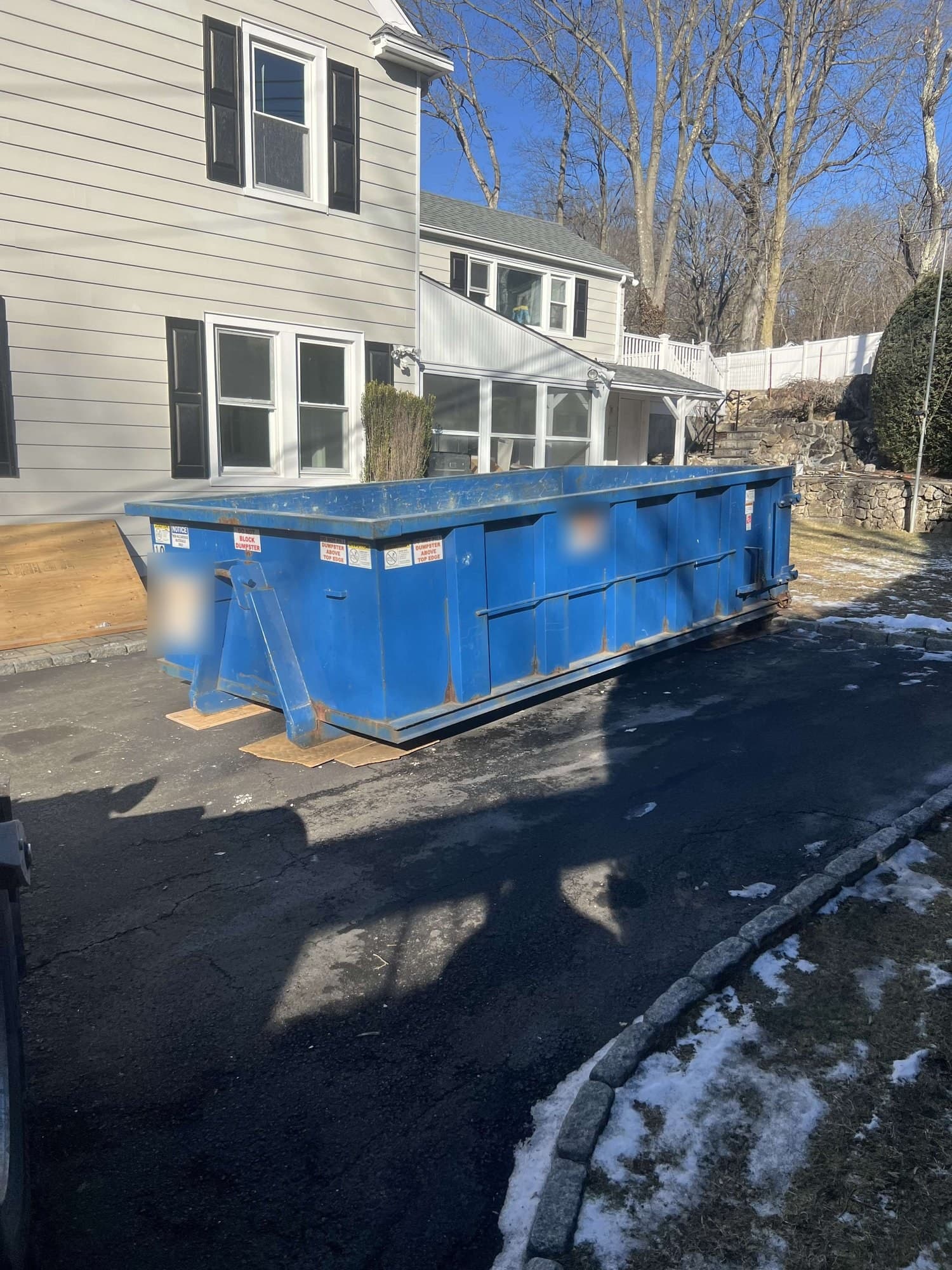
Across three years of our books, trip charges hit about 1 in 80 rentals — 1.4% of rentals in 2023, 1.0% in 2024, 1.1% in 2025 (Grizzly Junk Pros job data, 2023–2025). And in every single case, the story was the same: the can could not be picked up or had to be relocated — blocked access, a vehicle in the way, a load above the rim, or a can moved from where it was placed.
That's it. Not paperwork, not payment, not weather. A truck arrived to pick up a can and couldn't — so the truck, the driver, and the route slot got spent for nothing, and the charge covers that wasted roll. We'd rather never bill it. Seventy-nine out of eighty rentals never give us the chance.
The five-item checklist
Run this the night before pickup and the trip charge can't happen:
- Keep the path clear on pickup day. The truck needs a straight shot to the can — no cars parked in front of it, no lumber pile staged against it, no landscaping trailer in the driveway. The same clearance the driver needed to set it is what they need to lift it.
- Nothing above the rim. A load mounded over the top can't legally leave your driveway — the driver has to either offload the overage or leave the can. Level at the rim is the line. (This one also keeps you clear of tarping problems on the road.)
- Don't move the can. It goes exactly where the driver placed it, angled the way the truck needs it. A can dragged even a few feet — to pour a footing, to get a car out — can be un-pickable until it's repositioned.
- Leave the gate open or share the code. Gated driveways and job sites are fine; a locked gate at 7 AM isn't. Tell dispatch the code when you book, or make sure someone's there for the pickup window.
- Call if the schedule changes. Project ran long? Concrete pour moved? Call before the truck rolls and there's nothing to charge — we reschedule the pickup and the posted extension-day rate covers the extra time. The fee is for the surprise, not the delay.
The bigger picture
Trip charges are a footnote in dumpster economics — the numbers that actually move your invoice are the base rate and the weight tier. Those are all posted: the statewide rate card has every number, how pricing works explains the whole bill line by line, and the 20-yard page covers our most-booked size. When you're ready, book online — and leave the gate open Friday morning.
Where these numbers come from
The trip-charge shares are our own billed job data — direct rentals, 2023 through 2025, pulled from the dispatch system that runs the trucks. The cause statement isn't an estimate: every trip-charge line item in those three years was reviewed, and every one traces to a can that couldn't be picked up or had to be relocated.
Trip charge FAQs
What is a dumpster trip charge?
It's the $95 fee for a truck that rolls to your address and can't do the job — the driver arrives for the pickup and has to leave without the can, or has to relocate it before it can be loaded. The truck, the driver, and the route slot were all spent either way, which is what the charge covers. It's a real cost passed through, not a profit line, and it's the single most avoidable fee in the whole rental.
How common are trip charges?
Genuinely rare: about 1 in 80 rentals in our books — 1.4% of rentals in 2023, 1.0% in 2024, and 1.1% in 2025 (Grizzly Junk Pros job data, 2023–2025). Seventy-nine out of eighty rentals never see one, which is exactly why the one that does stings.
How do I make sure I never get one?
Five habits, all on pickup day: keep the path to the can clear (no parked cars, no material staged in front of it), keep everything at or below the rim, leave the can where the driver placed it, leave the gate open or share the code with dispatch, and call ahead if anything about the schedule changes. Every trip charge in three years of our books traces to one of those going wrong — there is no sixth cause.
My schedule changed and the can isn't ready — what do I do?
Call before the truck rolls, and there's no charge to avoid — we move the pickup. The fee exists for the truck that arrives and can't work, not for the customer who tells us the plan changed. Dispatch runs Mon–Sat 8 AM – 4 PM; extension days past the 7-day window are posted, so running a few days long is a phone call, not a problem.
More from this series: the overage fee guide, the rental period guide, and the Connecticut Dumpster Price Index.
Clear path, level load, open gate
That's the whole trick. Book online or call (203) 219-8855 — and if the schedule changes, call dispatch before the truck rolls. Phones answered 8 AM – 10 PM, 7 days; live team Mon–Fri 8 AM – 4 PM, AI phone assistant other times.